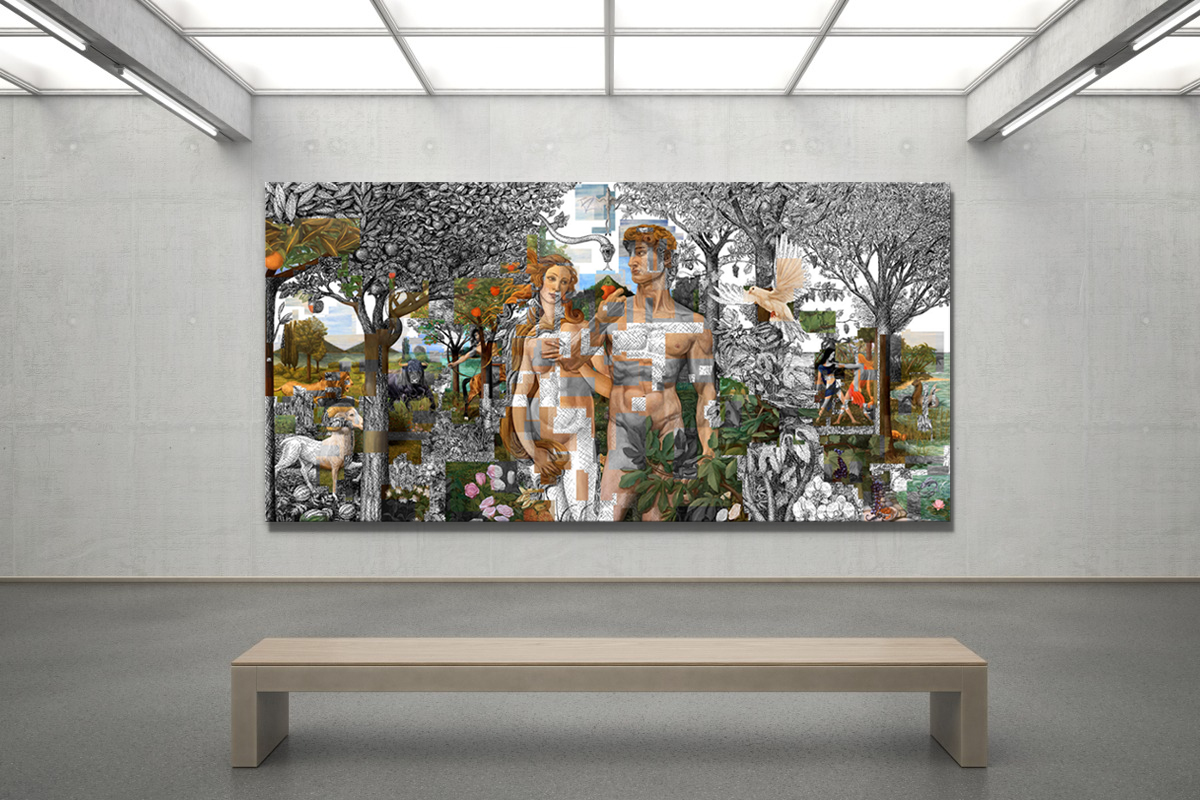
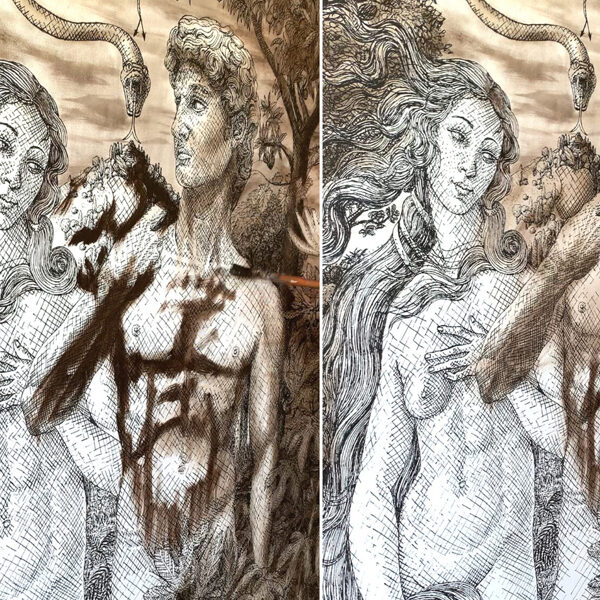
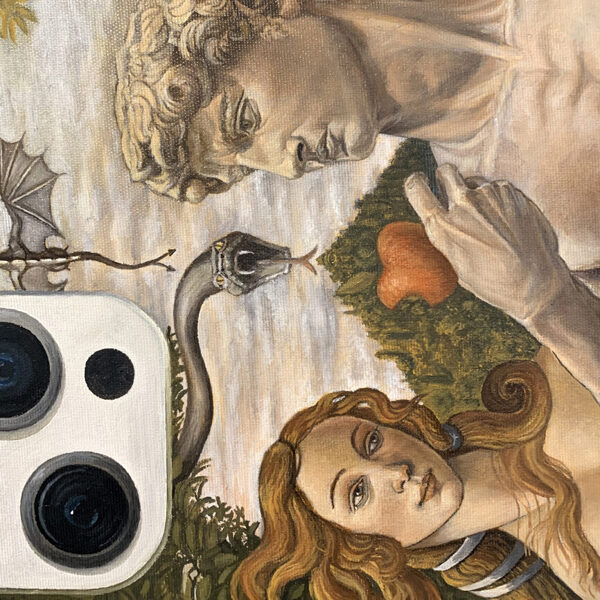
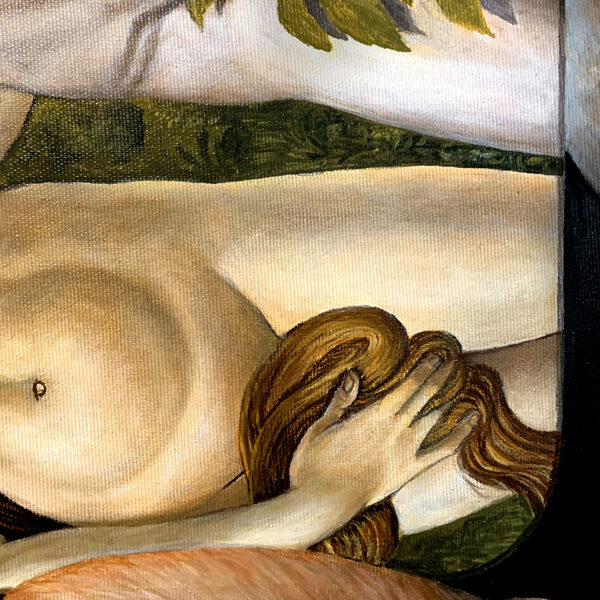
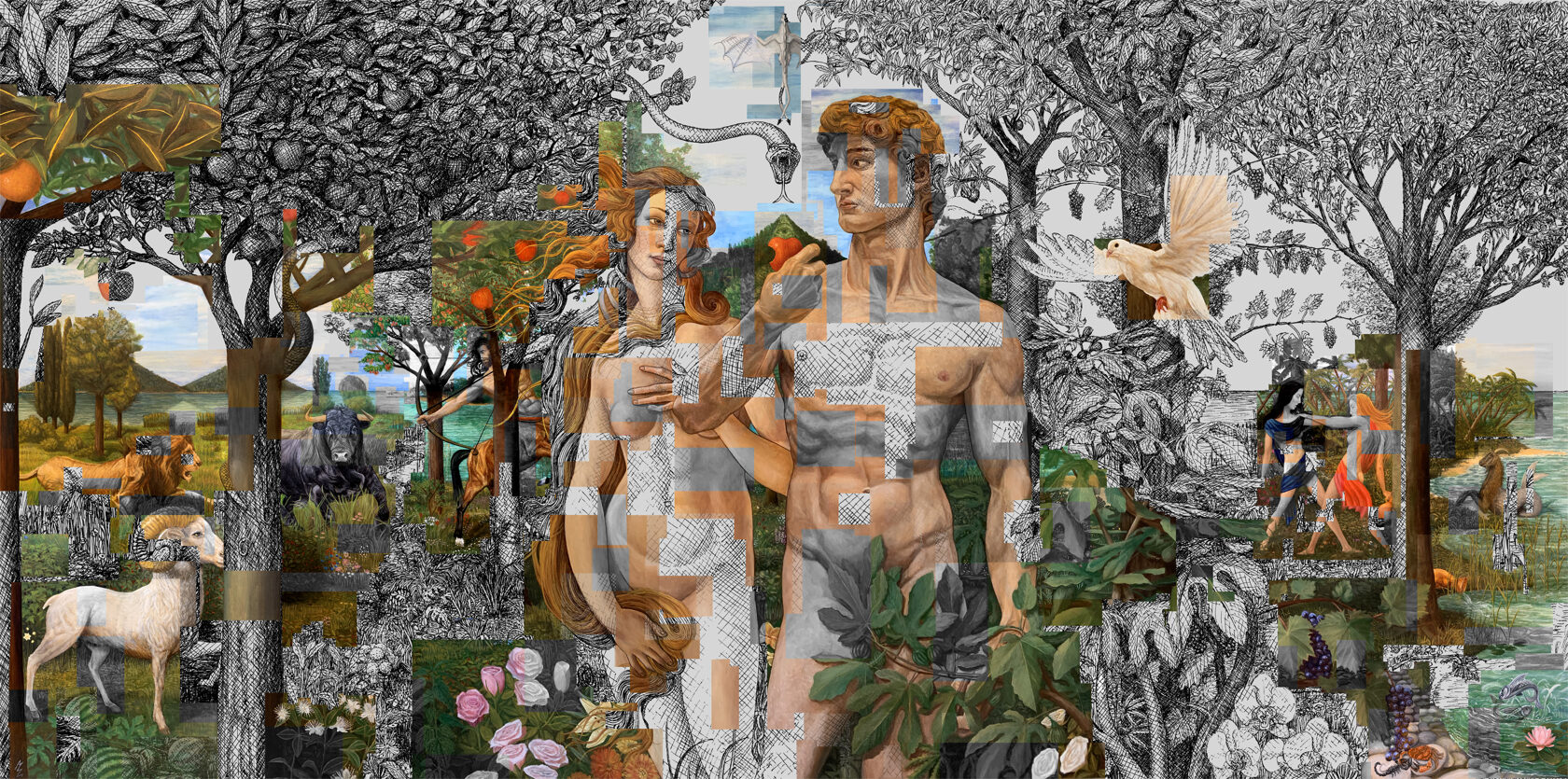
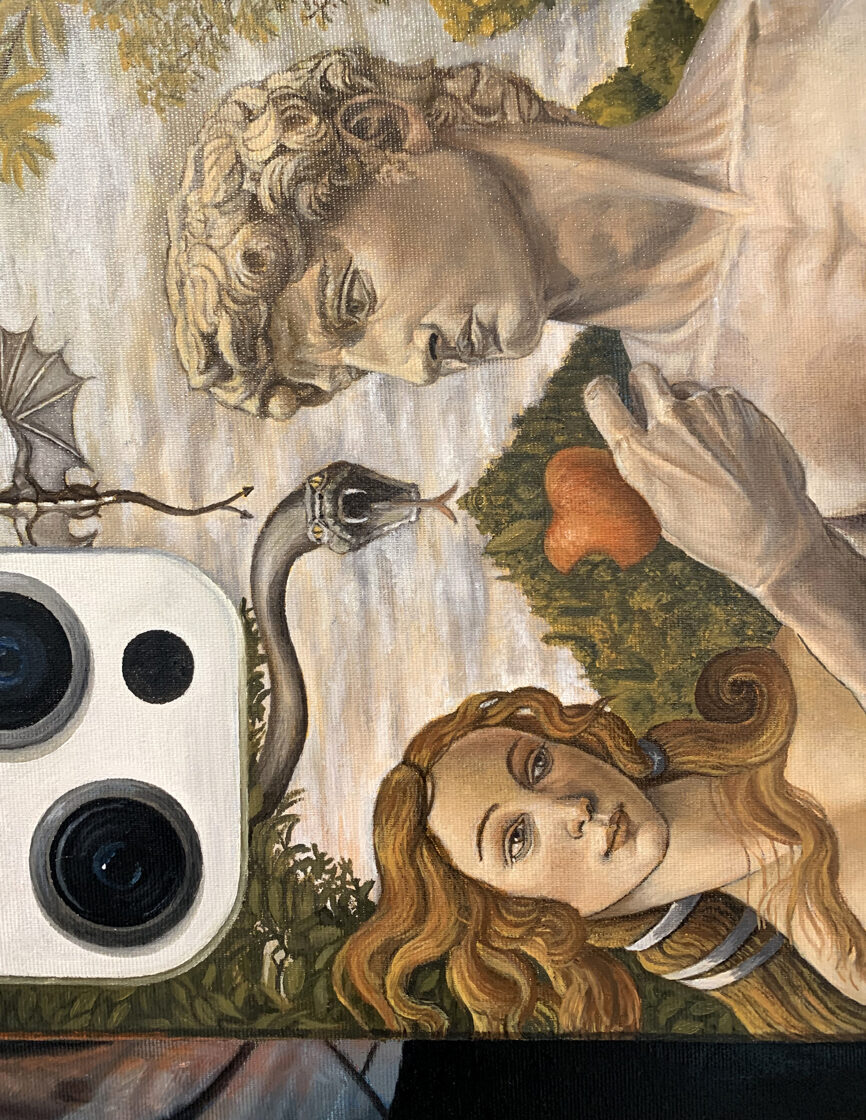
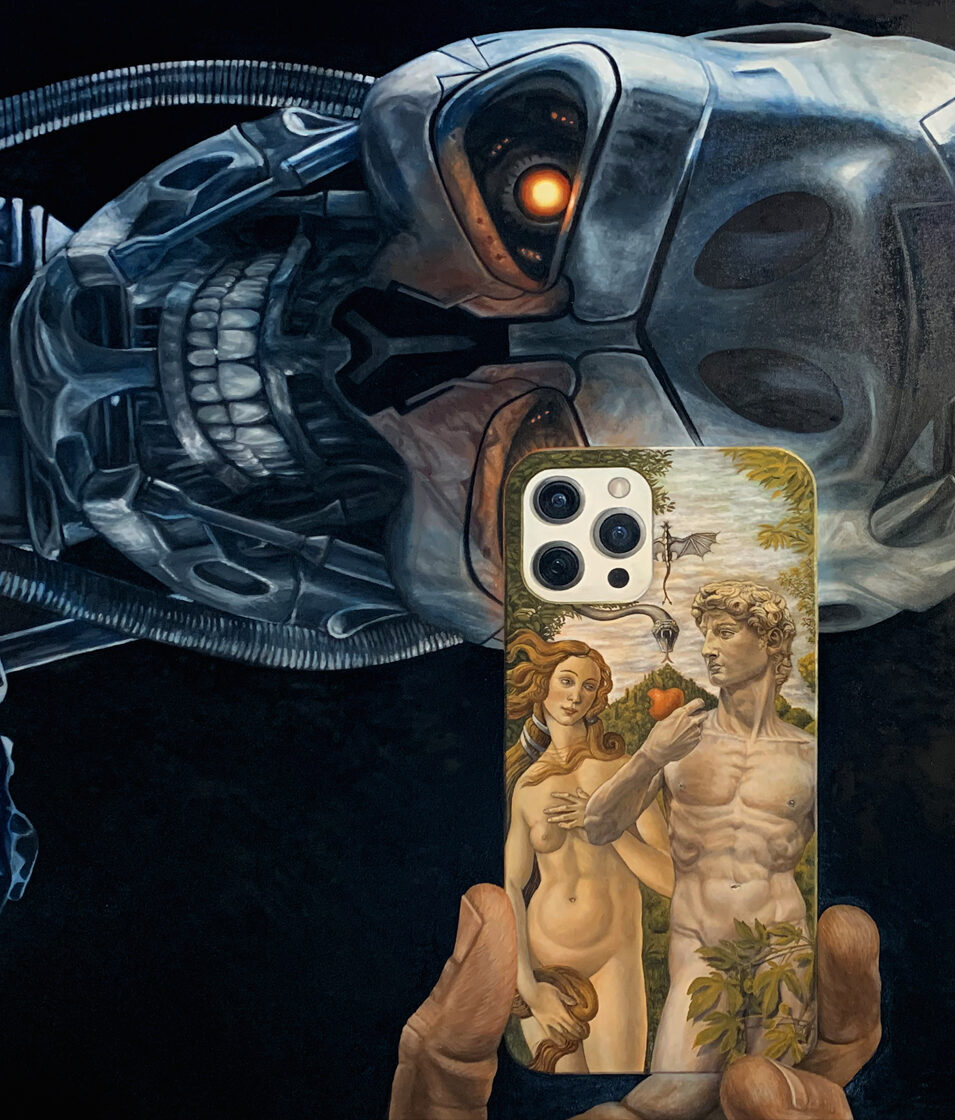
The artwork was inspired by the iPhone logo and the concept that this logo represents the same apple from the Bible. Just as humanity accepted the apple in the Garden of Eden in pursuit of divine knowledge—and consequently fell into earthly existence—we now move into the virtual world by following the same symbol. The first sketch began simply as a graphic design for an iPhone case, featuring Botticelli’s Venus (1485–86) as Eve and Michelangelo’s David (1501–04) as Adam. Both artworks were created in Florence and are perhaps the two best-known masterpieces of the Renaissance. Yet their subjects come from two distinct roots of European cultural history: Venus from the Greco-Roman tradition and David from the Judeo-Christian one. The Western relationship to the supernatural, to science, and to the individual was born out of the marriage of these two origins. After the darkness of the Middle Ages, the Renaissance rediscovered the technical achievements of antiquity and placed the individual alongside, and sometimes above, the collective.
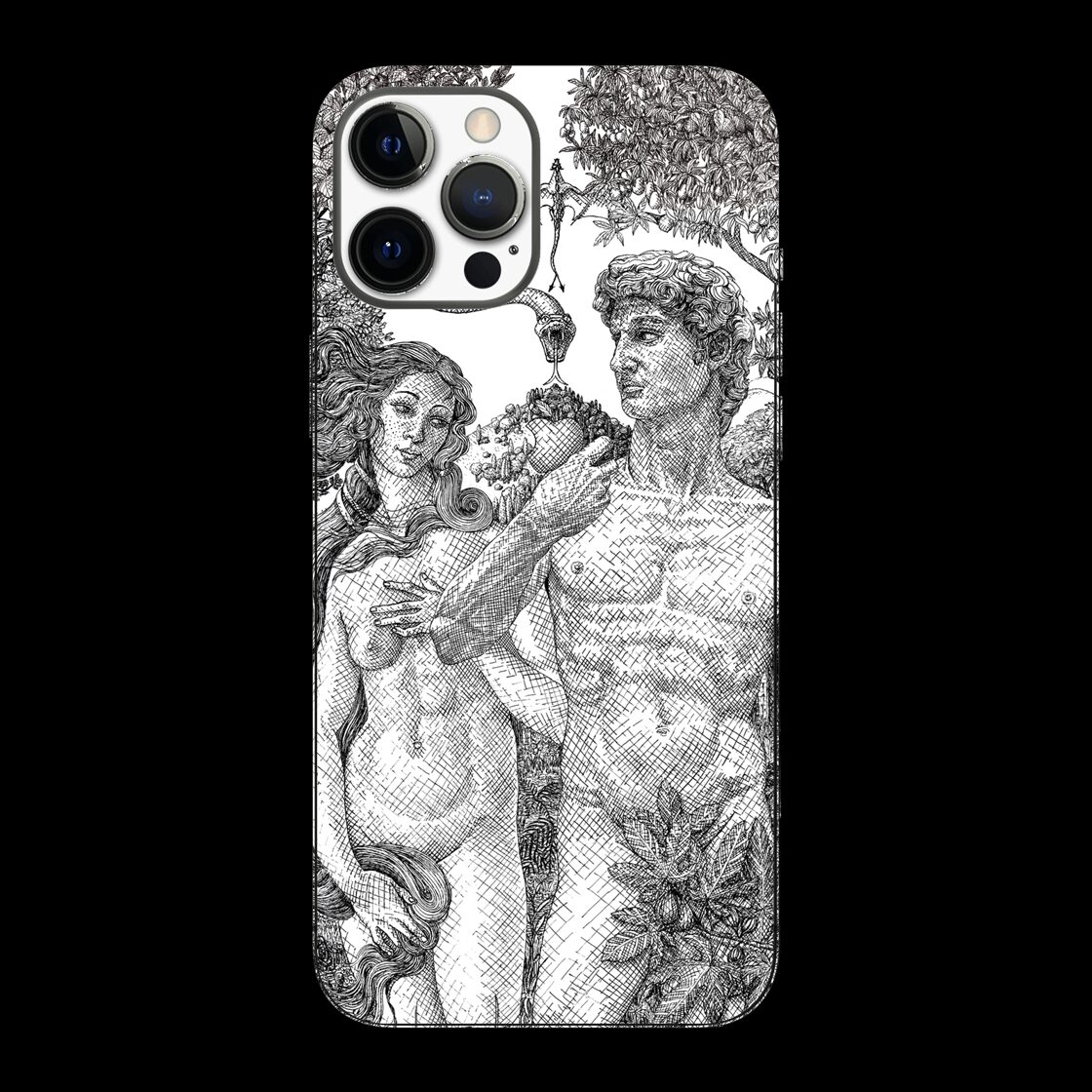
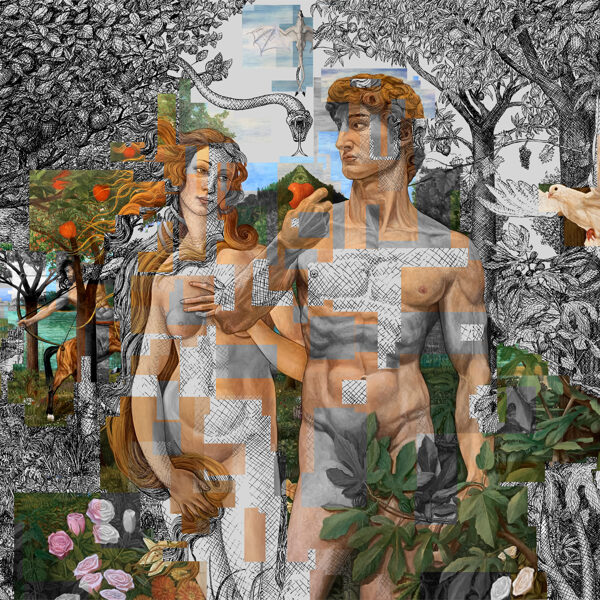
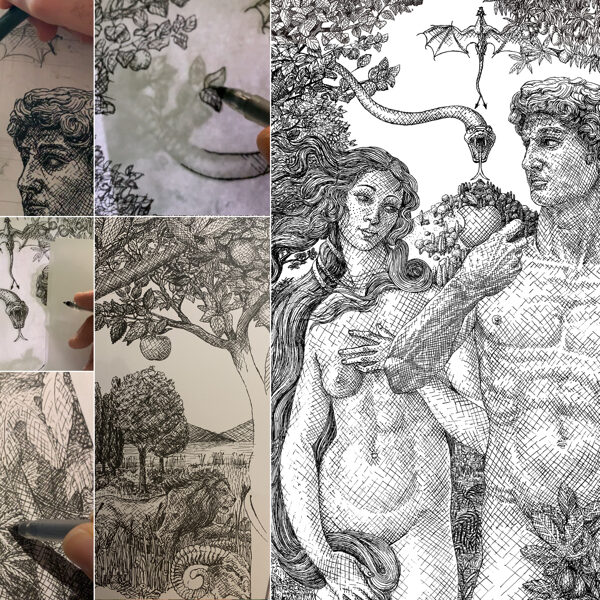
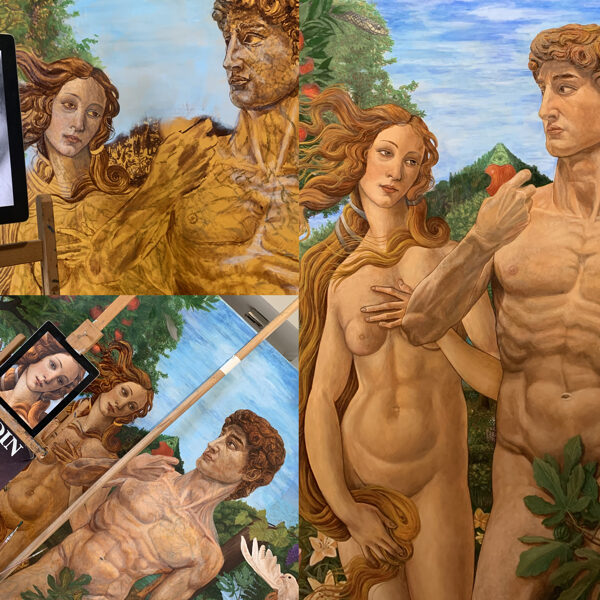
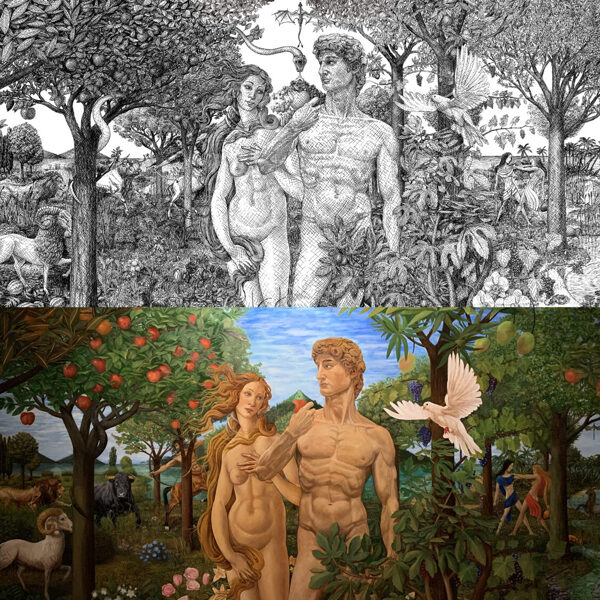
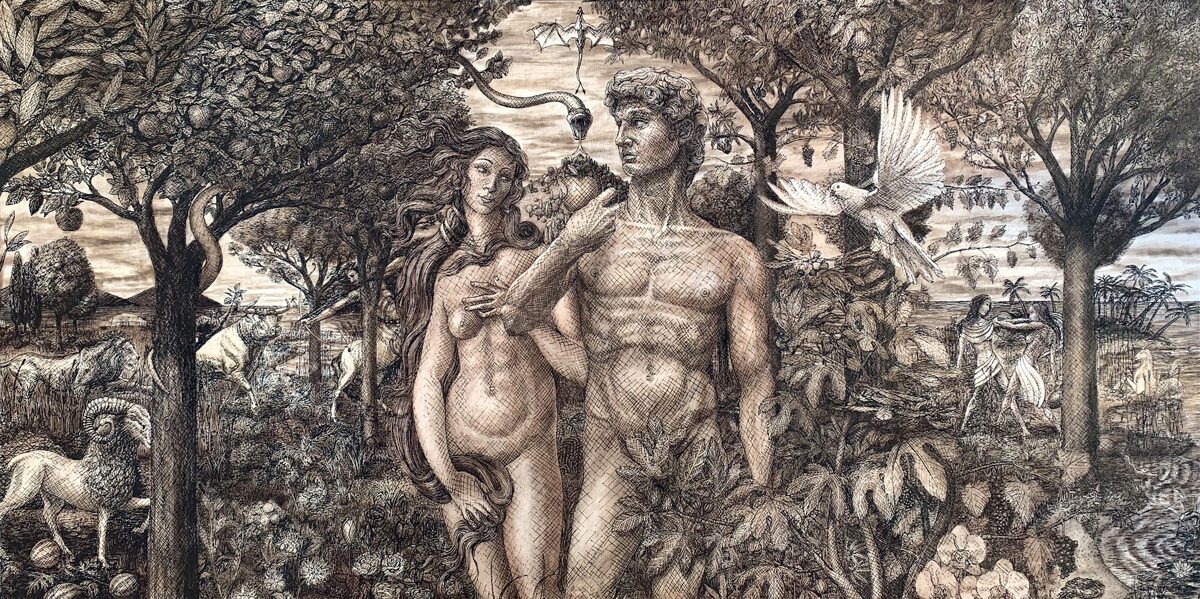
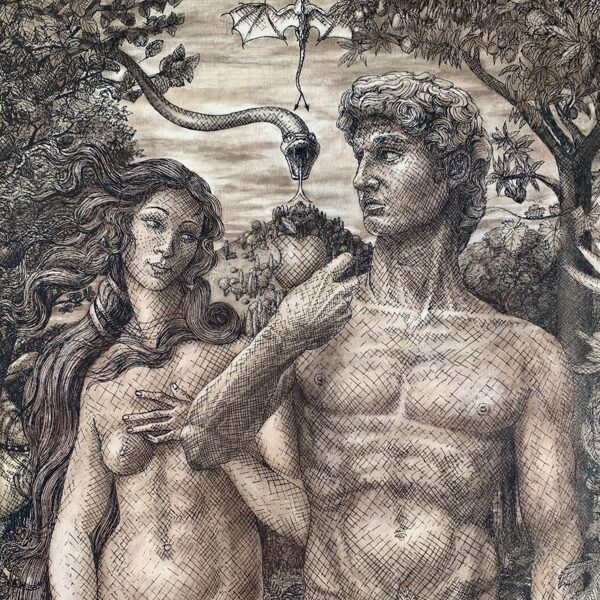
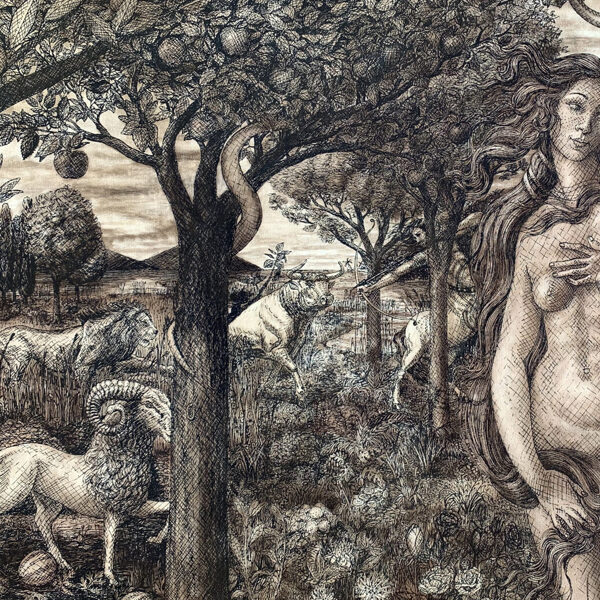
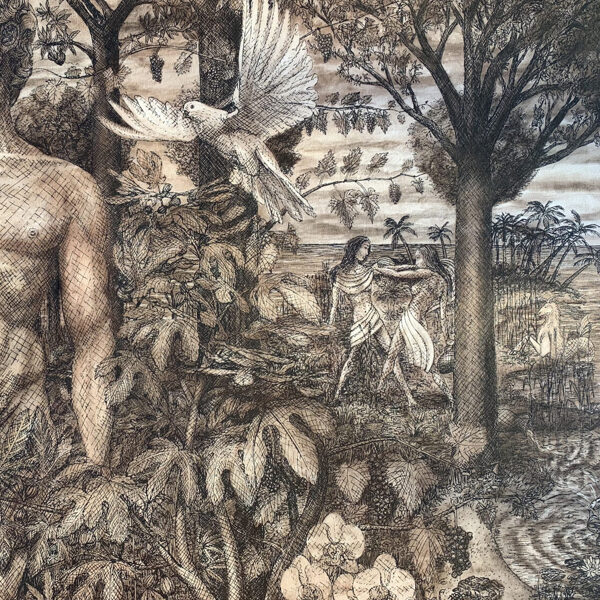
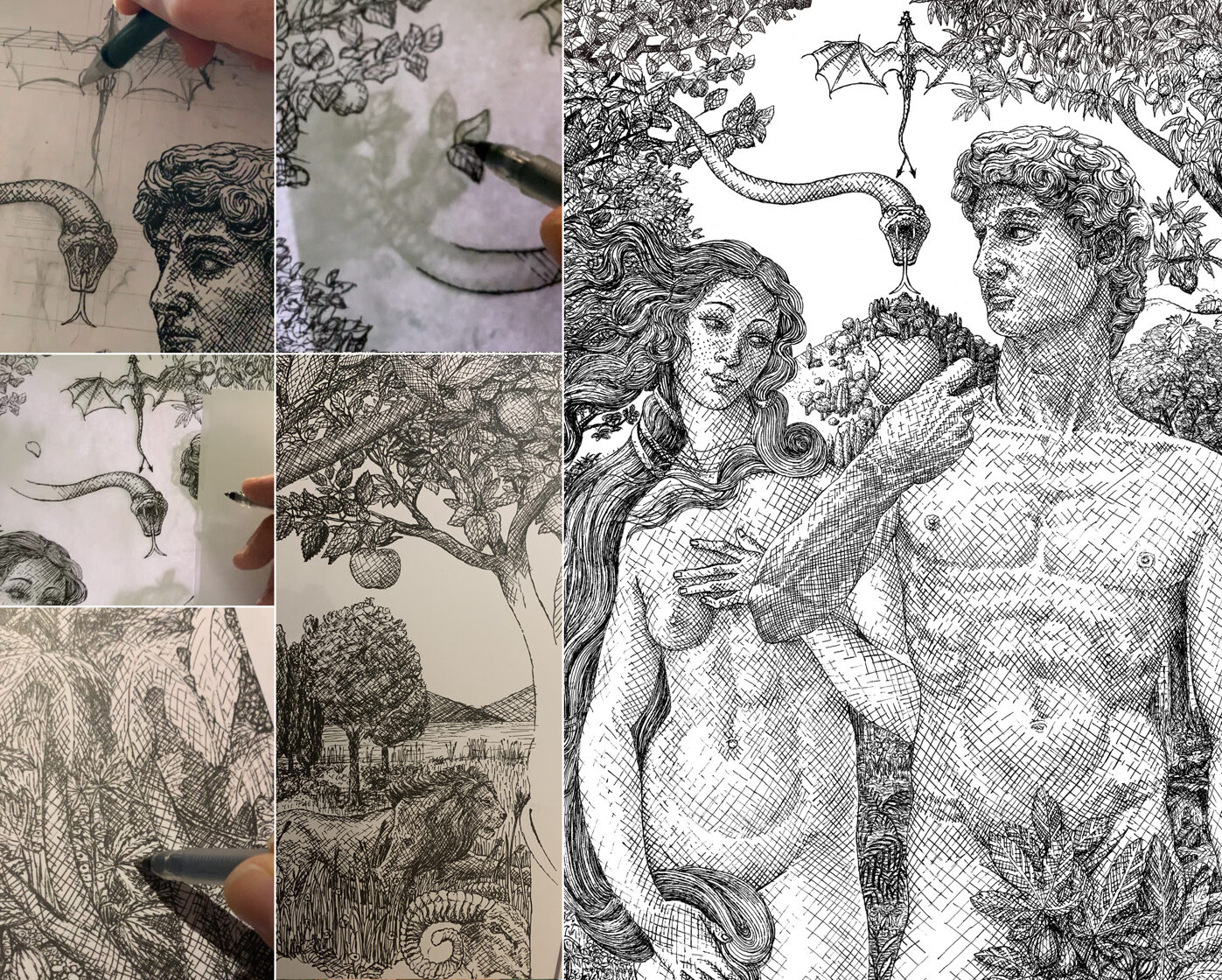
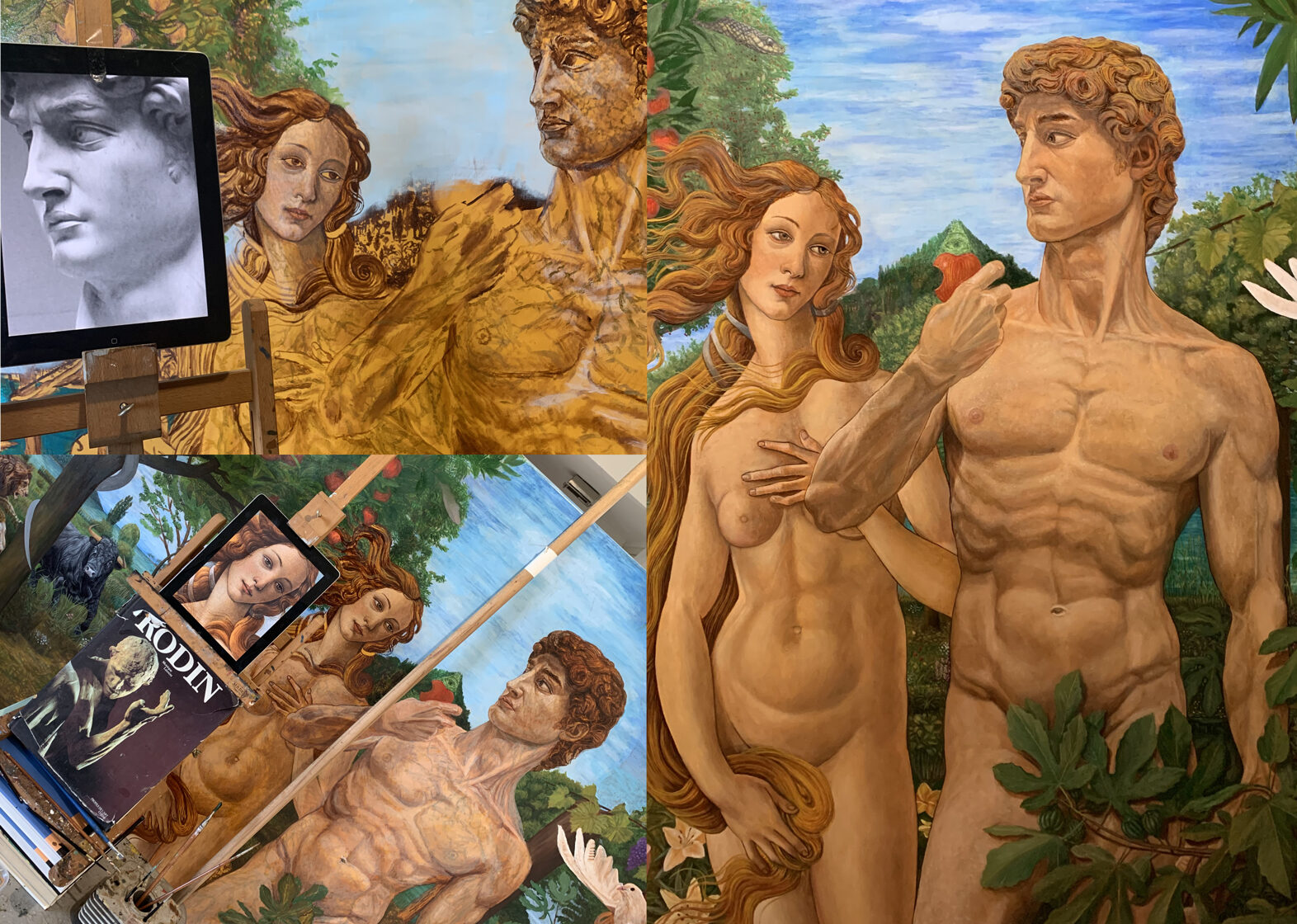
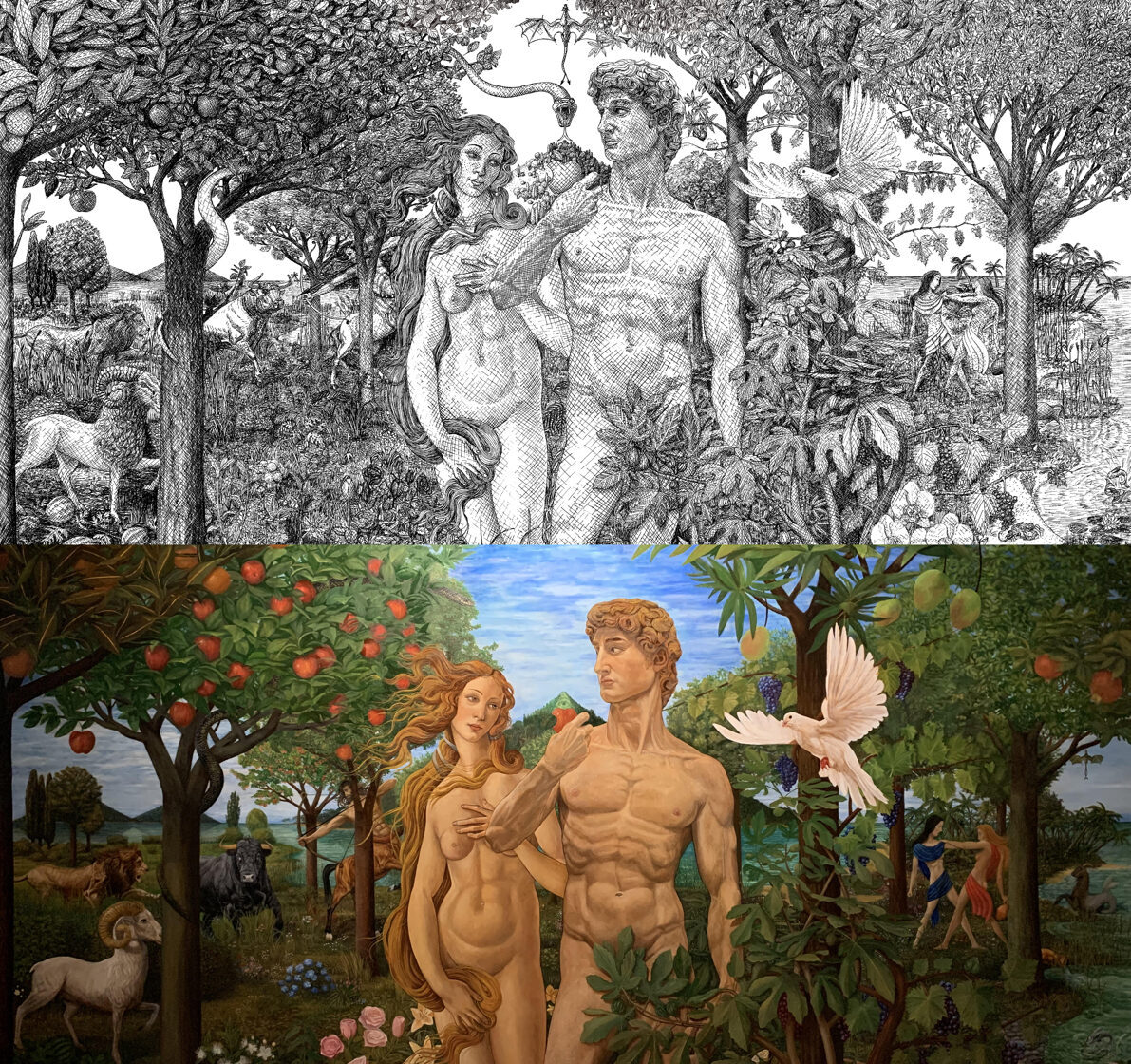
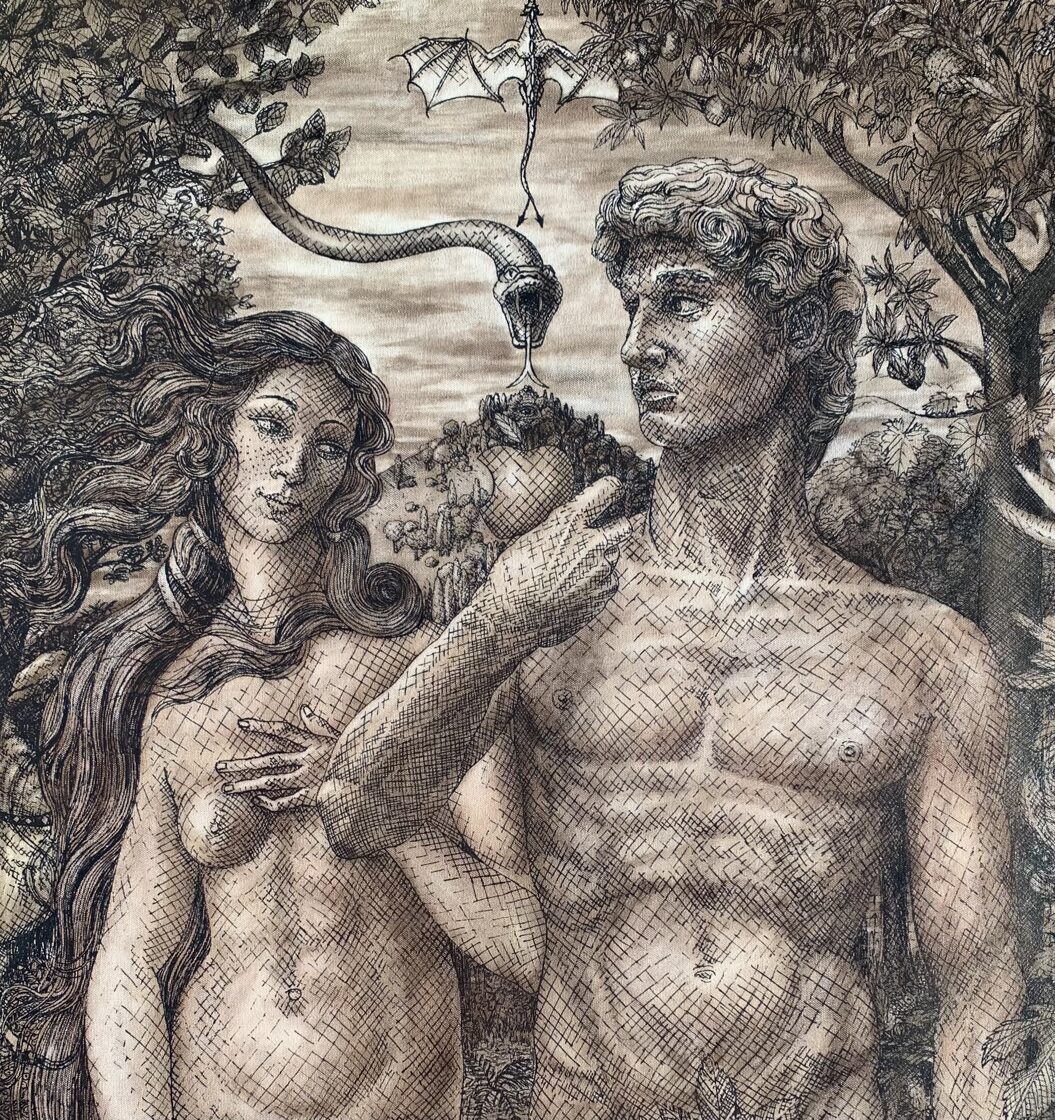
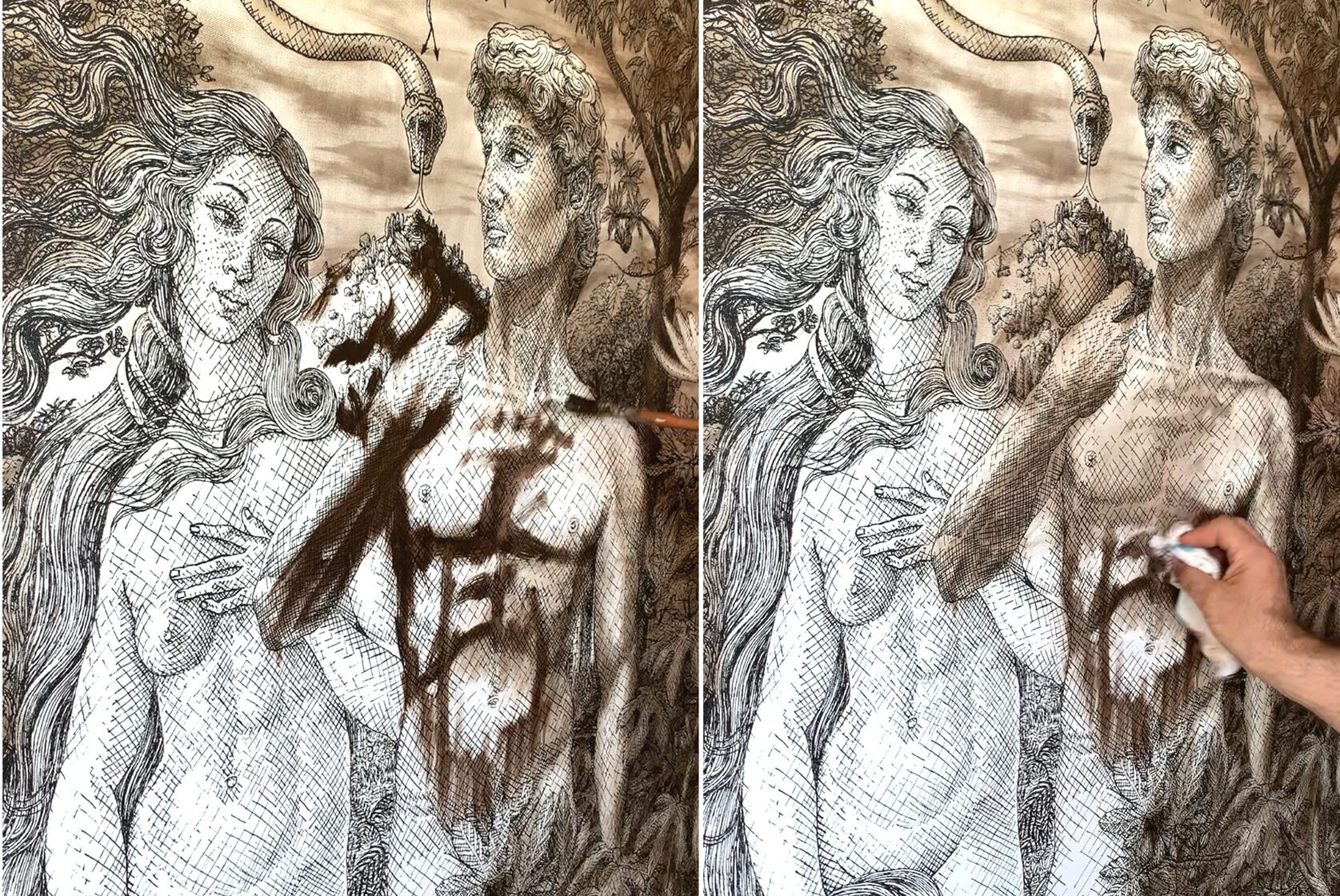
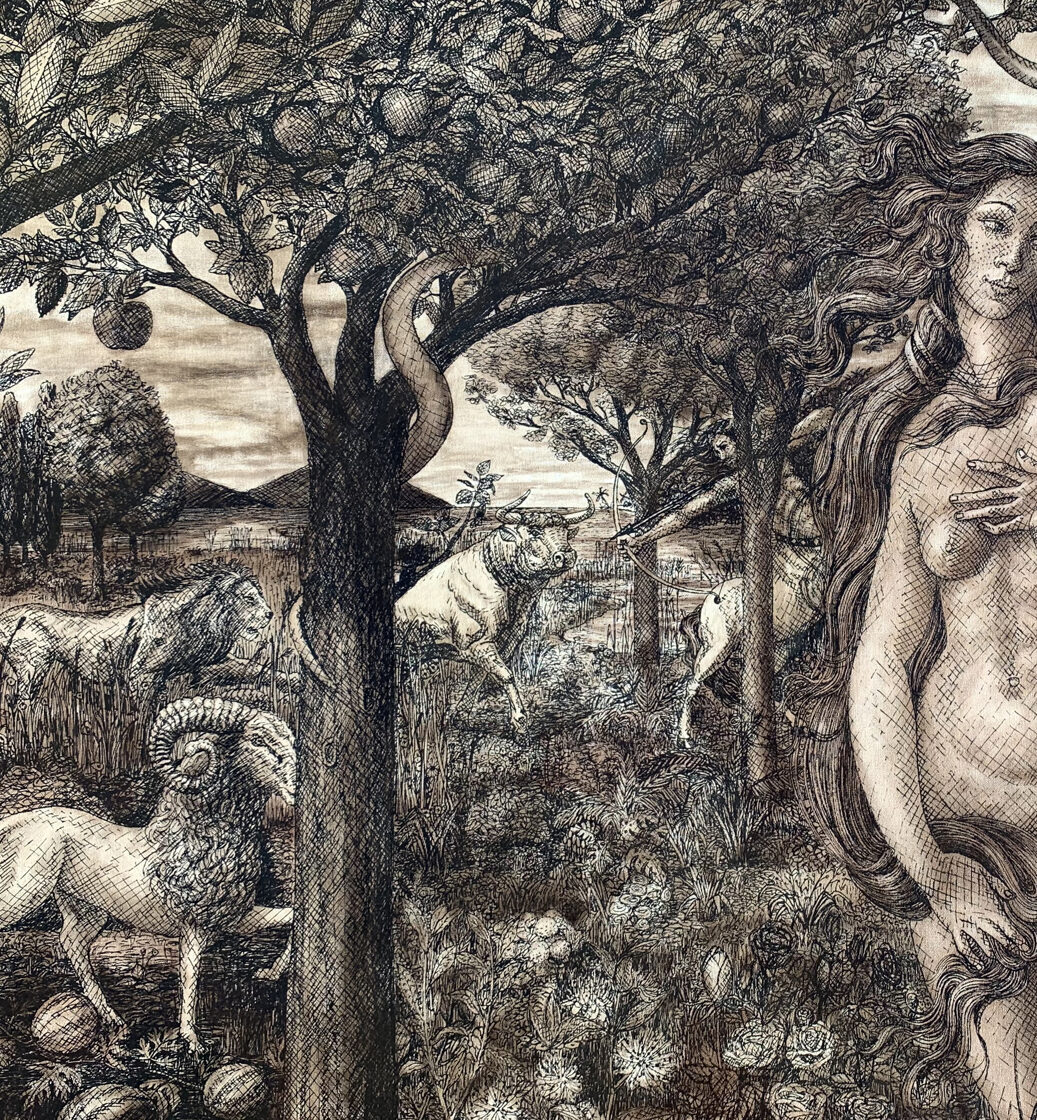
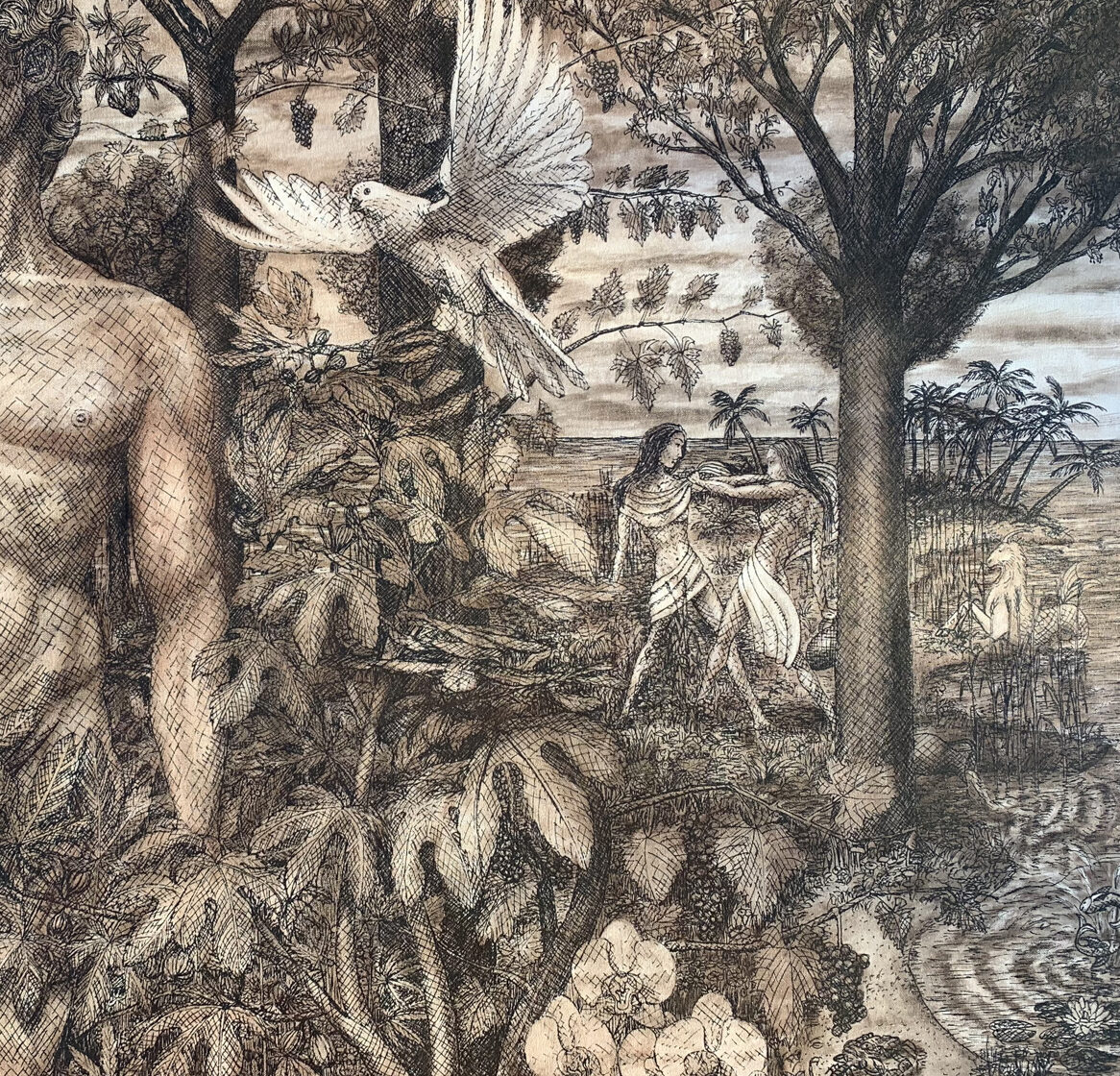
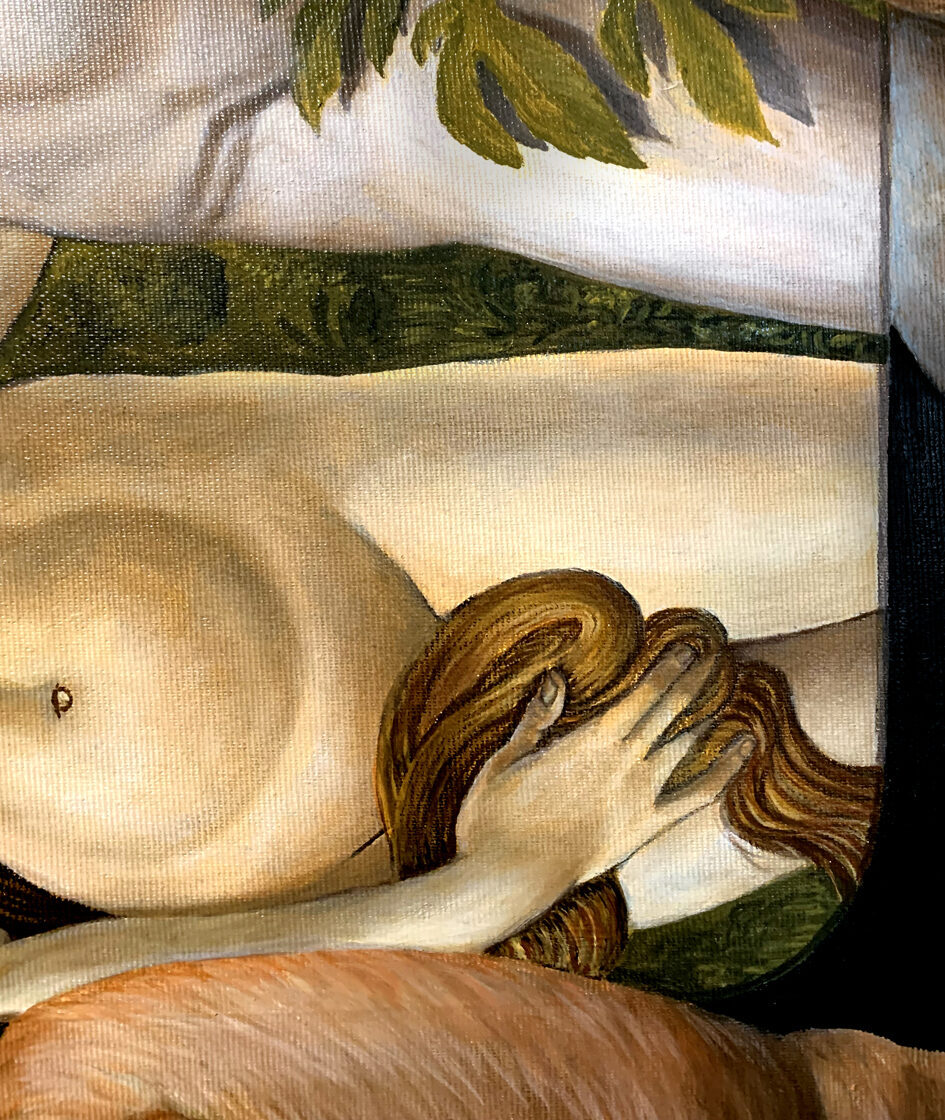
In my work the human and animal figures, except for the dove, are all astrological symbols. Eve is the virgin and Adam is the serpent bearer (the 13th zodiac sign still used in the Renaissance, also known as Hermes). Libra is the dragon in the Chinese zodiac, which is located in the middle of the picture, the rest of the zodiac signs are in the West, moving from left to right in the picture: Aries, Leo, Taurus, Sagittarius, Gemini, Scorpio, Cancer, Aquarius, Capricorn, Pisces.The plants in the background are placed in a permacultural system that is capable of creating a paradise state in most agricultural areas in a sustainable mode. (An edible forest or food forest that has no pests or weeds because everything is part of the system that regulates itself in the proportions. Human and environmentally -friendly breeding method because it does not require digging, weeding, irrigation, or chemical spraying.) Recognizable in the picture of apples, figs, grapes, mango, watermelon, peach, cherry, orange, palms, cypresses, raspberries, currants, straw , psilocybe mushrooms, nettle, cannabis, coca shrub.I drew them after studying (or planting) living plants, all of them based on botanically correct, actually functioning permacultural gardens. Therefore, only the student drawing took more than 6 months. I made the study drawing with a pencil, which I placed on a bottom-screen glass and then finished with pen (as with the drawings of old animation movies) in a 100x 50 cm size. (This process is presented in the 2nd picture below in the gallery) Based on this drawing, to do the oil painting was more than 1 year, because it made with the same technique as my previous Botticelli reproduction. (Botticelli probably painted the blood vessel system on the gold and ocher background and covered it with a lot of thin layers like the real skin. This process is presented in the 3rd picture below in the gallery). In the end I digitized the drawing with a high -resolution scanner, and then paste the detail photos of the painting with 128 layers in Photoshop. The result has become a high-definition digital file (first photo in the gallery below).
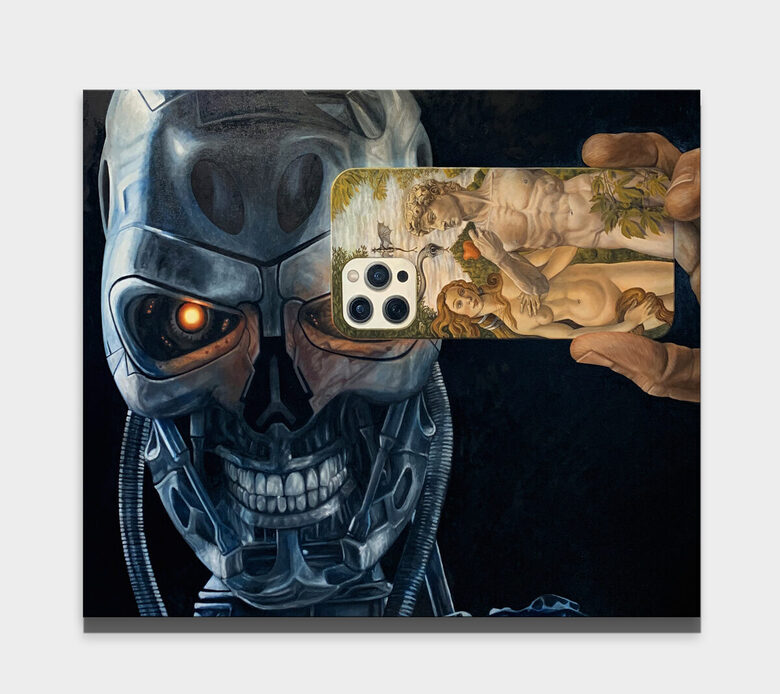
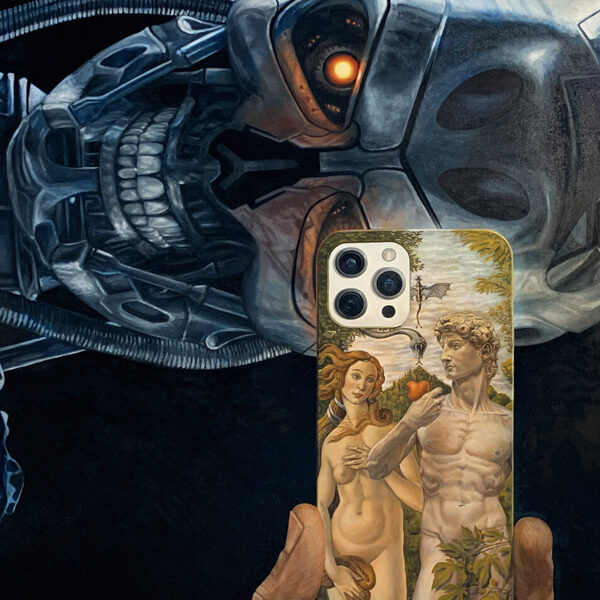
After the Industrial Revolution, we slowly reached a point where the uniqueness of objects was lost through mass production — and I believe something similar happened to humans as well.As we began to think in increasingly materialistic terms, placing our sense of self into these injection-molded mass products, we gradually became mechanized. For me, the metaphor for this transformation is the Terminator: a being that appears human, but is driven by an emotionless, mechanical intelligence.Once again, the collective rises above the individual — but this time, not in a natural or organic way. It is artificial. Mechanical. Smartphones and the identical selfies across social media platforms are, in my view, both the catalysts and the final stretch of this process. The emotionless yet intelligent machine watching us from behind the phone represents, for me, the birth of a new god. A god that truly can keep count of every heartbeat — and if we become mechanized enough, might even predict our fate.Its smile is not real. Just like the narcissistic selfies — only it has no skin on its face, so it looks real
title: Terminator Selfie
medium: oil, on canvas,
size: 120x100cm
year: 2025

The earliest forms of religious prostitution developed in Mesopotamia in the 3rd millennium BCE, as part of rituals connected to the fertility goddess. Women served in temples, and this service could include sexual acts as a religious duty. This practice was not considered immoral; on the contrary, it could bring social esteem. This tradition later spread among the Phoenicians, who carried the cult throughout the Mediterranean region via their maritime trade—to Carthage, Cyprus, Malta, the islands of Sicily and Rhodes. Various forms of the rite persisted in these areas, often as part of a religious service performed before marriage. In later Greek and Roman religion, the figures of Eastern goddesses merged with Aphrodite and Venus, and although the practice partially transformed, it endured for more than two millennia.
Two classical Greek authors also reported on the subject: Herodotus (5th century BCE) observed such a custom in Babylon, while Strabo (1st century BCE) likewise mentions that women offered their bodies for ritual purposes. Although these sources reflect the later, Hellenized form of the practice, they provide important historical confirmation of the long-lasting survival of religious traditions of Eastern origin.
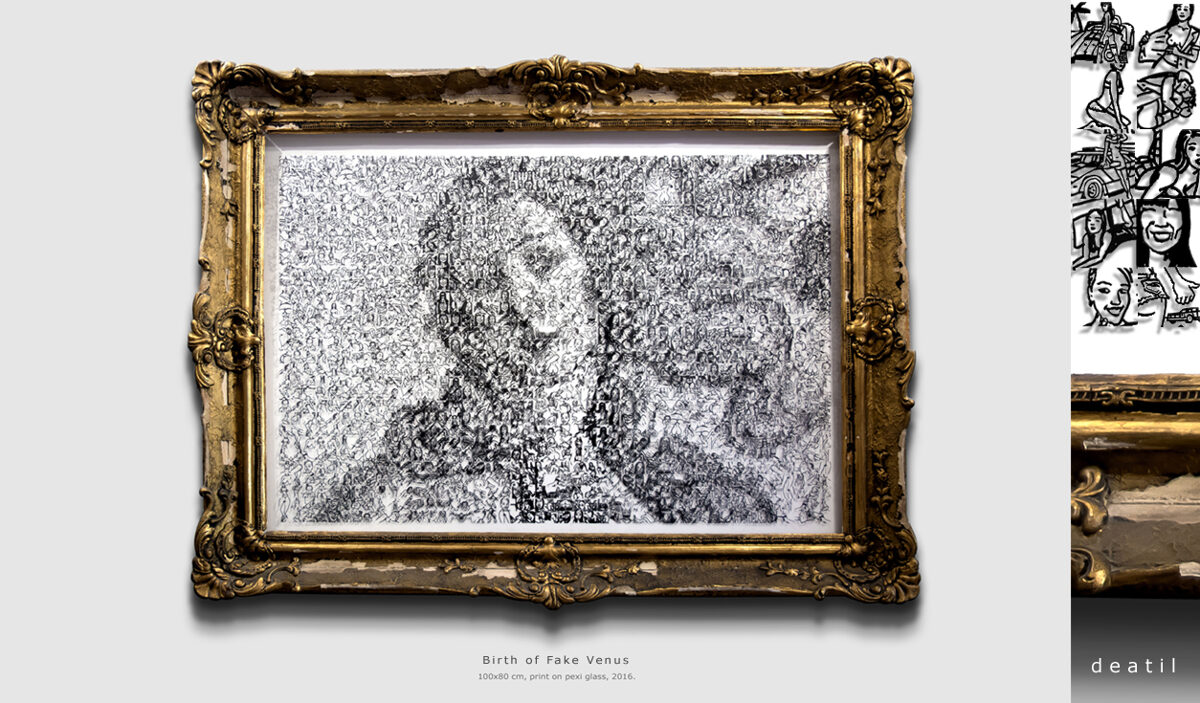
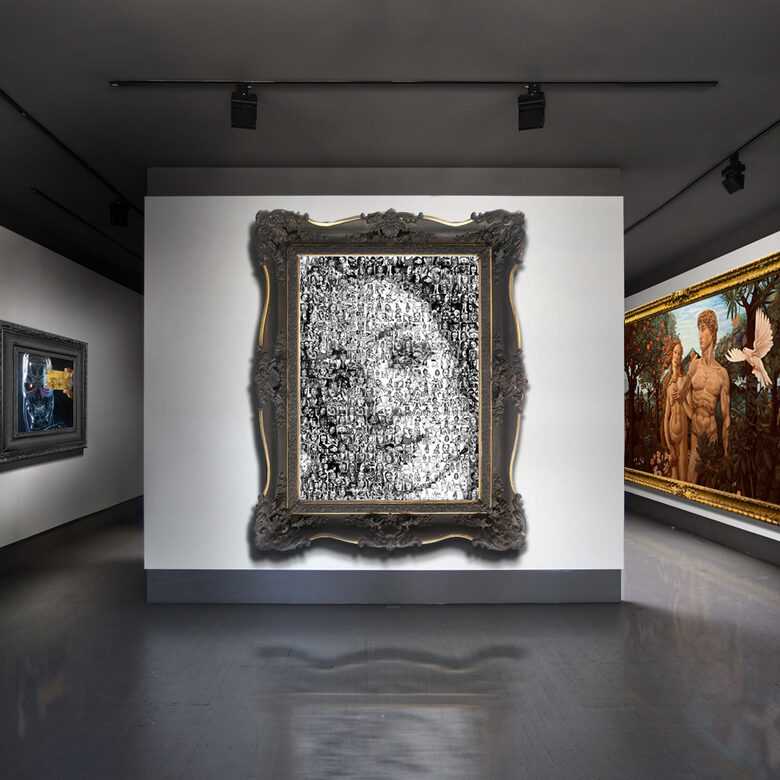
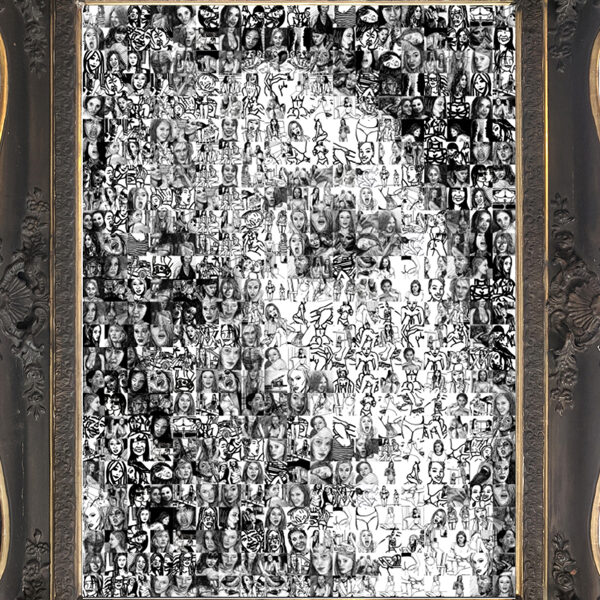
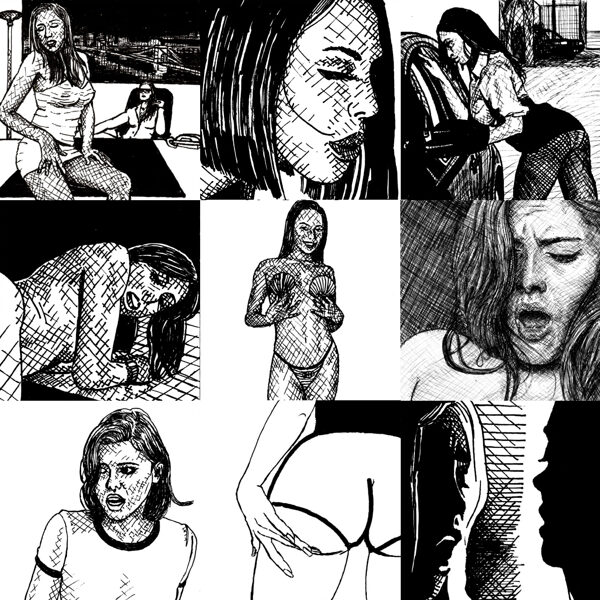
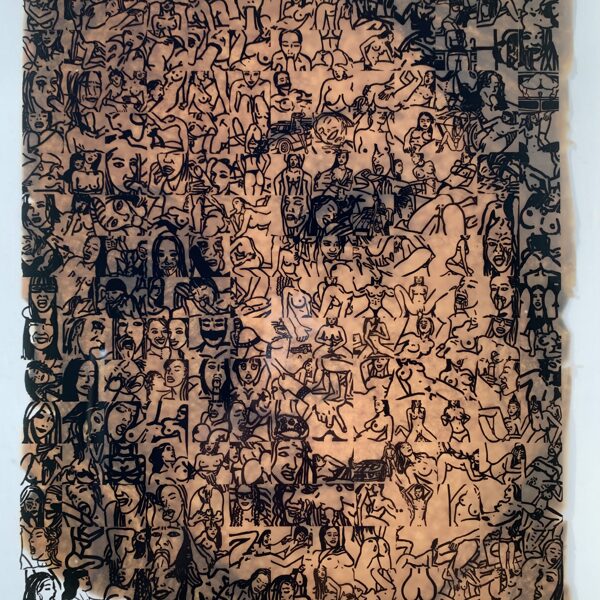
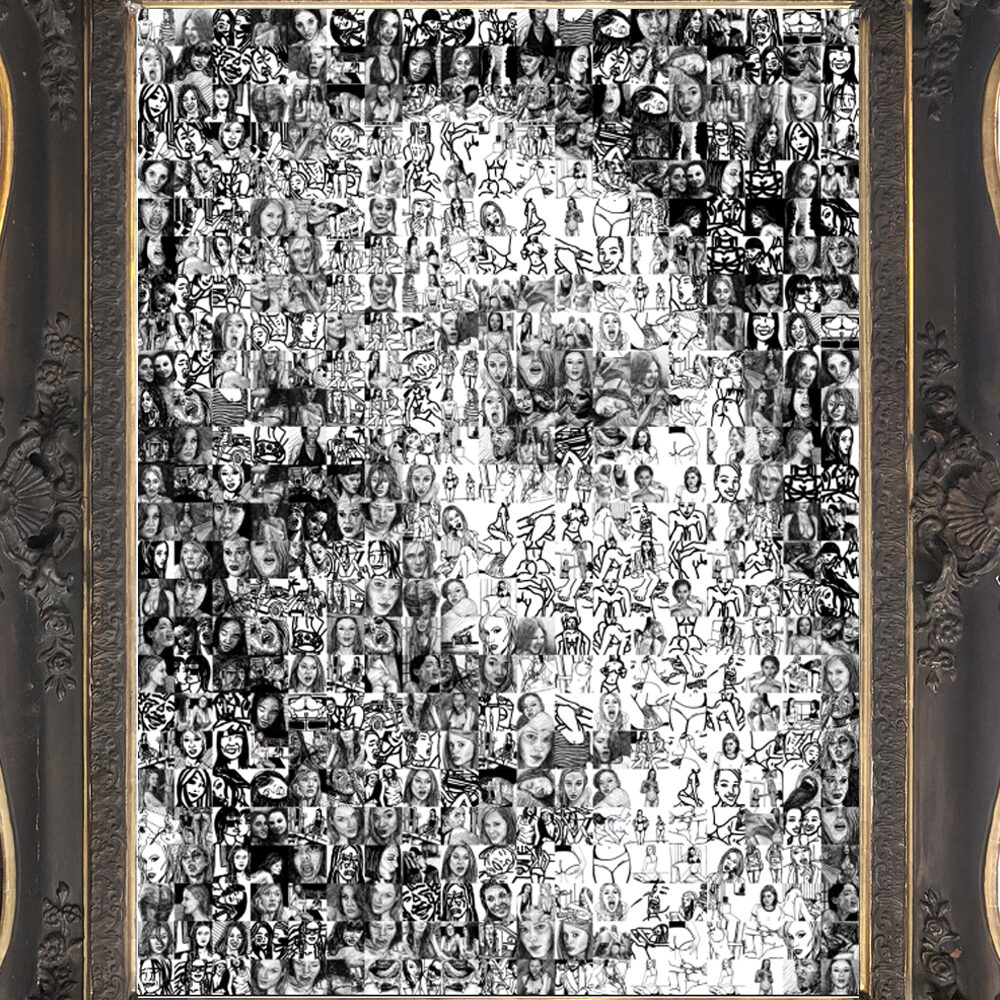
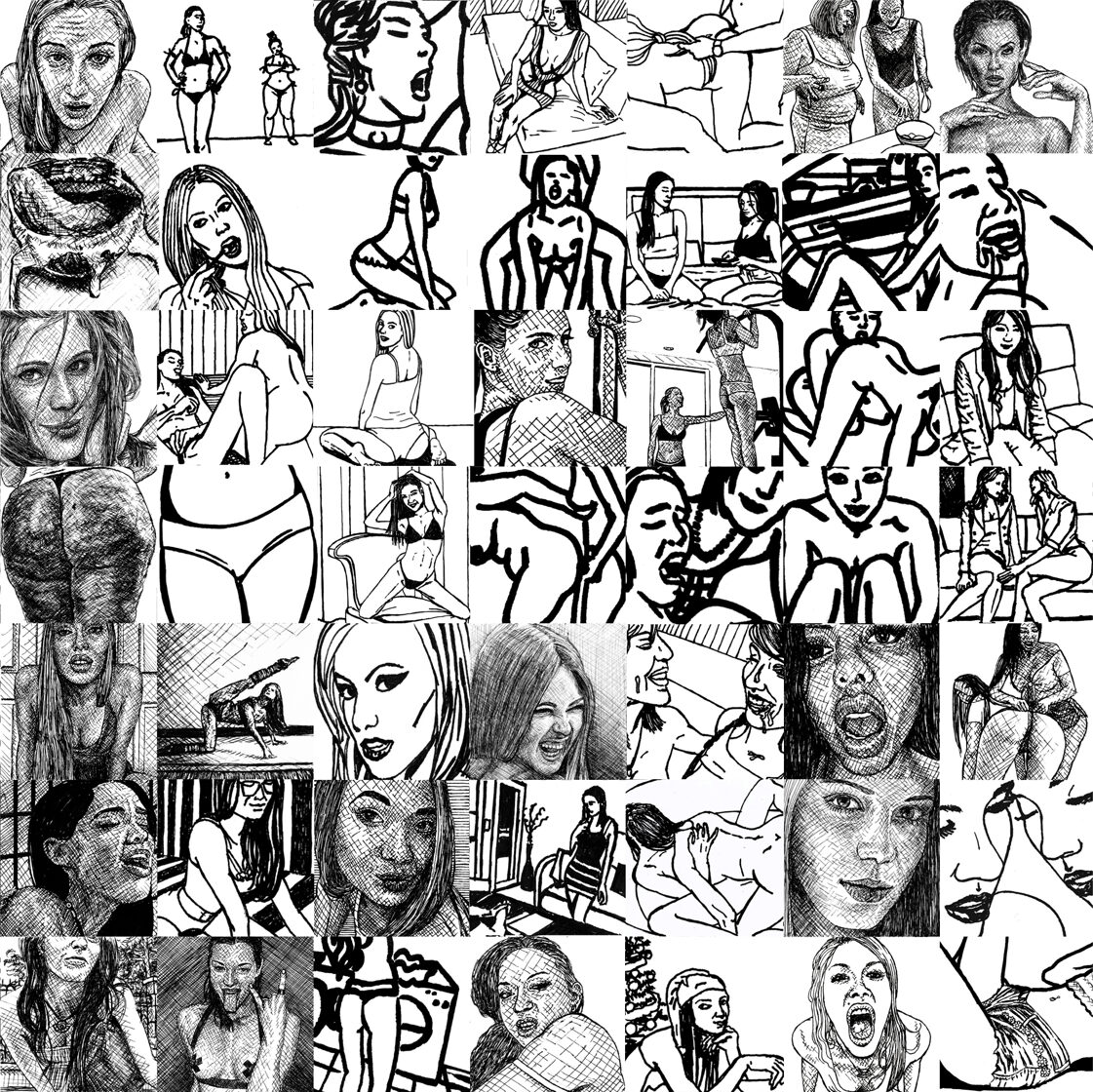
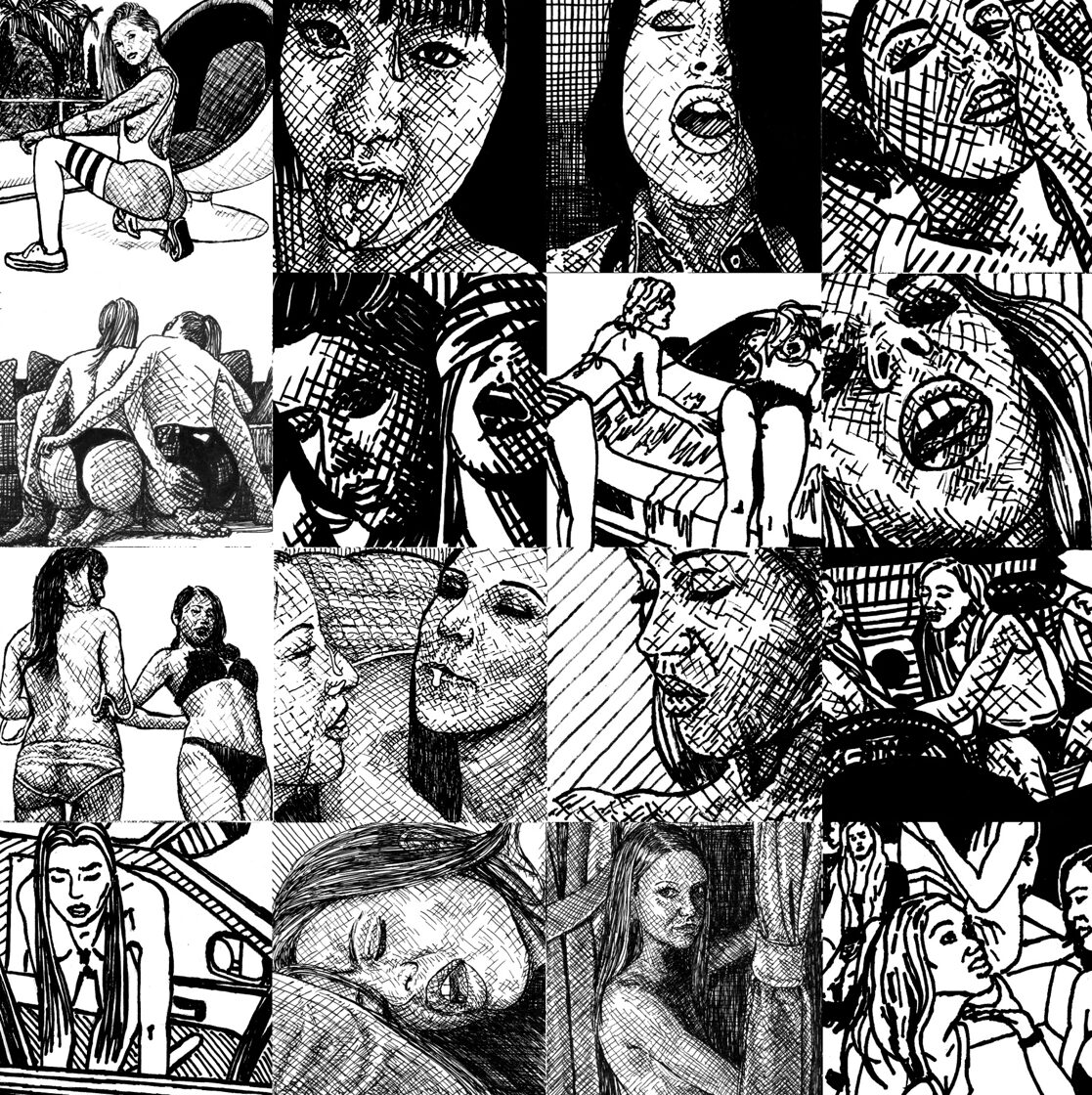
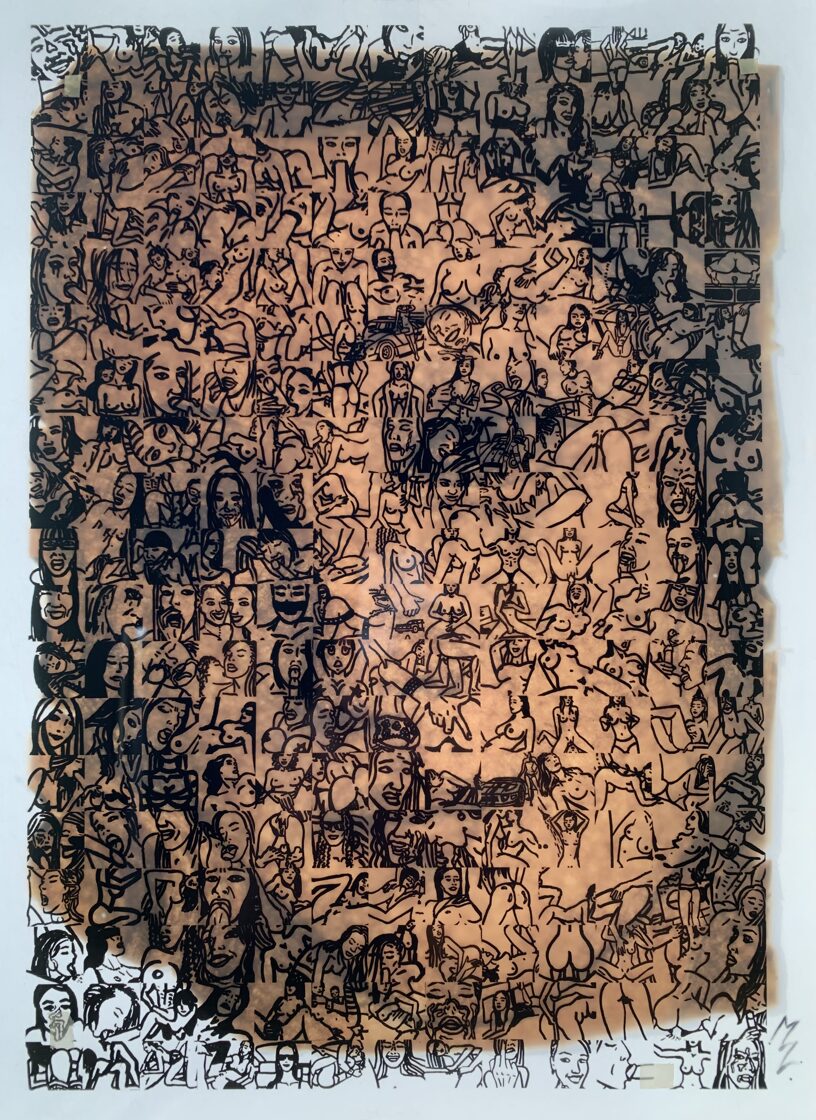
The Mosaic consists of 330 different drawings based on thumbnails from the most-viewed videos on adult sites. The parallels between ancient religious prostitution and internet pornography are particularly striking when we consider that, according to tradition, the gods are immortal, and their power depends on the number and depth of prayers and sacrifices offered to them. One of the hypotheses behind this image is that if something is capable of absorbing the sexual energy flowing into the virtual world through porn, it is likely to be the same goddess who once gathered it in ancient times.
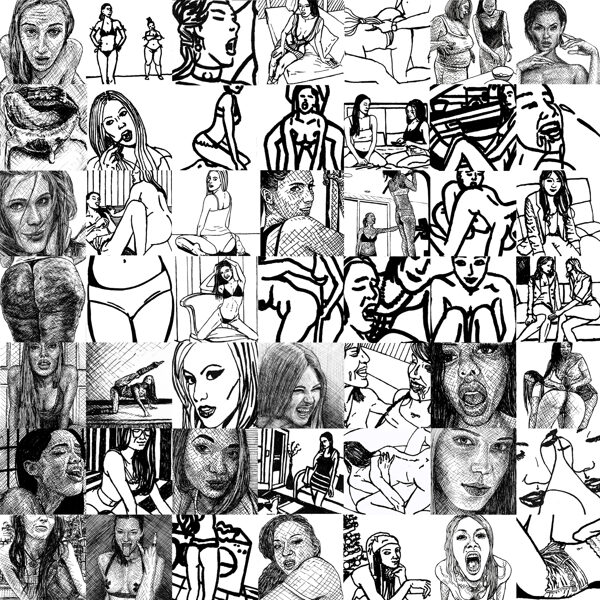
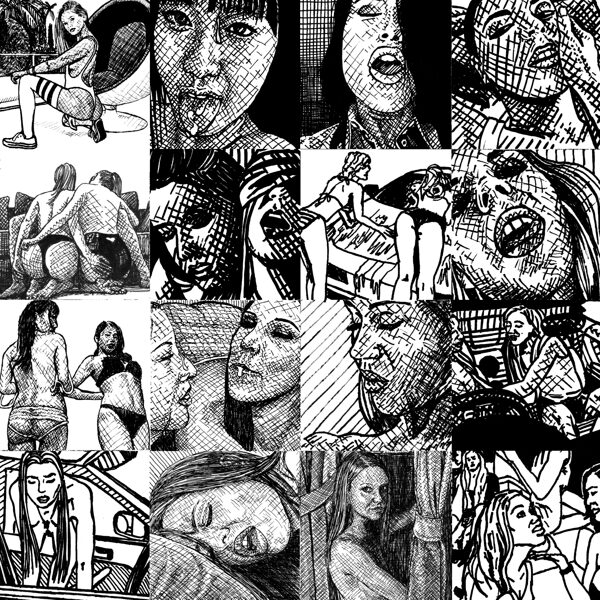
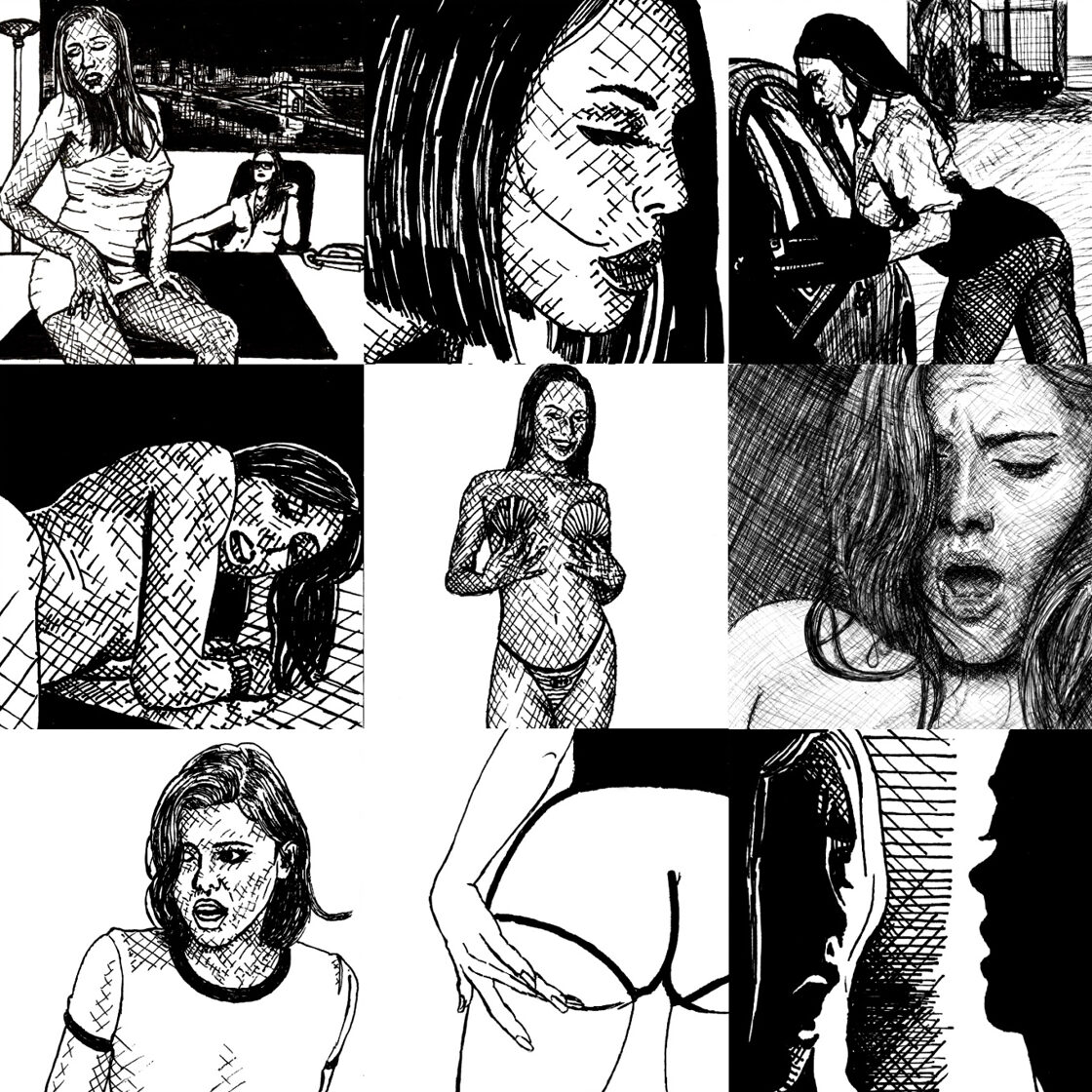
I drew the first 330 images with a black marker pen in small format (6×6 cm) between 2014 and 2016. The mosaic in the top photo was created from these drawings. Between 2016 and 2024, I made 220 more drawings using finer pens, more detail, shading, and larger formats (8×8 cm to 20×20 cm). These drawings were based on thumbnails that did not include visible genitals or even female nipples. Of the earlier works, 110 met the same criteria, so I added them to create a second set of 330 drawings for the second Mosaic.
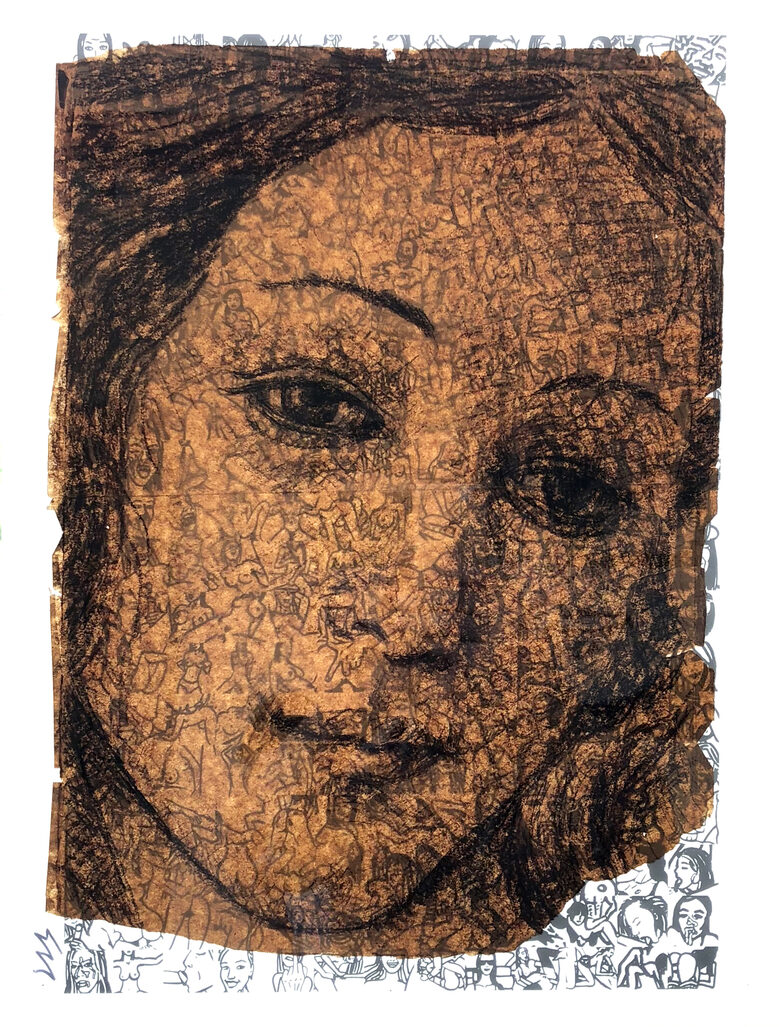
title: Venus Hub
medium: Page 1: pastel drawing , Page 2: digitized felt-tip drawings printed on opal PET film
size: 29x42cm
year: 2020
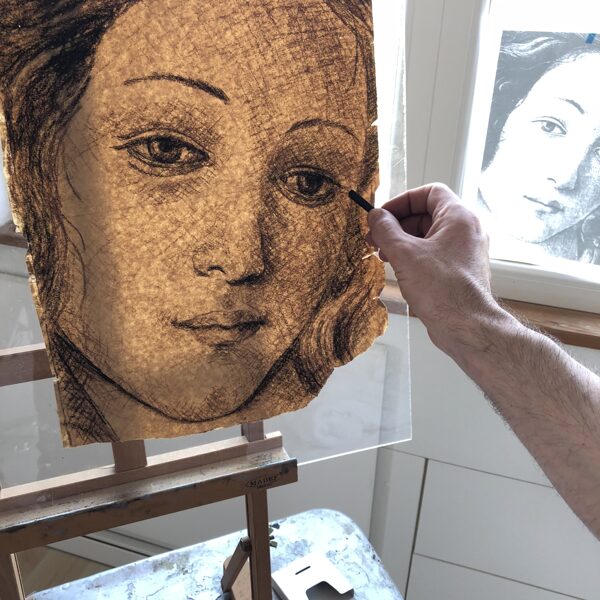
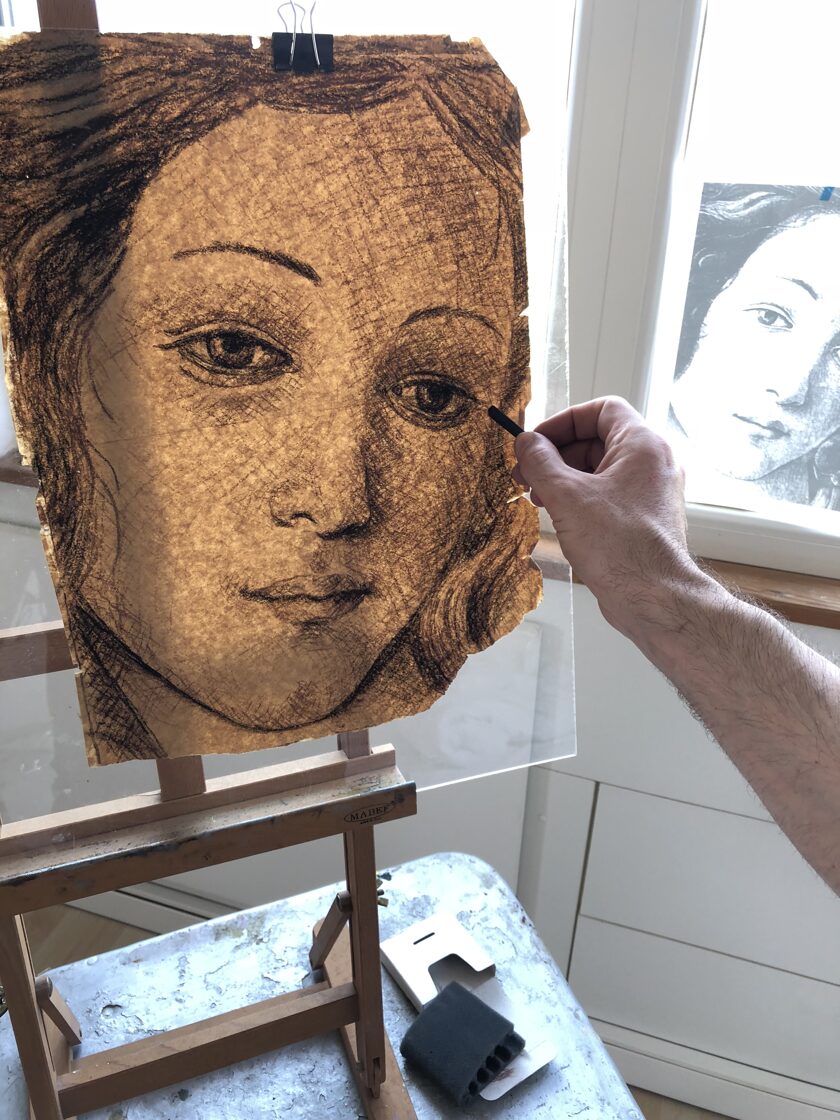
This is a double-sided image: on one side, there's a drawing of Venus's face on a 100-year-old piece of paper, and on the other side, the same face is recreated using felt-tip pen drawings, printed onto a transparent sheet. The effect is revealed when placed against a window or a light source.
The lower images show the drawing process and the reverse side. In the top image, the drawing is in front and the print is behind; in the lower one, it's the other way around.
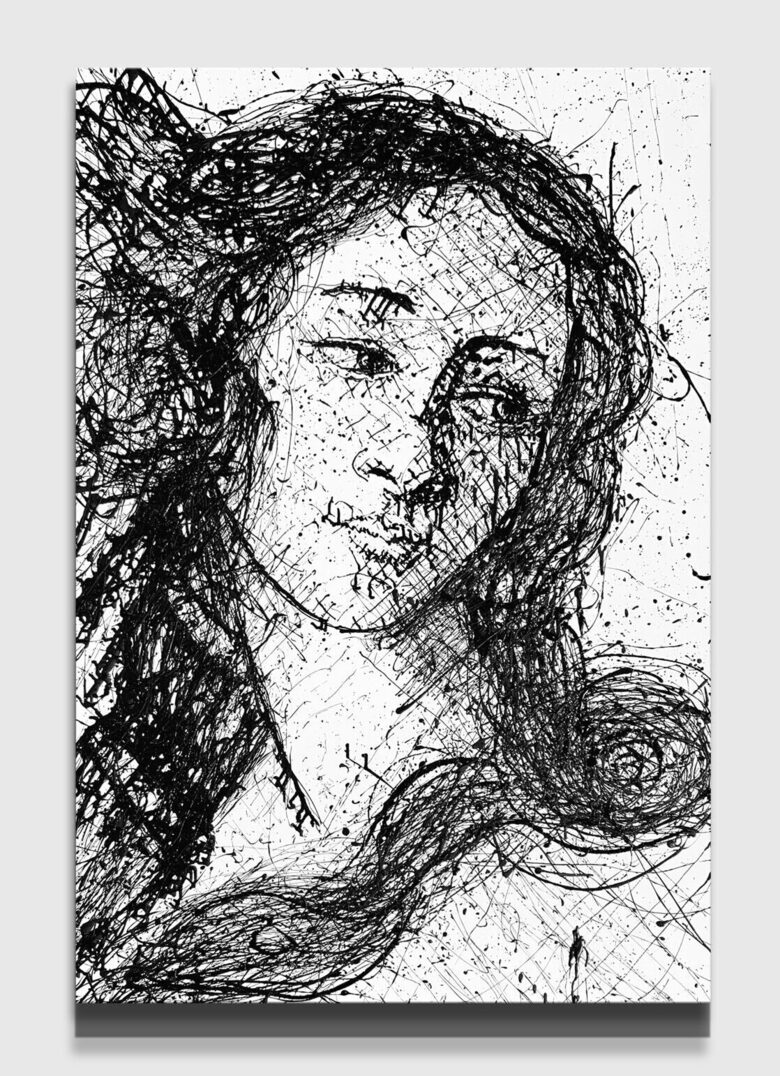
medium: oil on canvas,
size: 110x160 cm
year: 2022
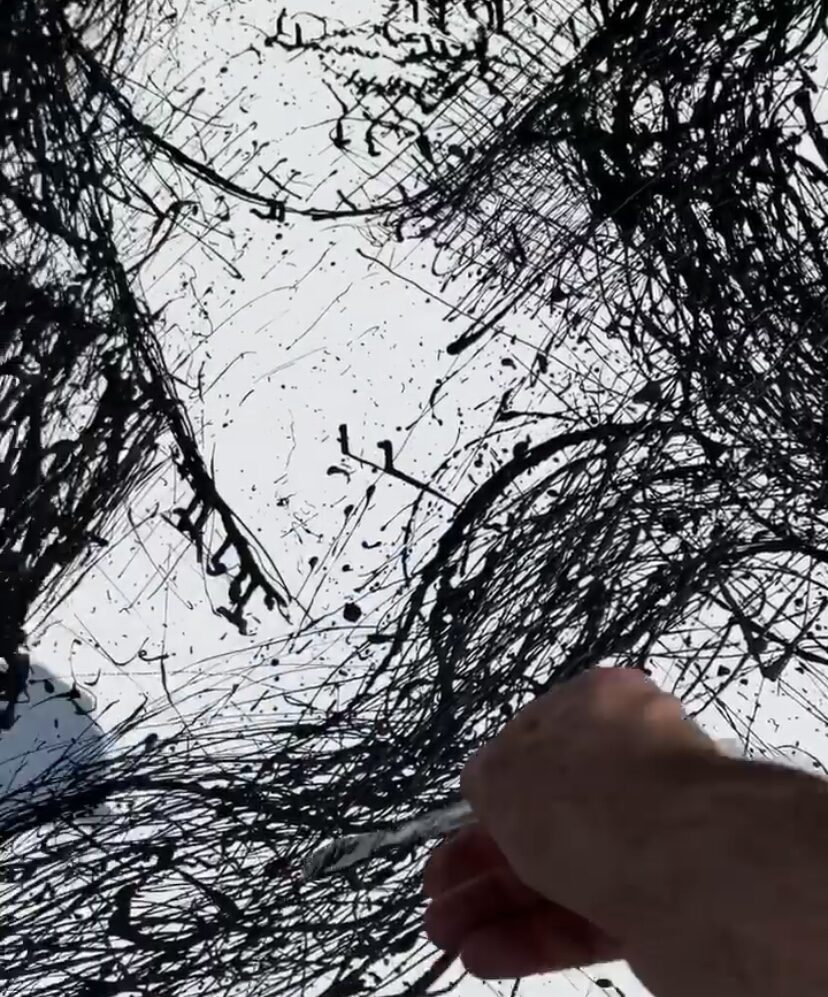
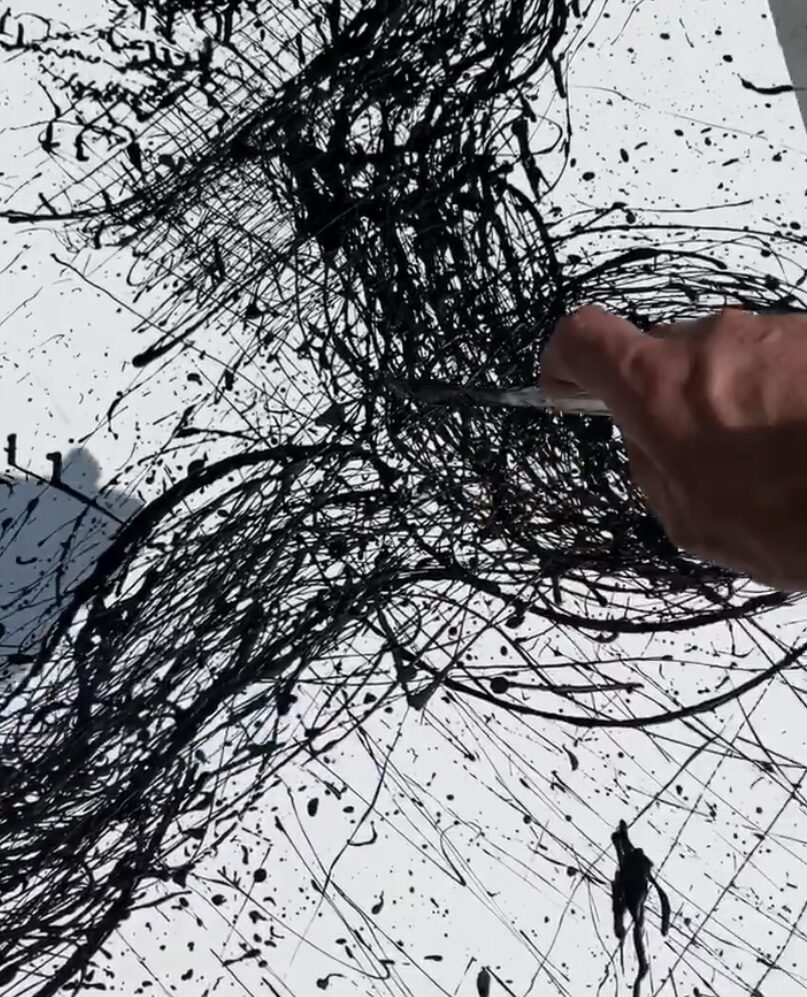
"What makes this painting unique is that there isn't a single brushstroke on it. On a warm summer day, I splattered black paint onto a white canvas laid flat on the ground. I used Pollock’s technique, but at the same time, I aimed for figurative representation."
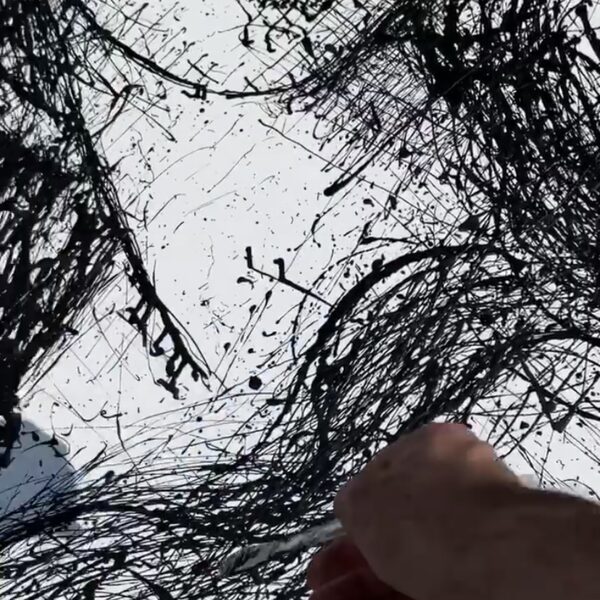
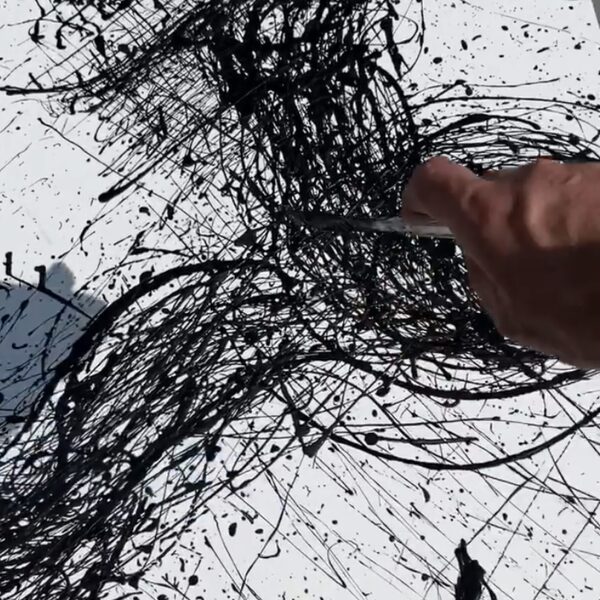

When I was drawing the frames of the porno-mosaic above, I never imagined I’d ever paint a reproduction—let alone Botticelli’s Birth of Venus, which actually served as the foundation for my piece titled Venushub. And yet, it was exactly that mosaic that created the opportunity. I was sitting in the gallery where the piece was hanging, reading Leonardo’s notebooks. I happened to reach the part where he advises his students that if they want to improve quickly, they should copy the works of great masters. A few minutes later, someone walked into the gallery—because from the street, the mosaic gave the impression of a classical artwork. That impression was only amplified by the old frame it was displayed in, and the visitor was looking for something in that vein. Of course, up close, the difference was obvious. But we started talking, and at one point he told me that he collects classical pieces—but there are works that are clearly not for sale, and for those, he’s looking for an artist who can paint them in perfect detail, at museum quality. Then he asked me if I knew such an artist. I said that if he had asked me a little earlier, I probably would’ve said no—but now, having just read Leonardo’s advice, I felt I could be that person. Vermeer’s Girl with a Pearl Earring was my first reproduction—I worked on it for a year and a half. After that, I began the Venus, in the original 300 × 170 cm size. I started the painting in 2019 in Hungary, and when the pandemic began in 2021, it was transported to Vienna, where I later completed the gilding. I finally finished it in 2023, in a workshop near the Albertina, where many of the museum’s own paintings are also framed. I don’t know the exact number of working hours, but I spent at least a year and a half on it. You can see the full process in the YouTube video below.