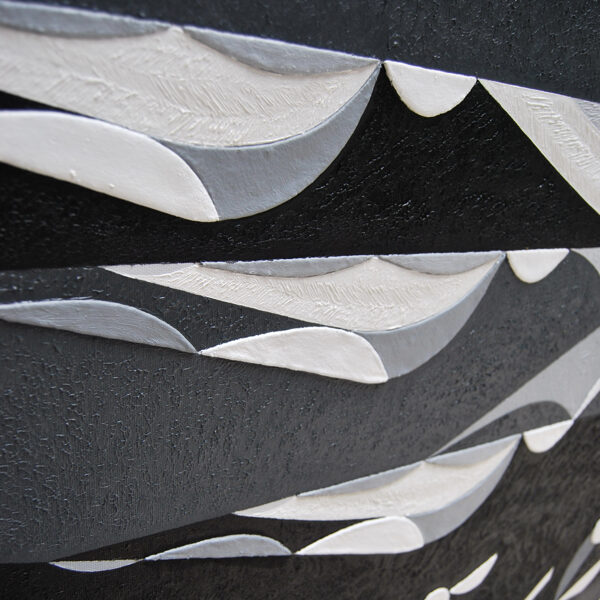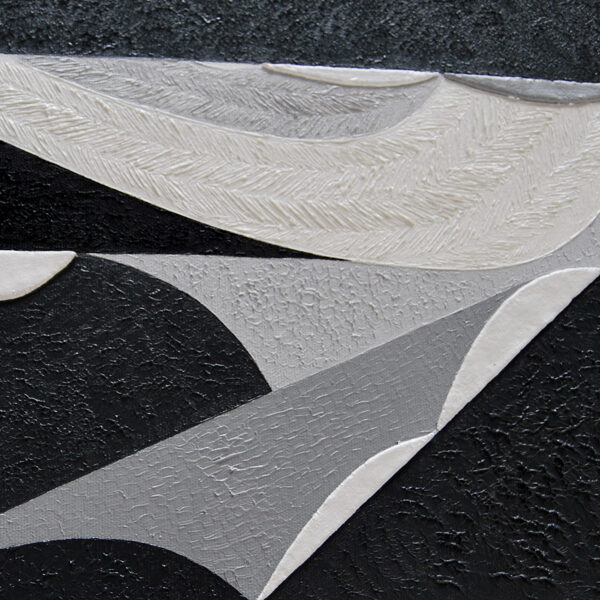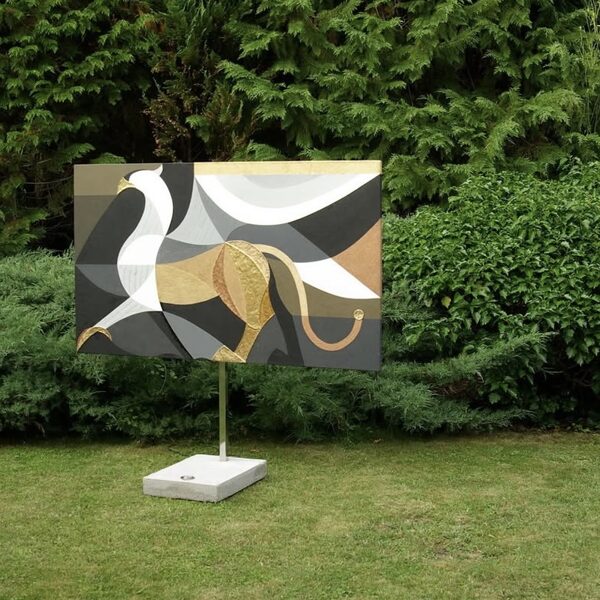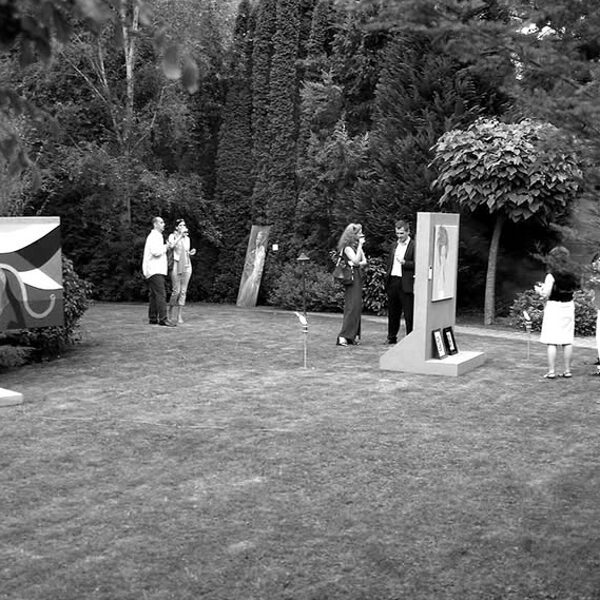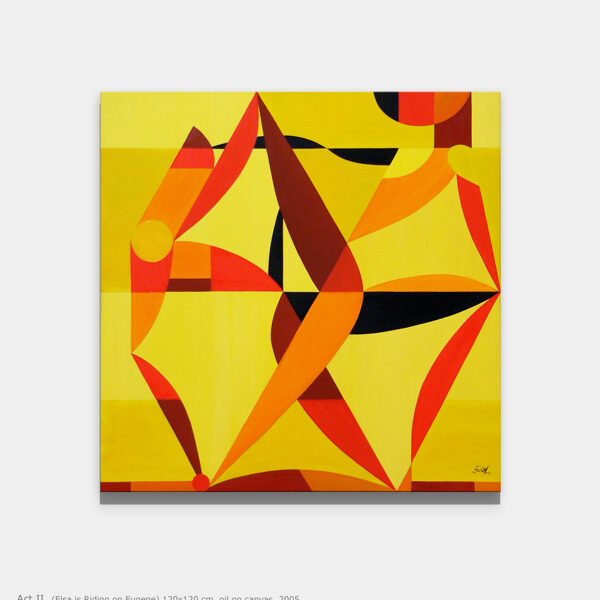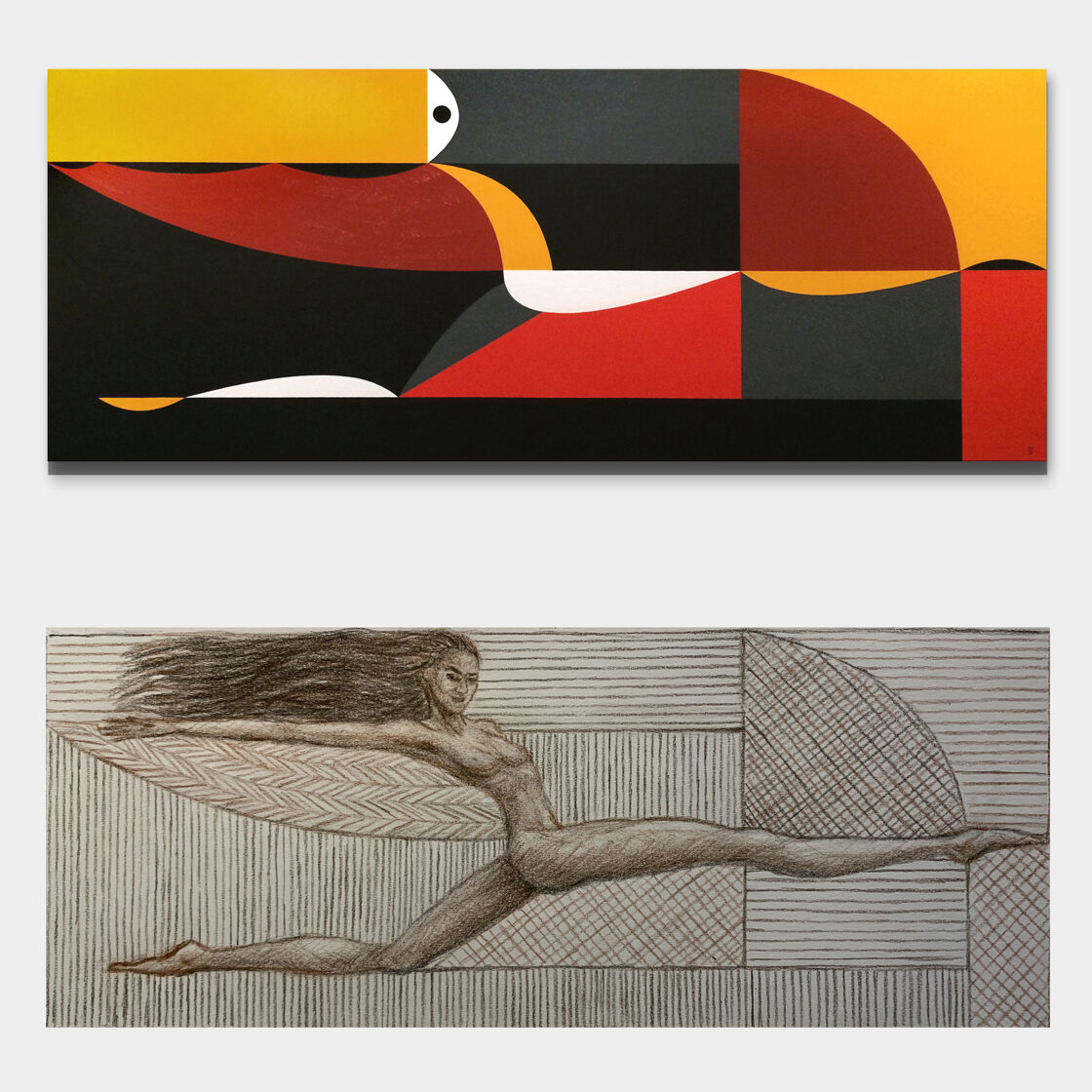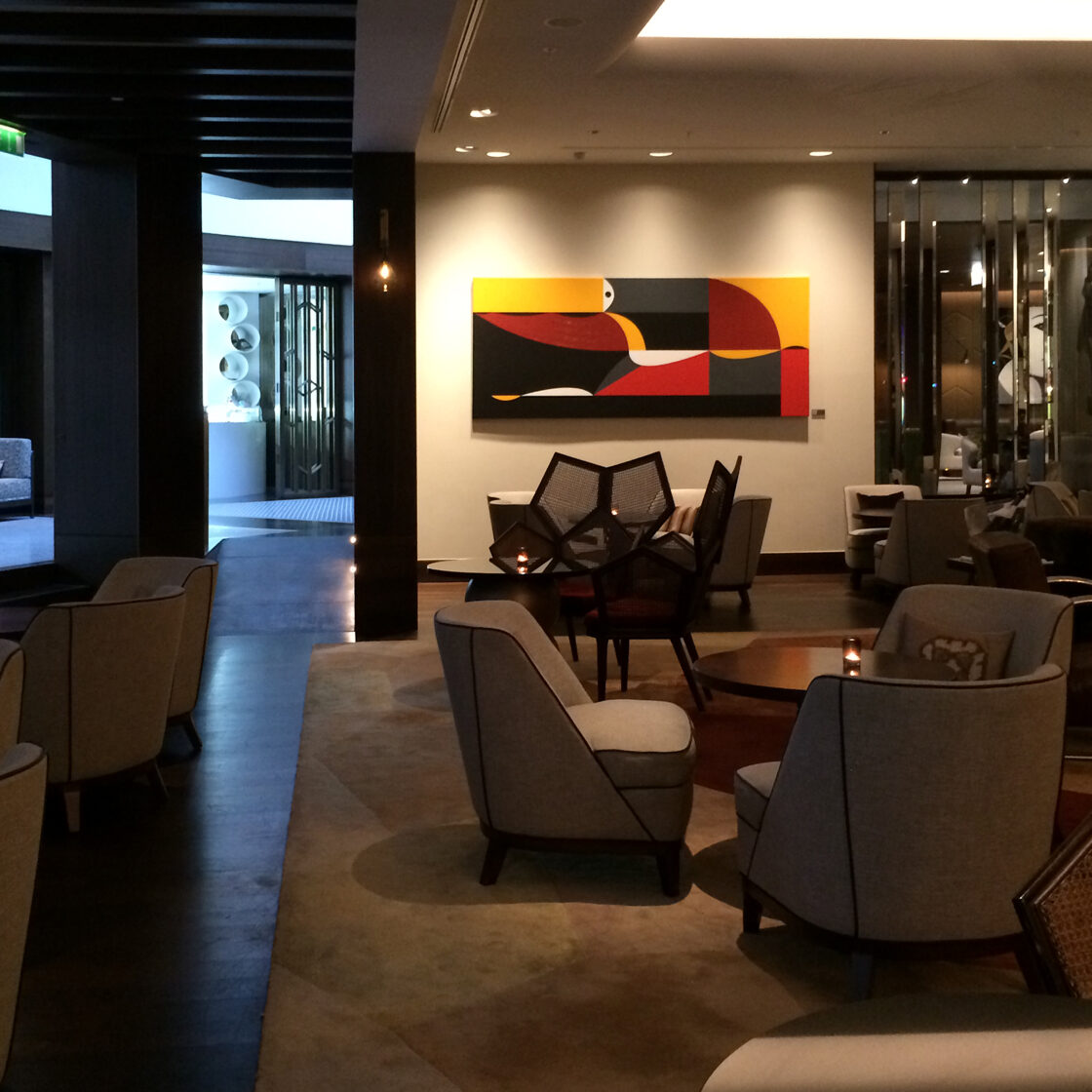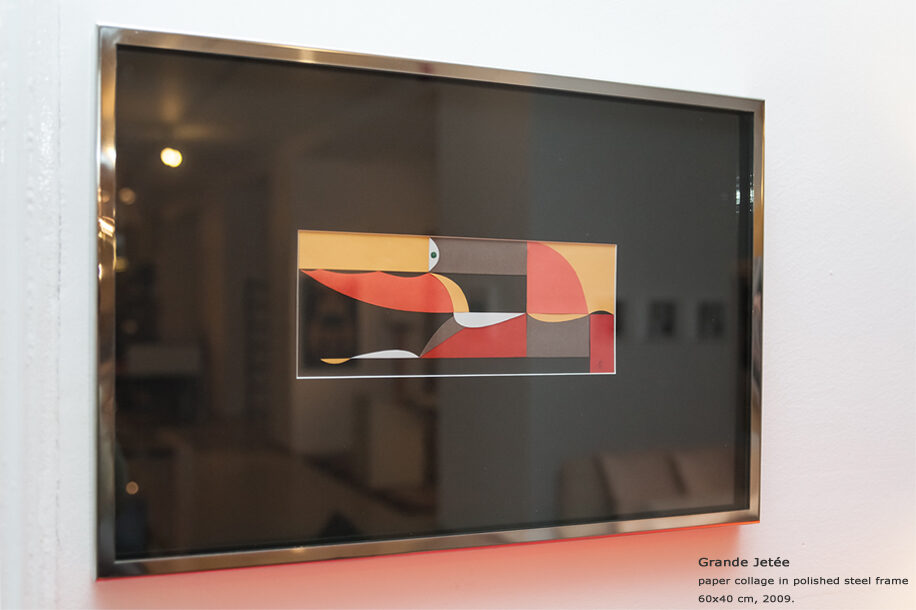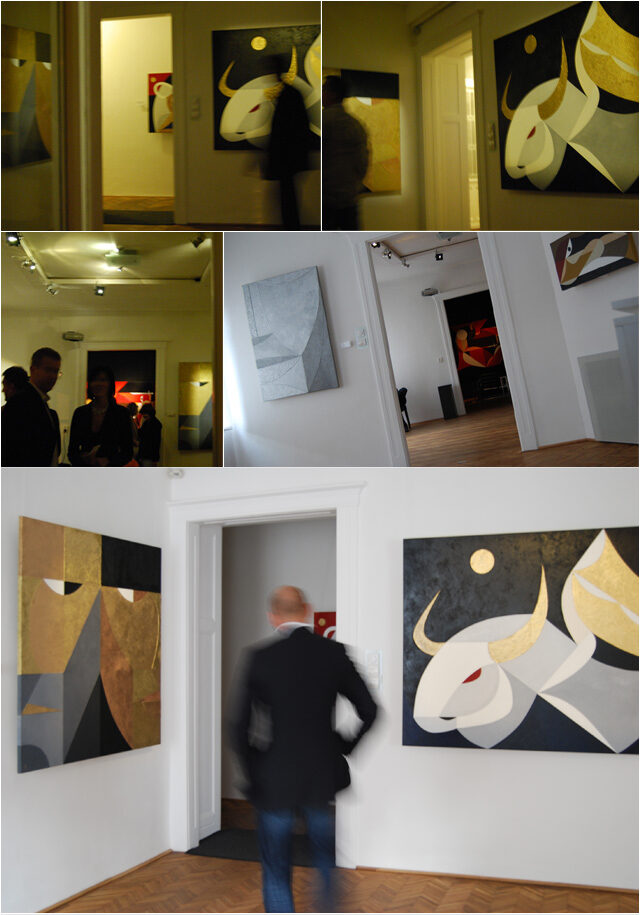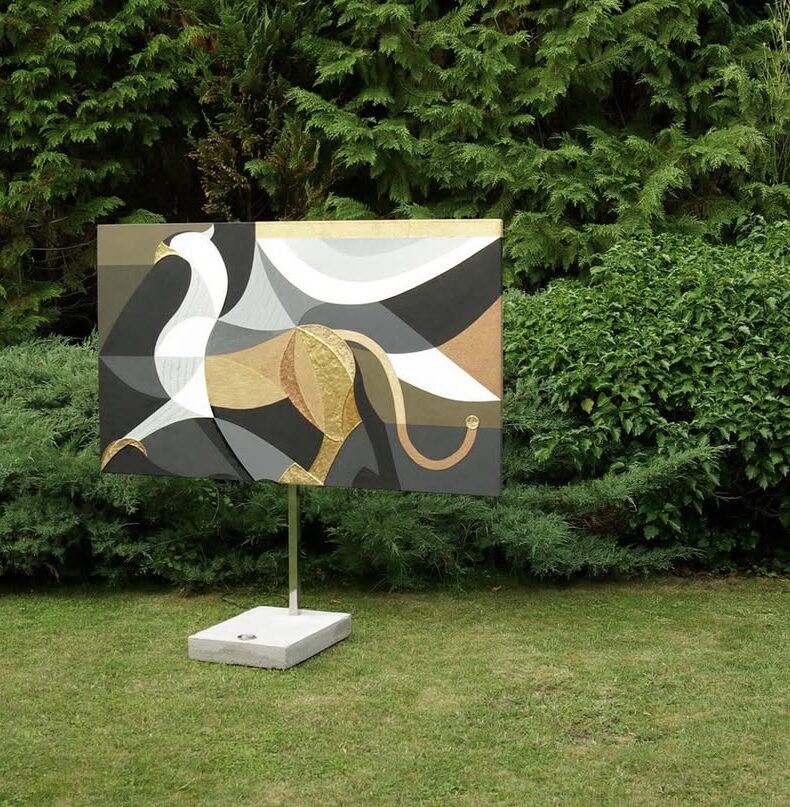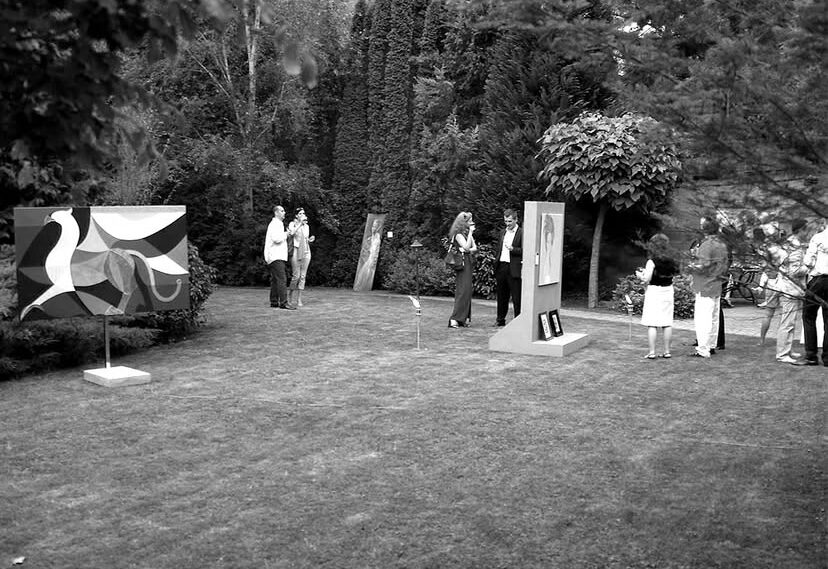
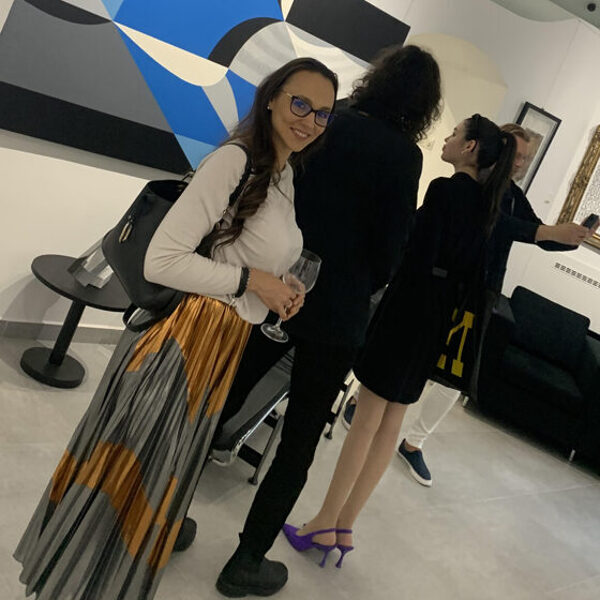
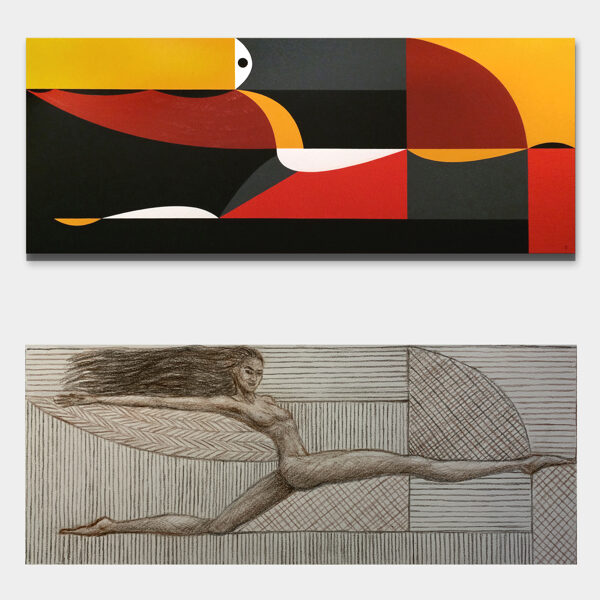
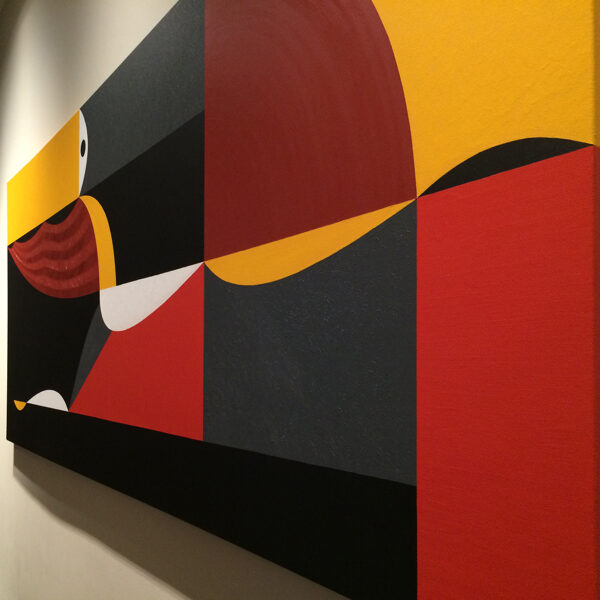
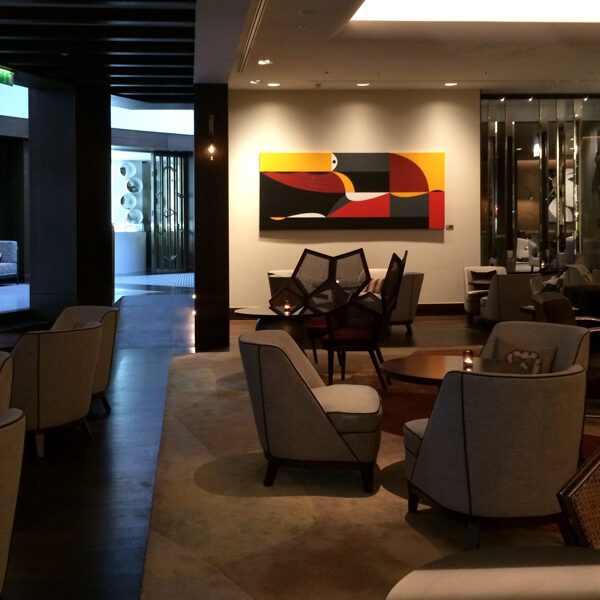
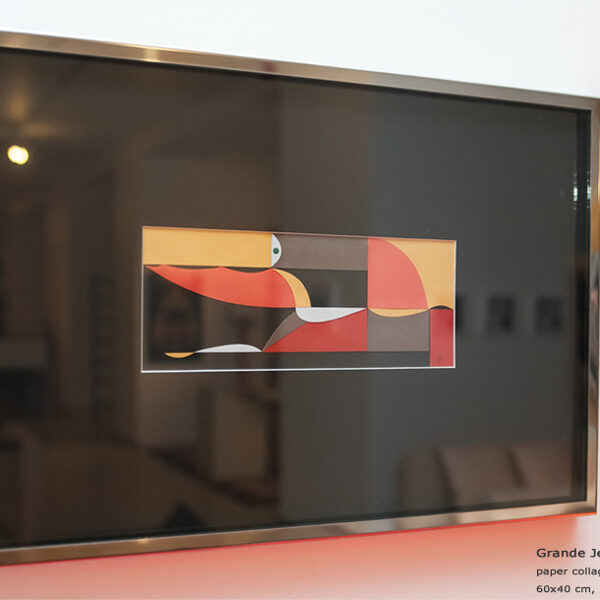
Auction at the Hungarian State Opera, organized by the National Ballet Institute, in 2009.
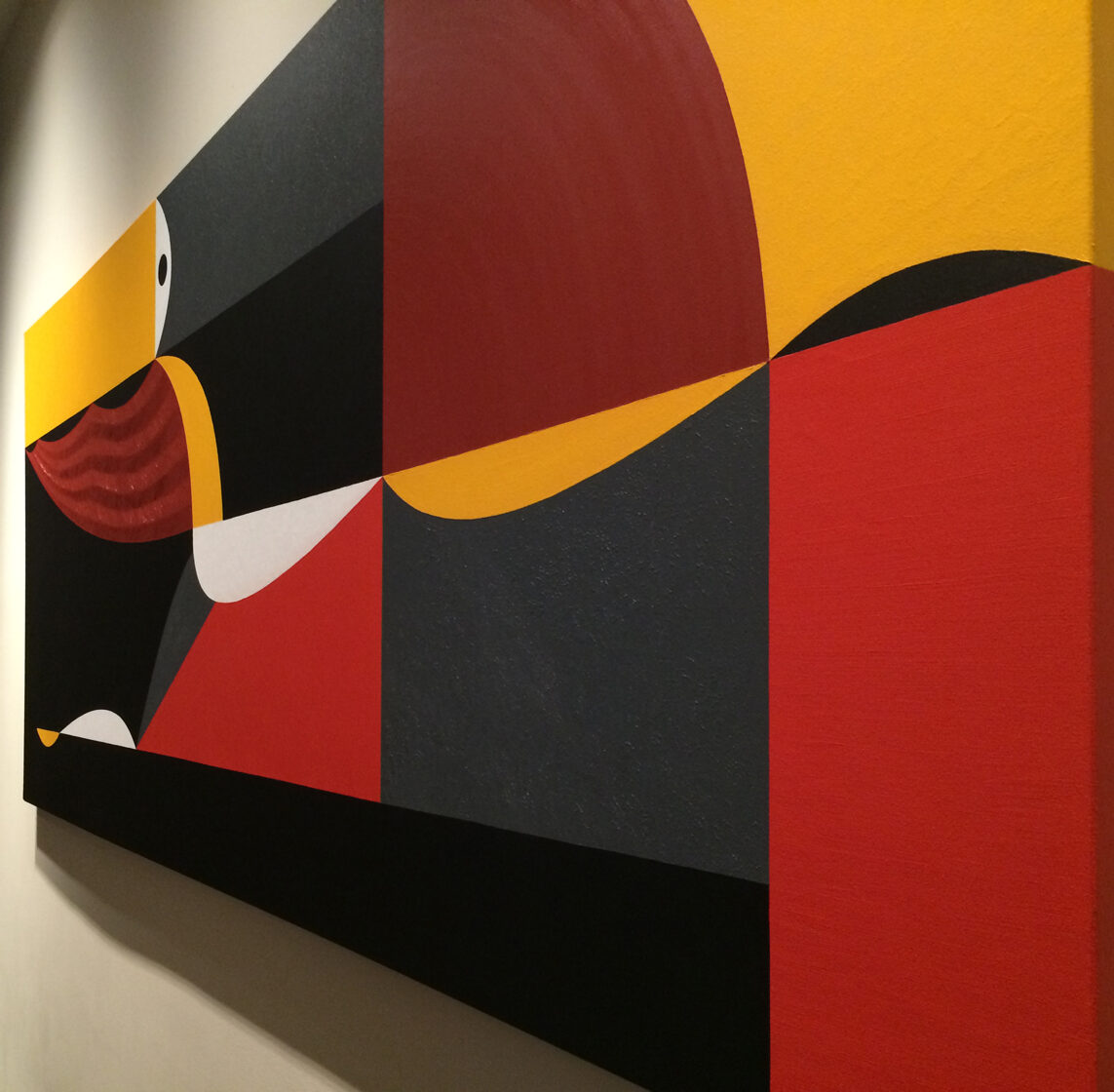
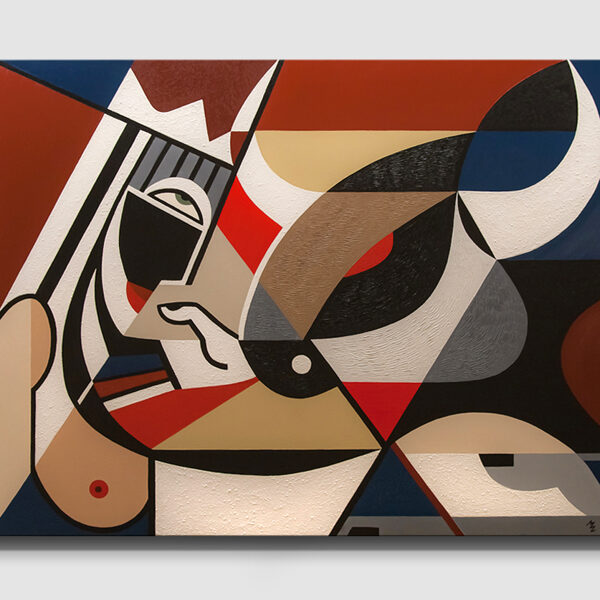
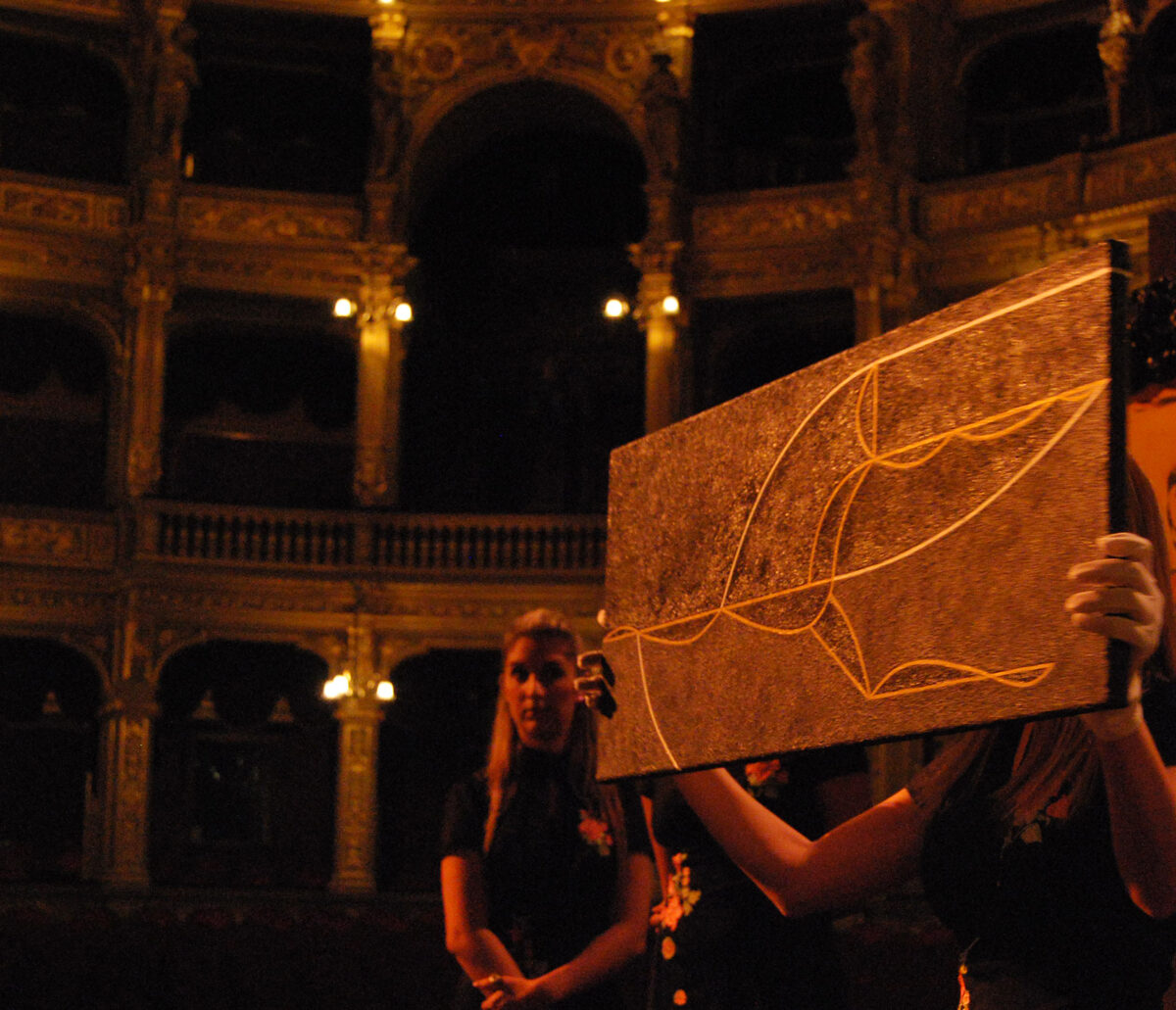 title: Grande Jetée Conture (ballet dancer series)
medium: oil, gold on plastered canvas
size: 100x44 cm
year: 2009
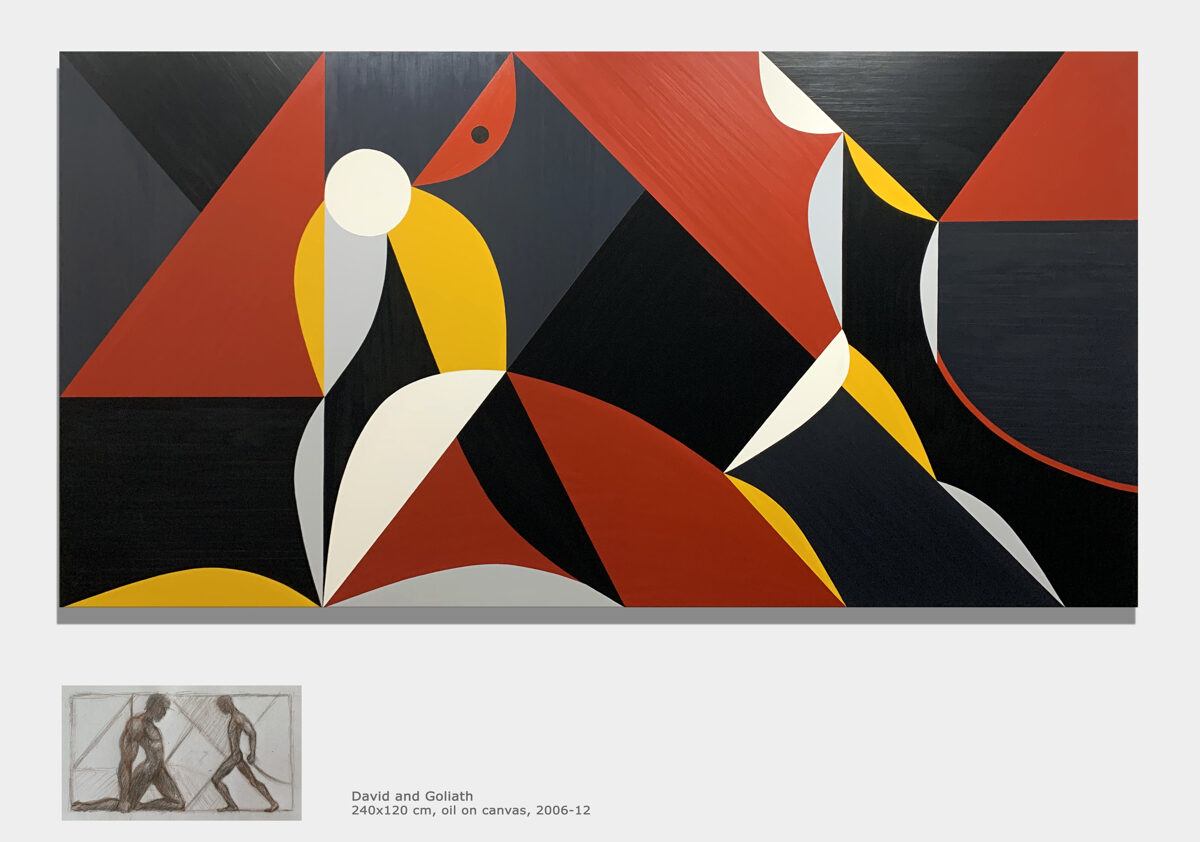
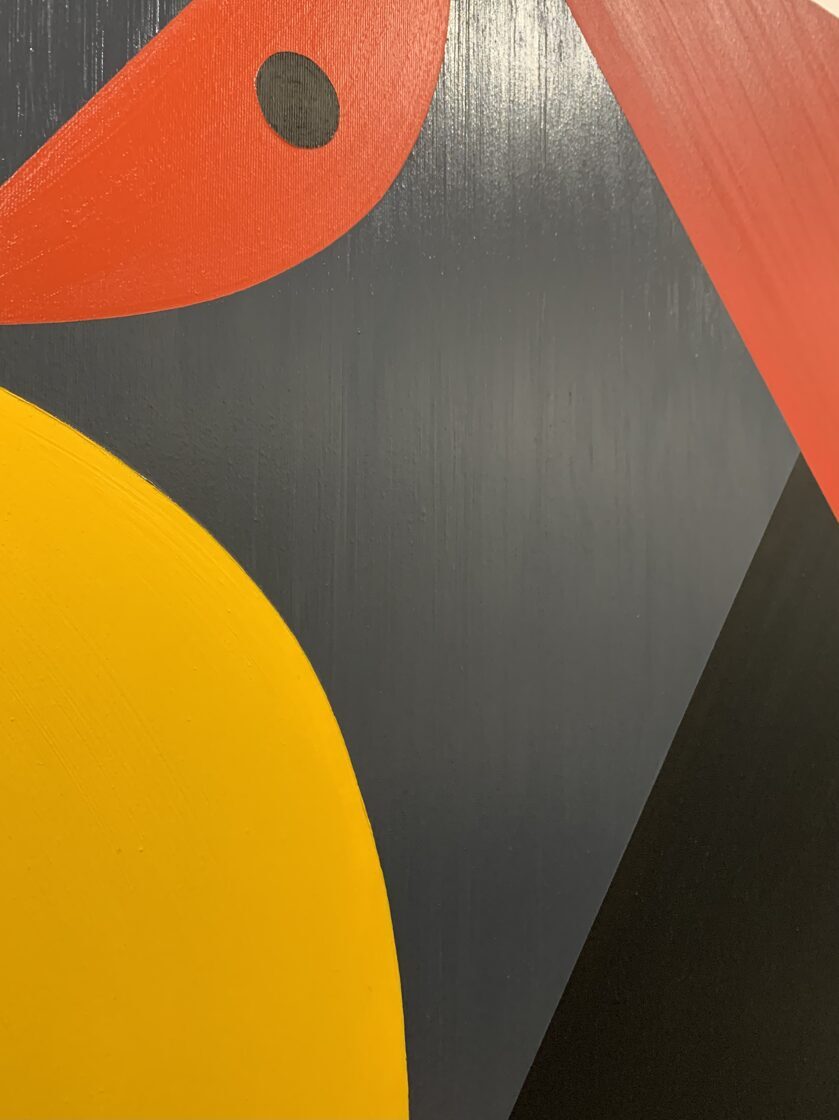
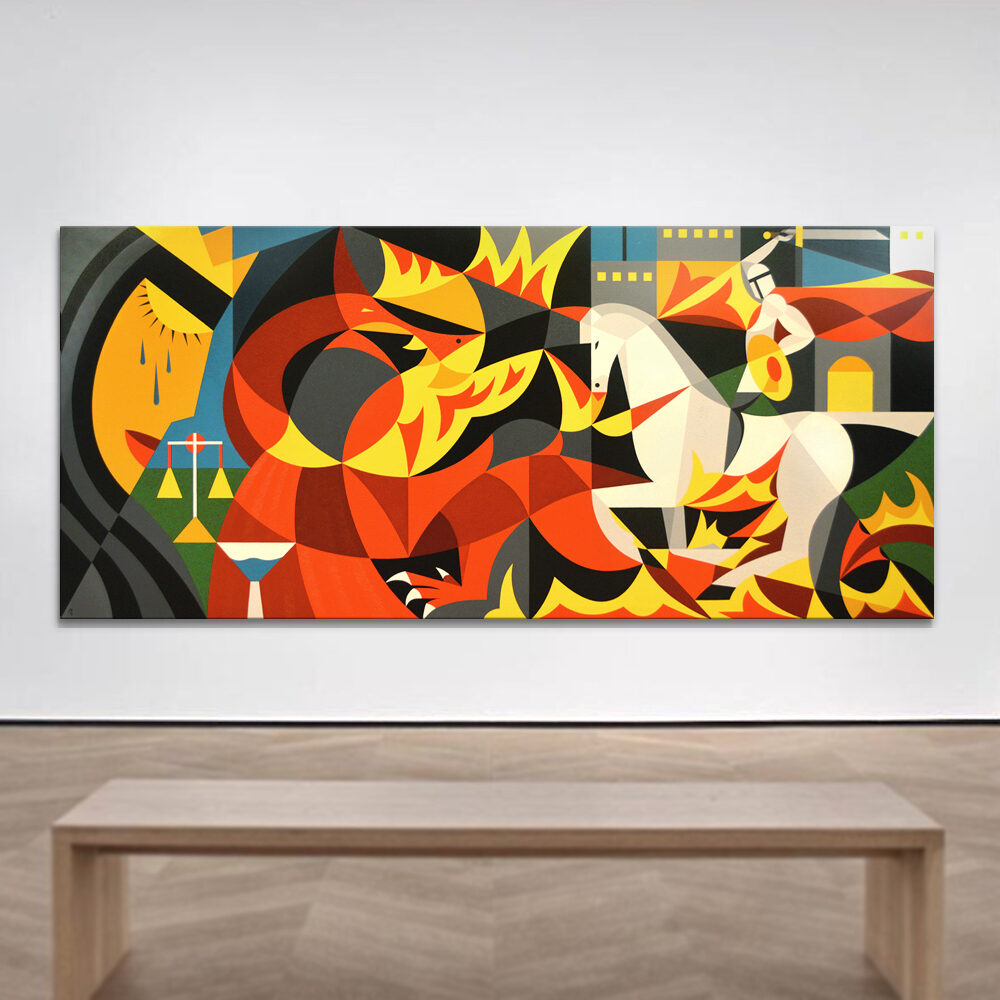
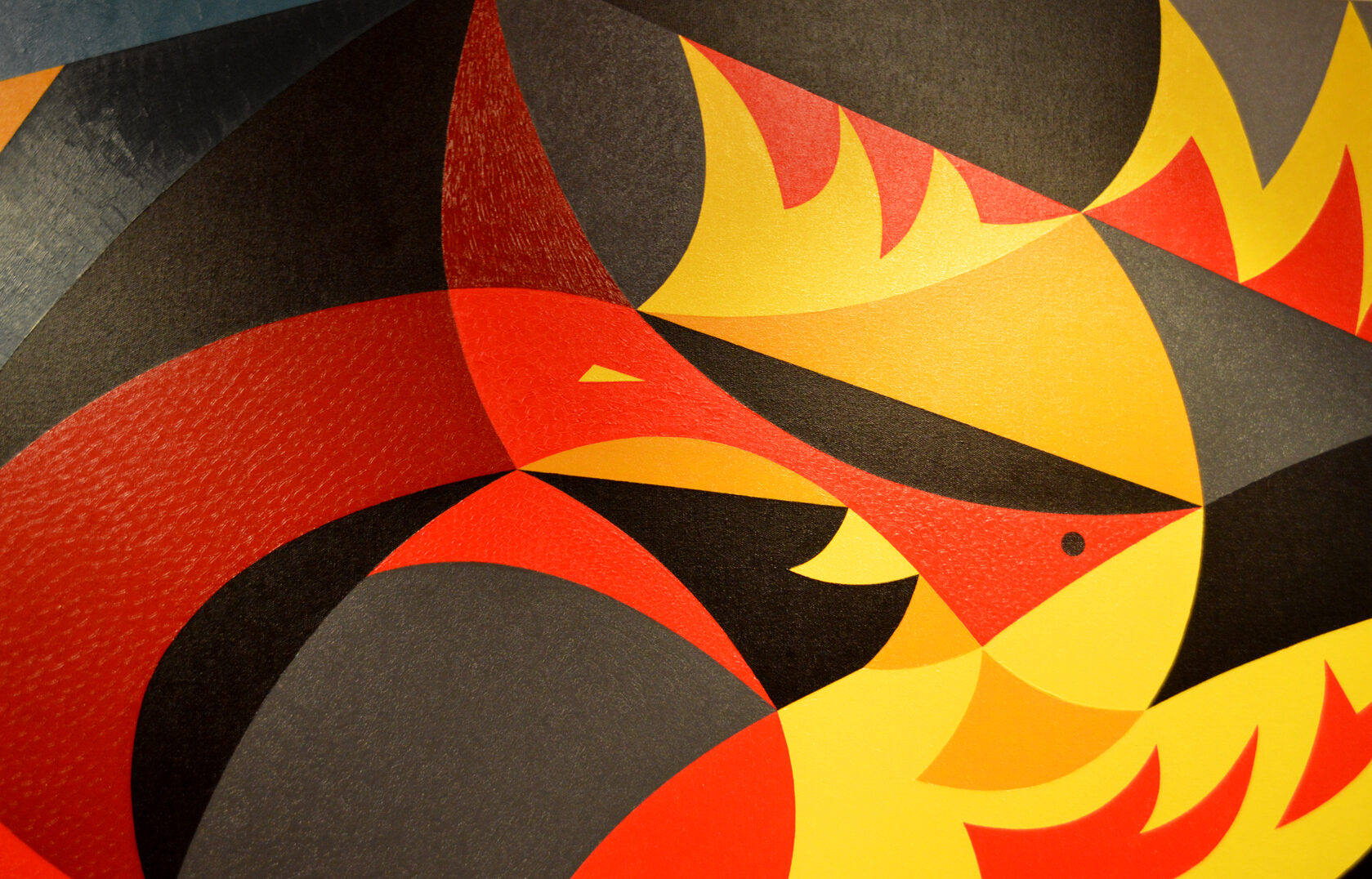
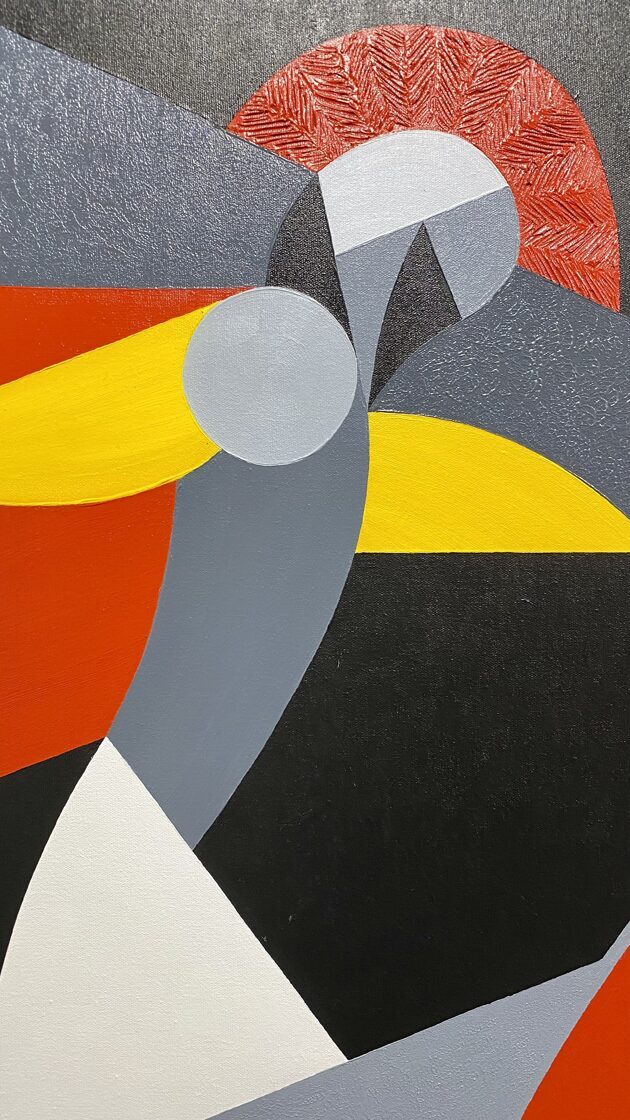
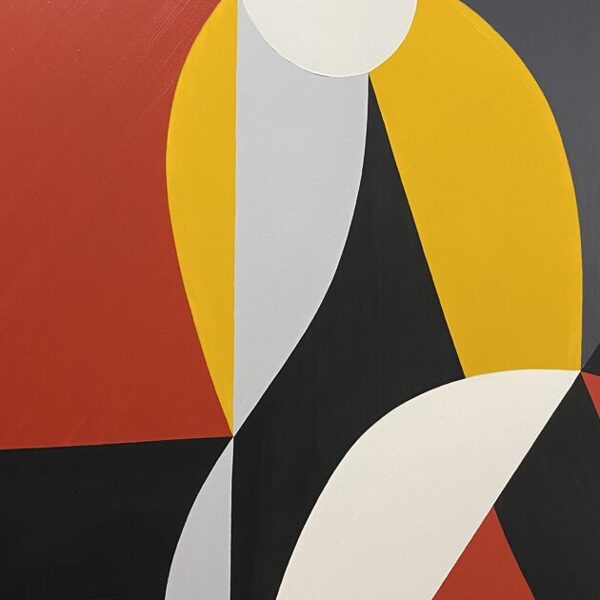
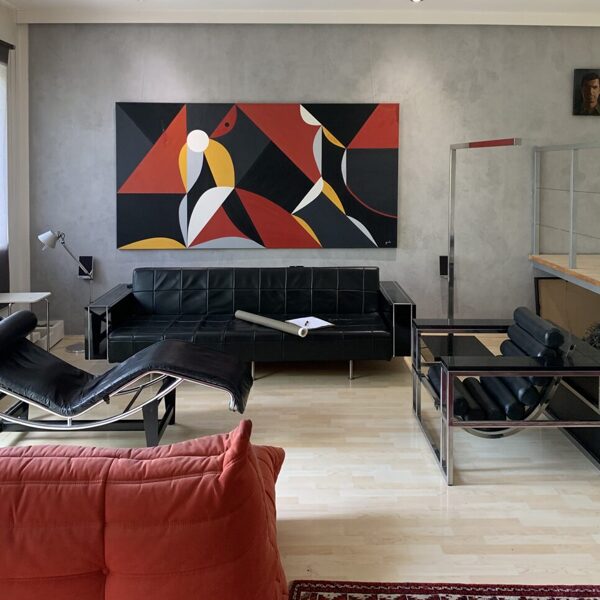
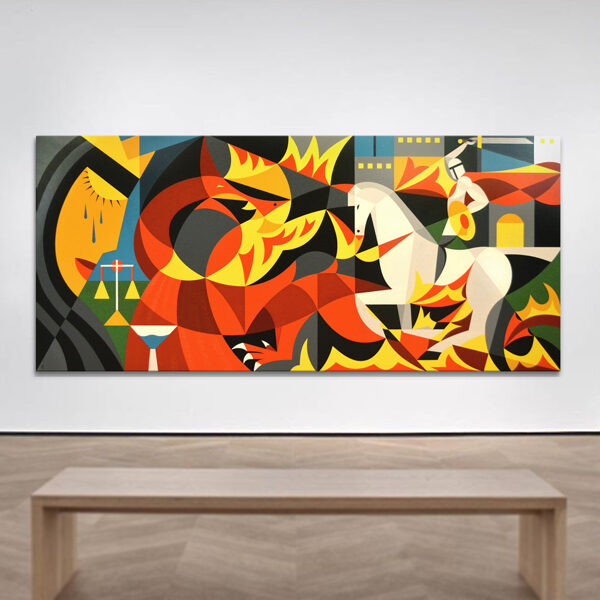
This painting depicts David’s victory over the colossus, though the well-known story is presented here in an unusual interpretation. In ancient myths, touching the forehead symbolized the awakening of deeper thought and the activation of the third, inner eye. In the painting, the small black circle on Goliath’s forehead represents the stone — appearing as a large, open red eye.In this reading, the struggle has no loser: whoever reaches the opening of the third eye through such an encounter is elevated to the level of the victor. Goliath, kneeling, has his head perfectly aligned with David’s — whose gesture no longer expresses aggression, but rather resembles that of a king knighting the one who kneels before him.
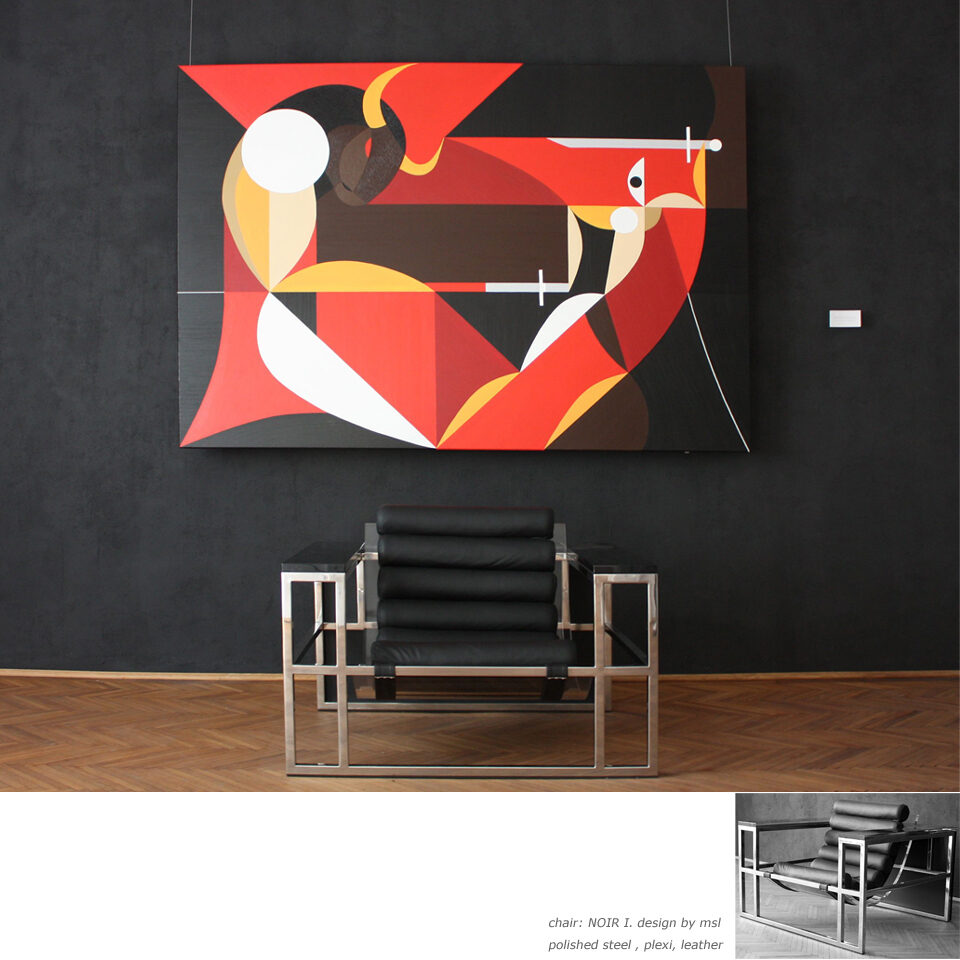
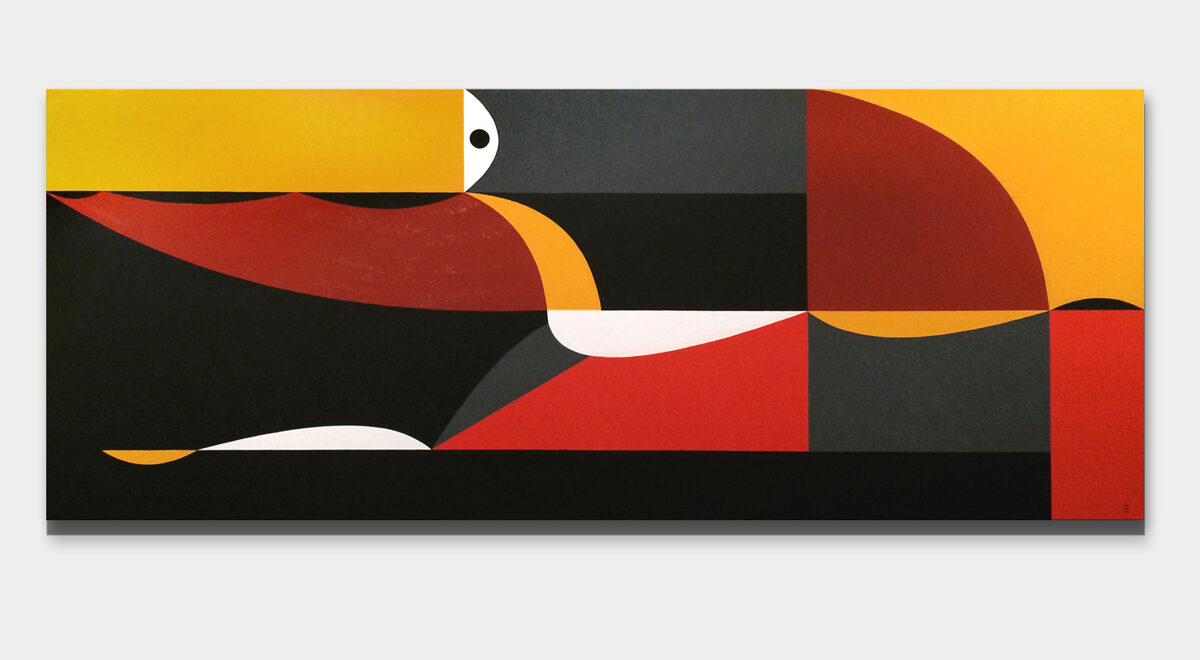 title: Grande Jetée Rouge (ballet dancer series)title: Grande Jetée Conture (ballet dancer series)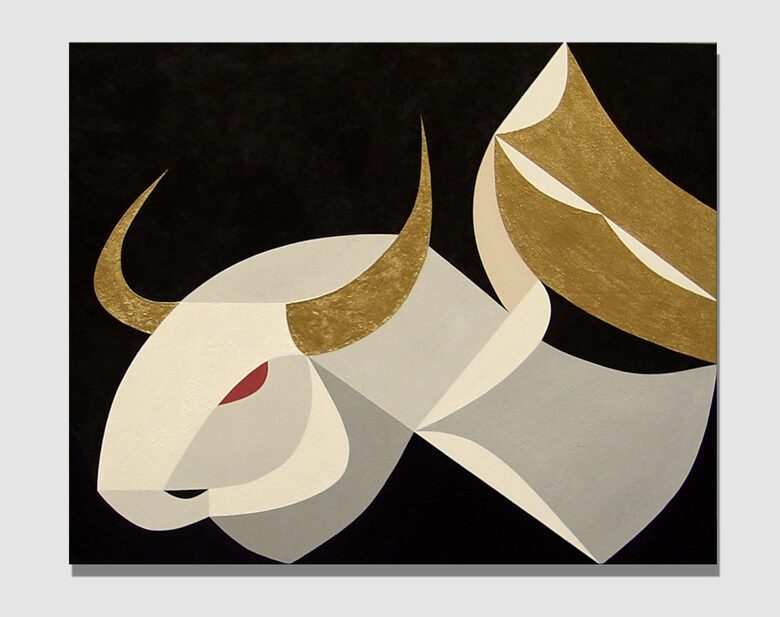
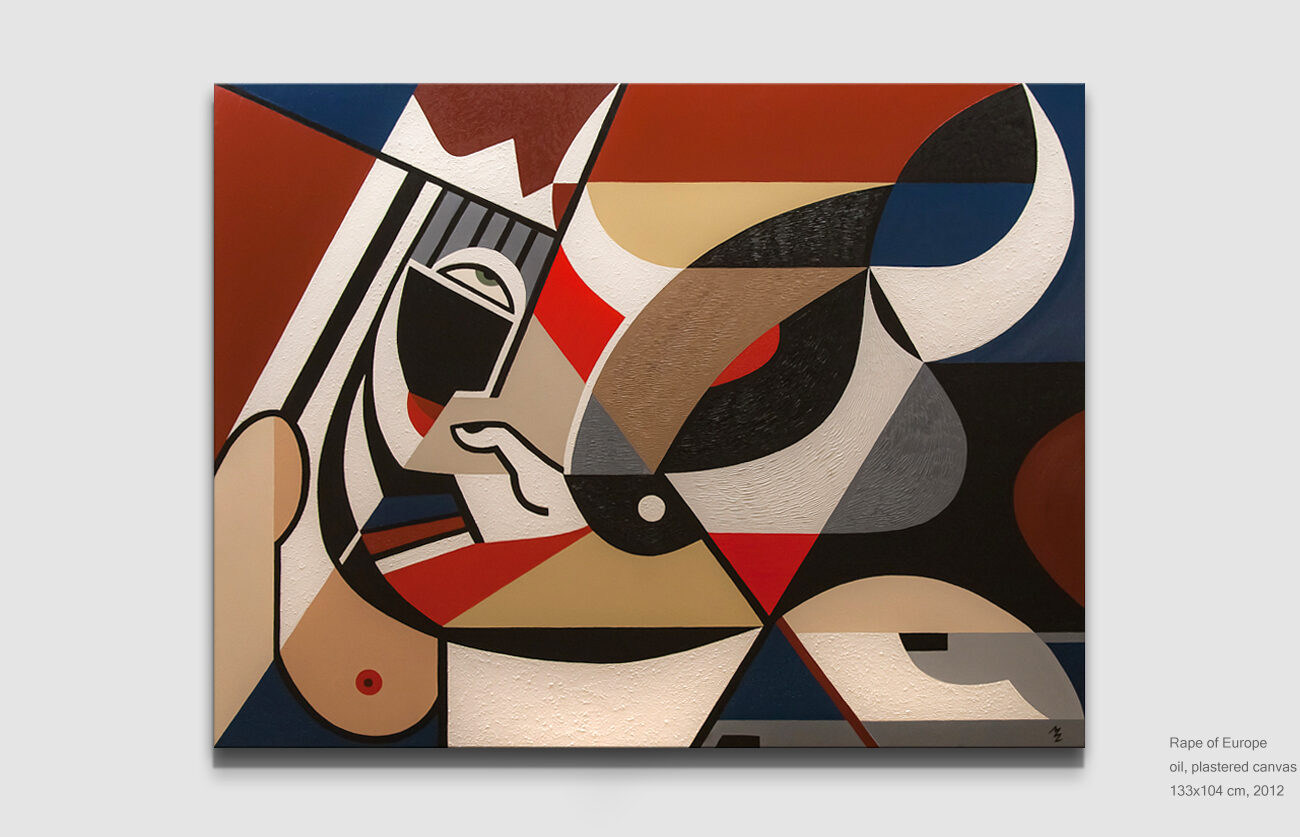
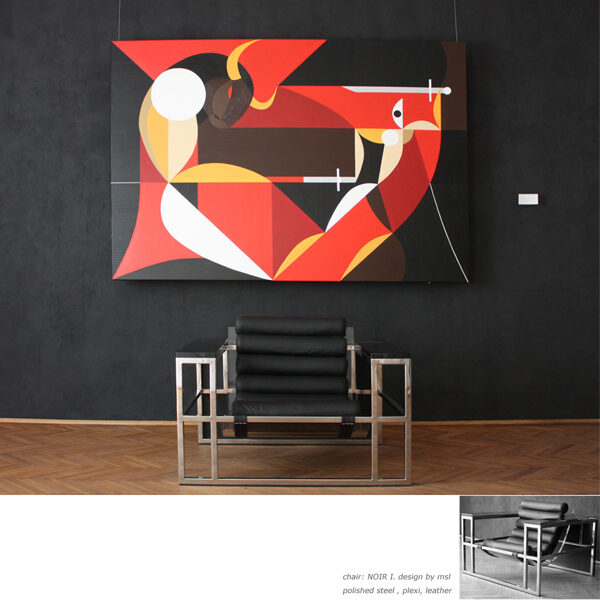
title: Rape of Europe
medium: oil on canvas
size: 170x140 cm
year: 2007
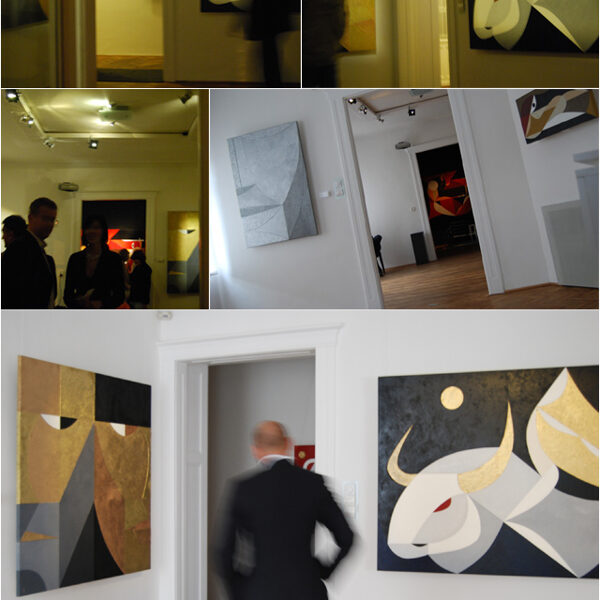
Zeus saw Europa on the seashore and fell in love with her. To avoid frightening the girl, he took the shape of a beautiful, gentle white bull and approached her. Europa stroked the bull and eventually climbed onto its back. At that moment, Zeus plunged into the sea with her and carried her to the island of Crete.There, he revealed his true identity, and Europa became his lover. Later, she bore him three sons, including Minos, the legendary king of Crete. The composition captures the moment when the bull moves through the sea toward Crete, carrying the golden-haired girl on his back, her arm extended in a gesture of quiet surrender.
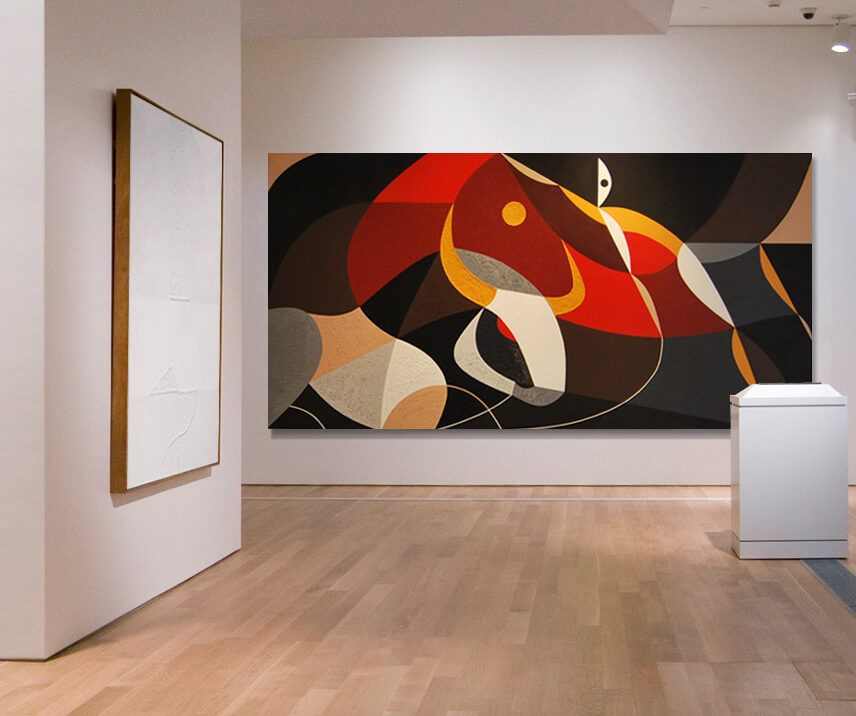
/this painting is in the collection of Deuche Telekom/
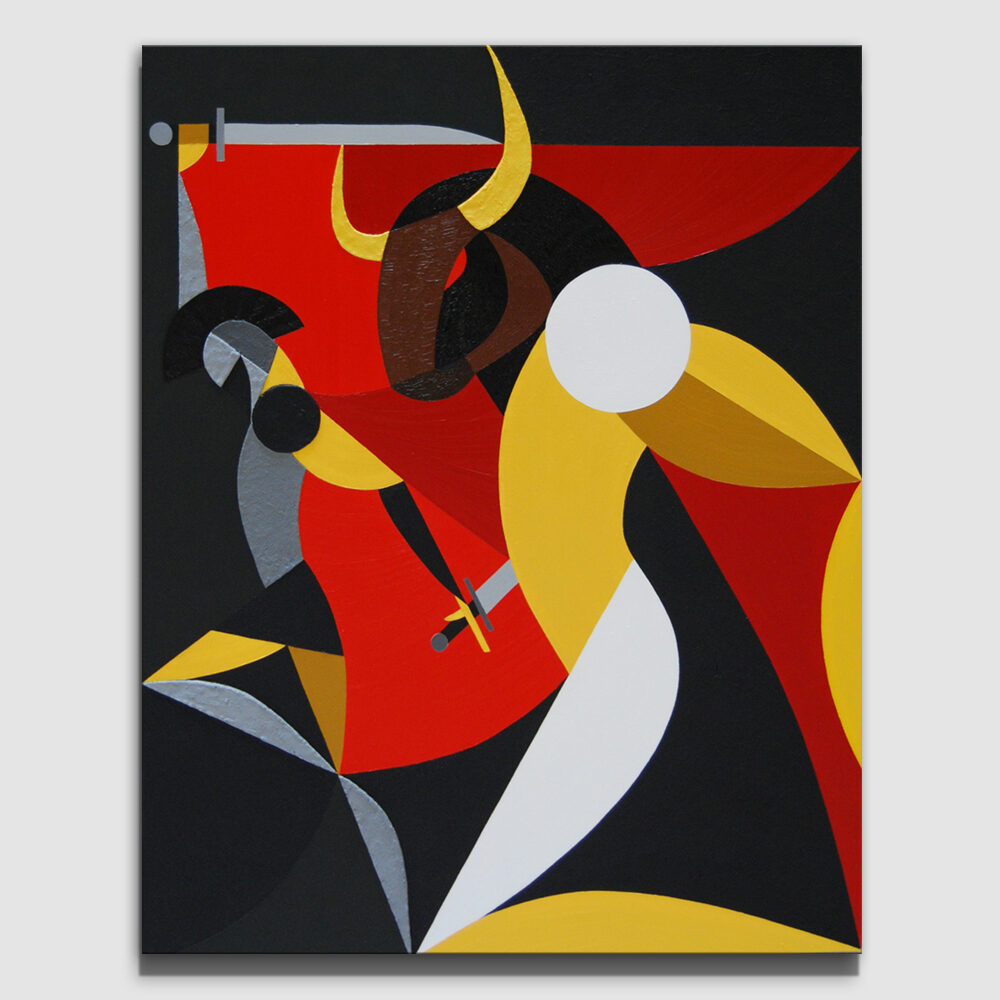
Jumping the bull was a popular pastime in Crete, where young girls prepared all their lives for these extraordinary events. They easily leapover the running bull while performing all kinds of acrobatics. The bull has always been a symbol of beastly instincts, so the bullfights of today represent man's victory over the animal. However during the sacred celebrations in Crete bulls survived, that's why I think these were the most elegant and humane forms of man overcoming beasts in history
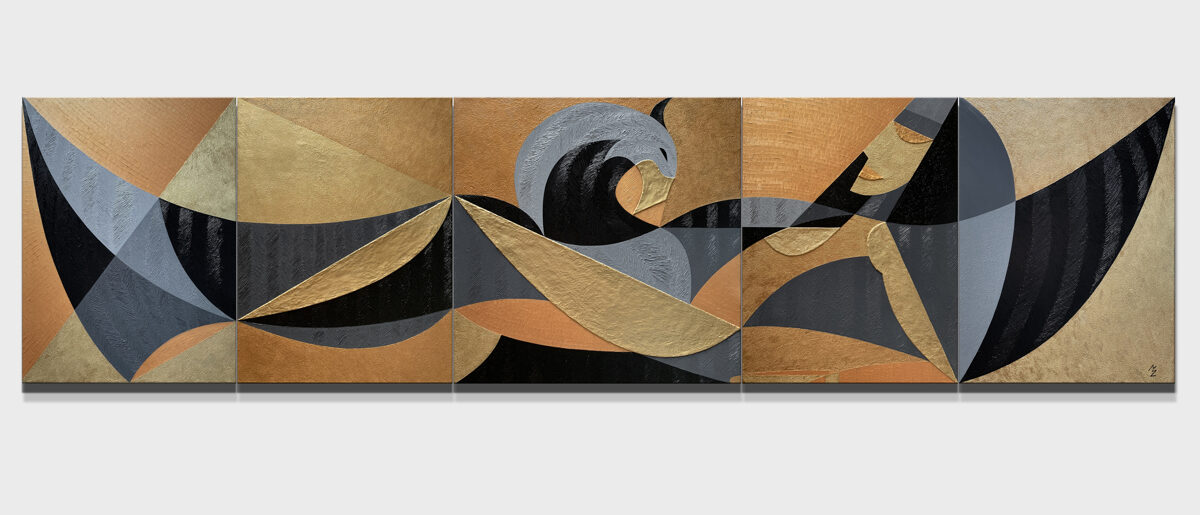
Tttle: Dream of Emese
medium: plastered canvas, oil, gold
size: 350x80 cm (80x80+4x67x80)
year 2014
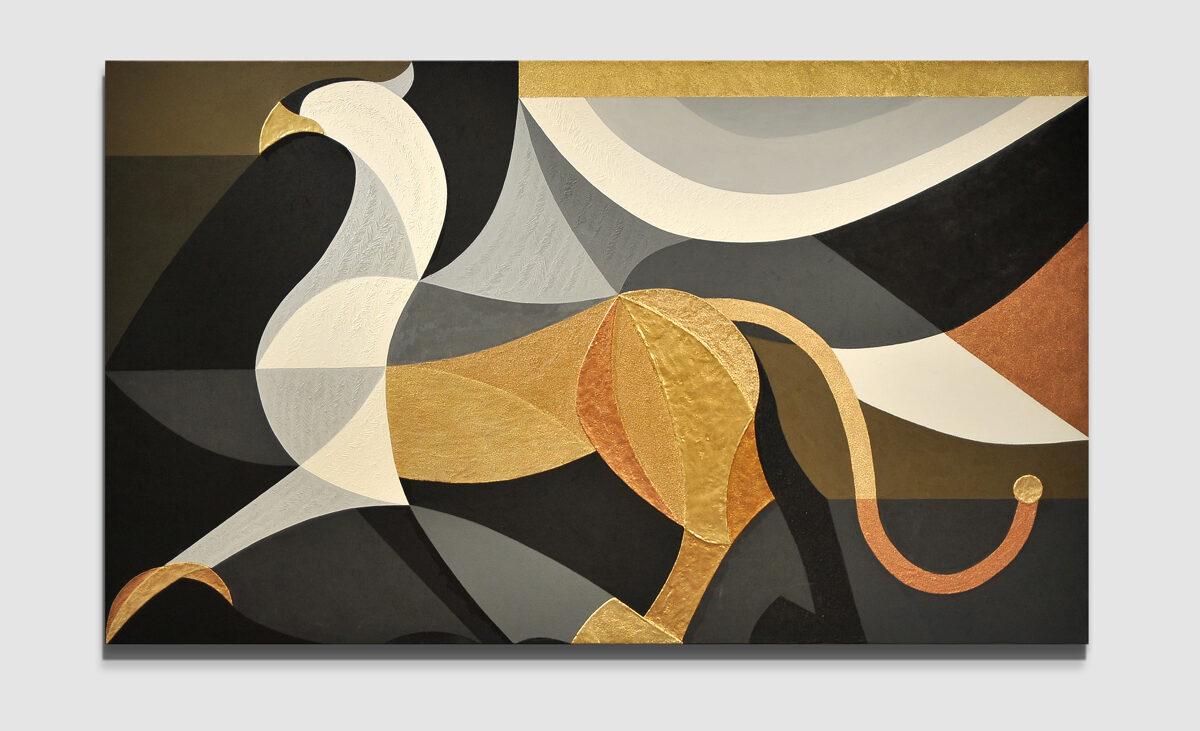
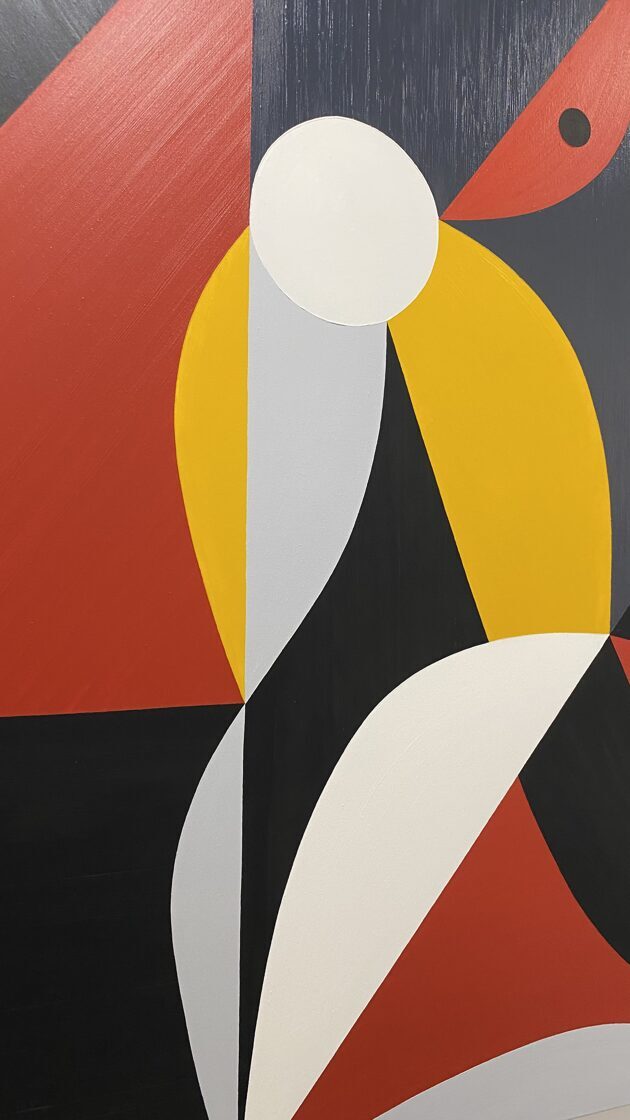
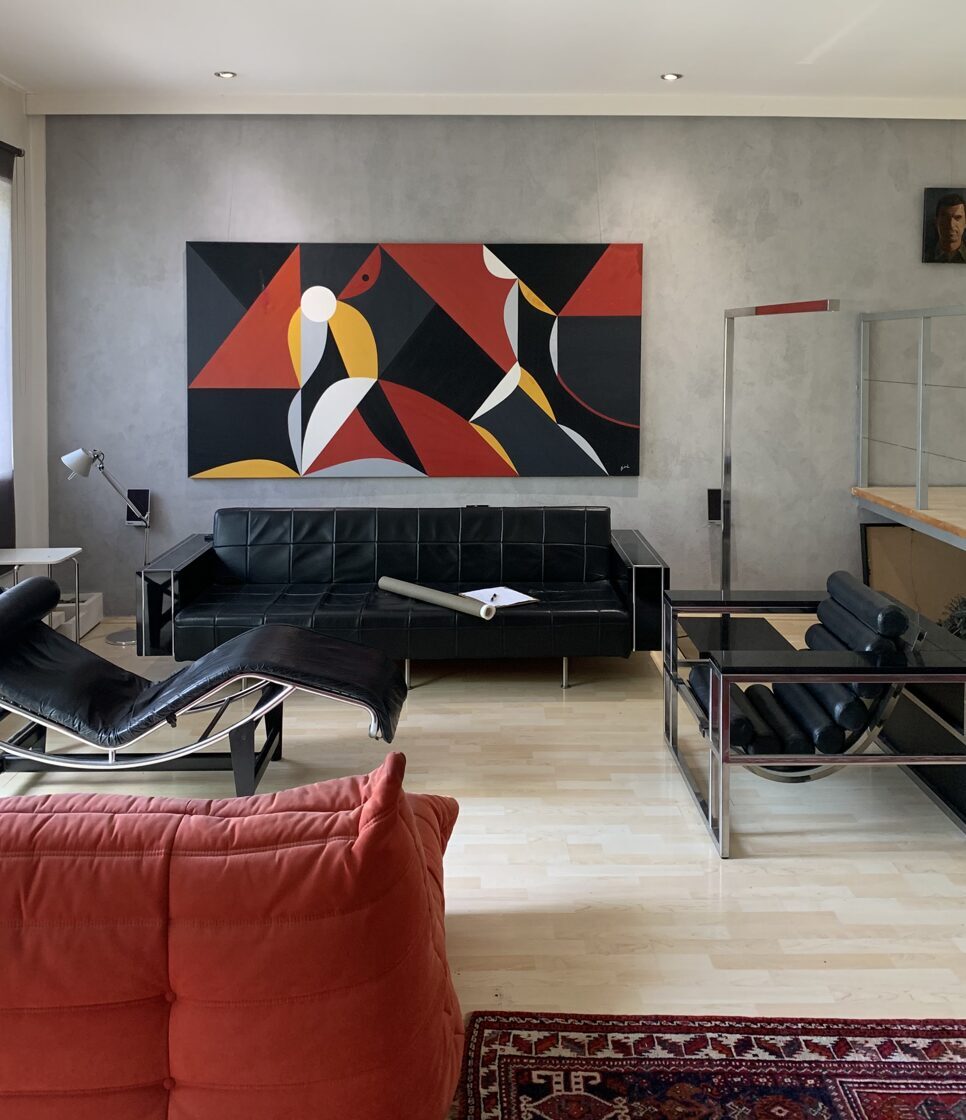
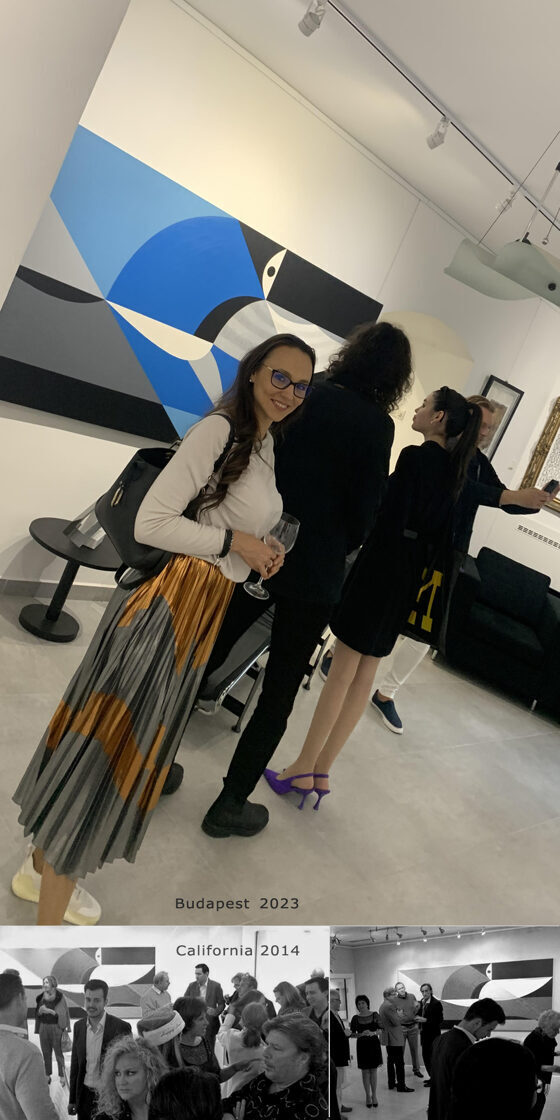
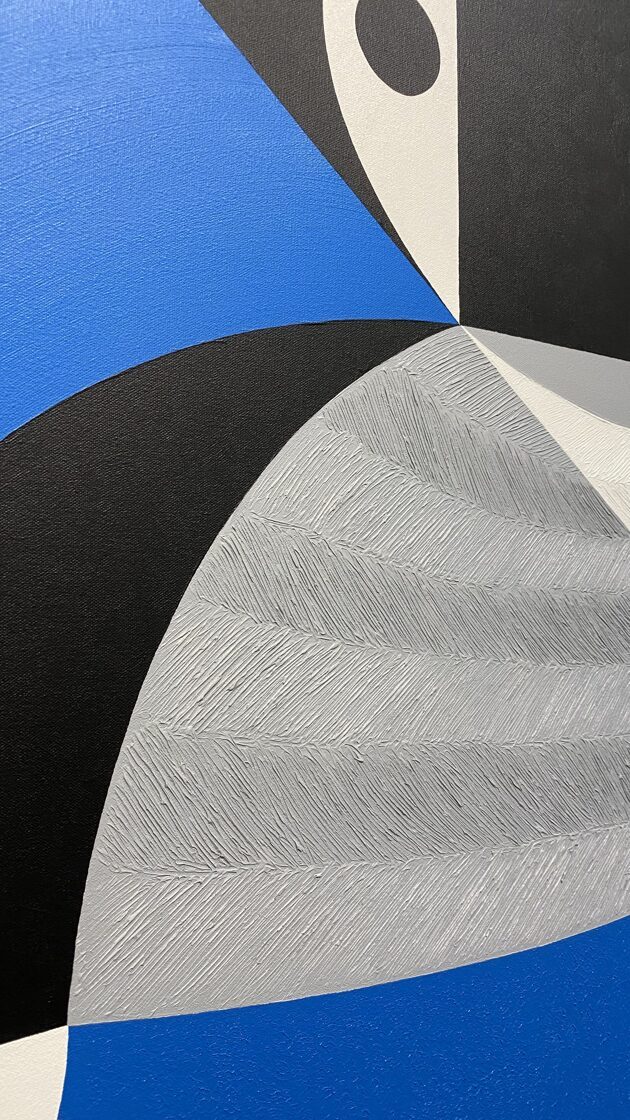
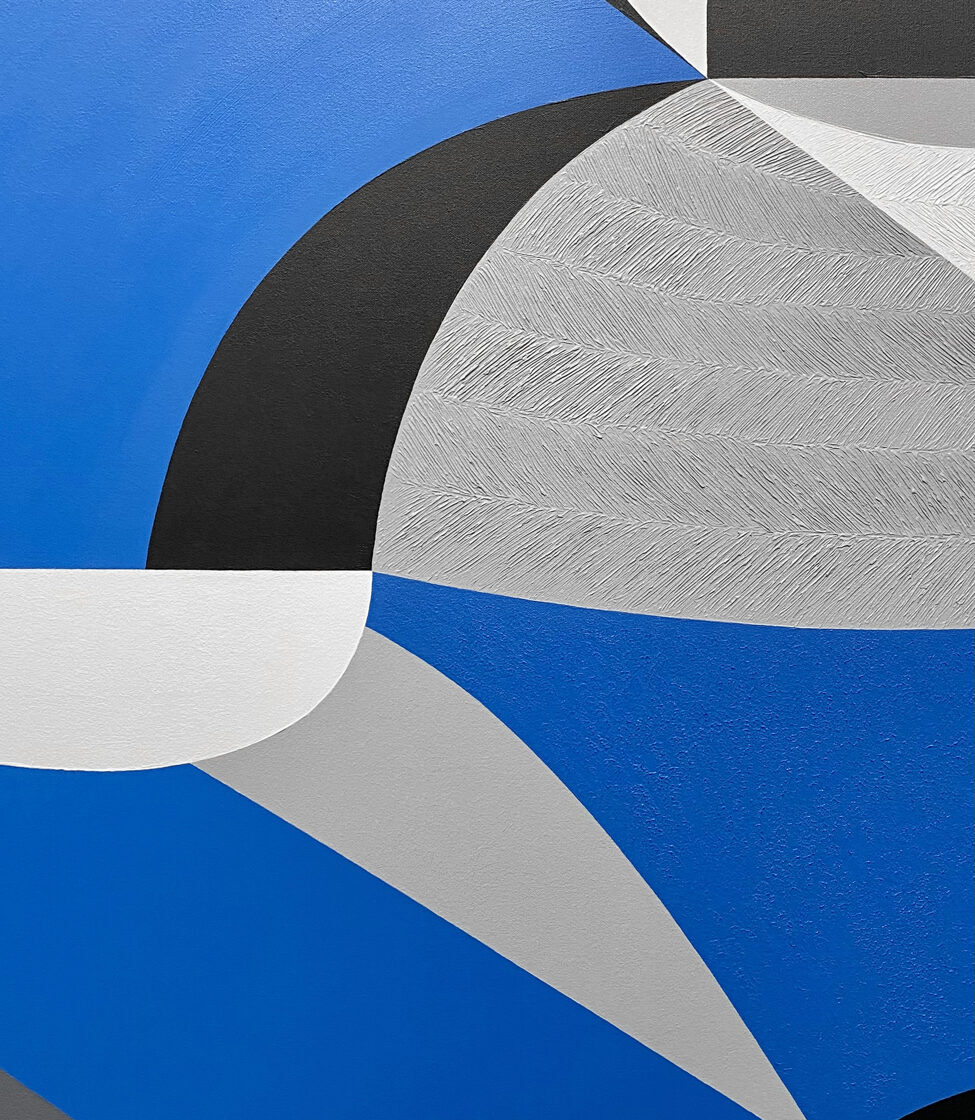
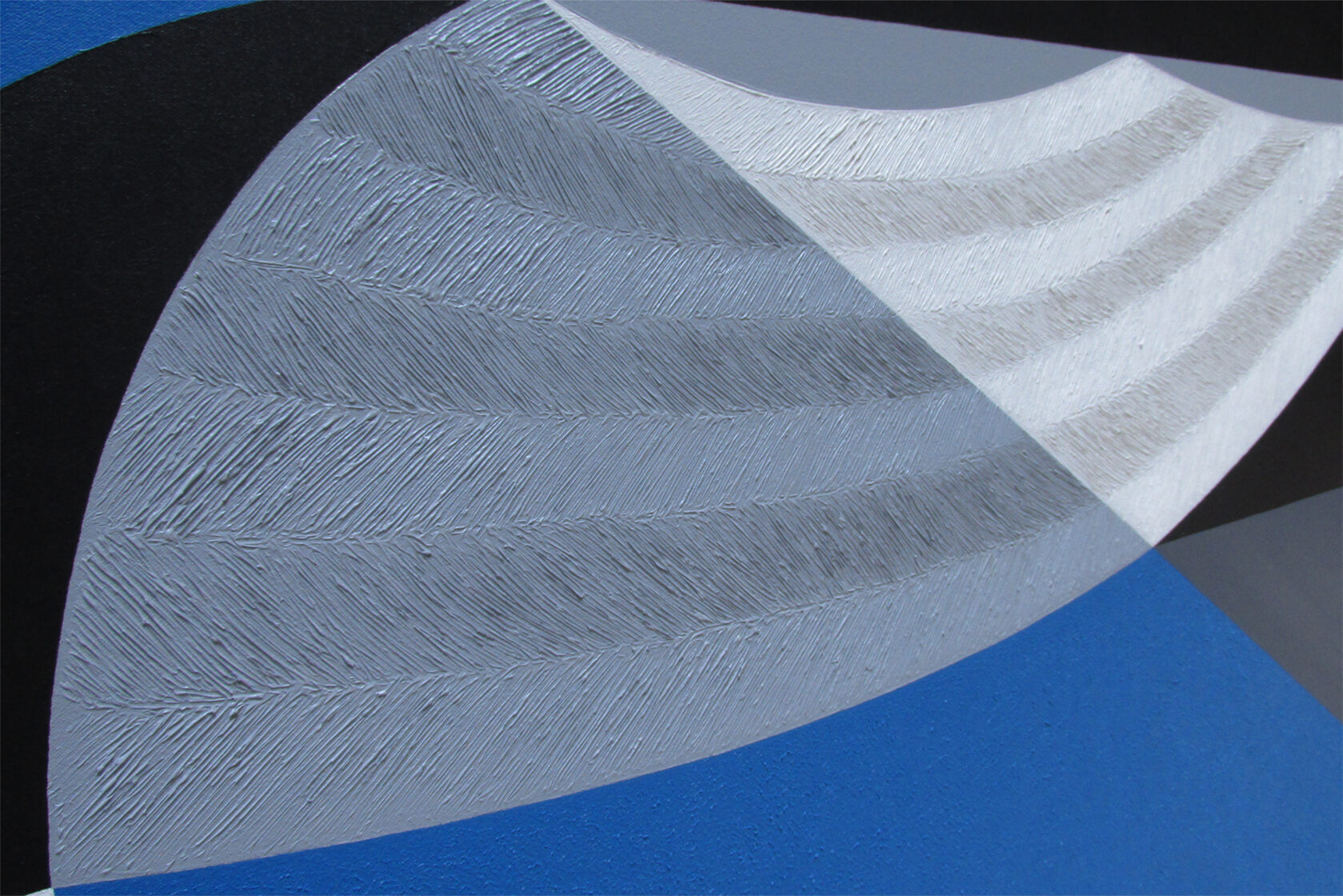
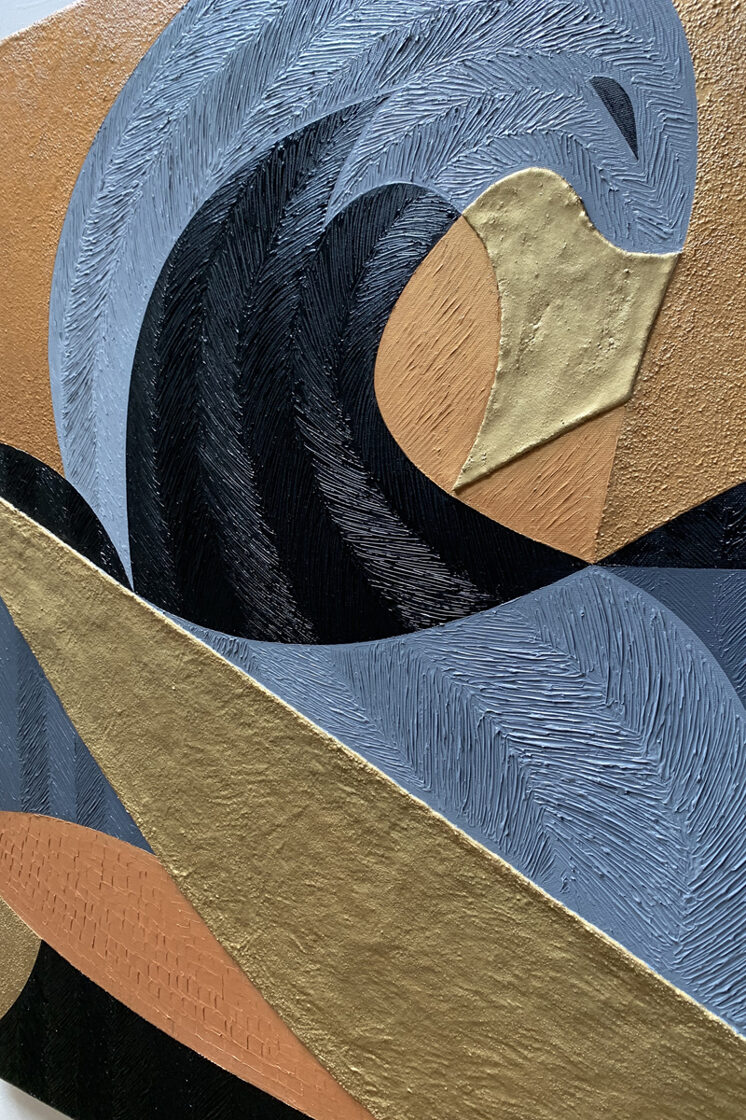
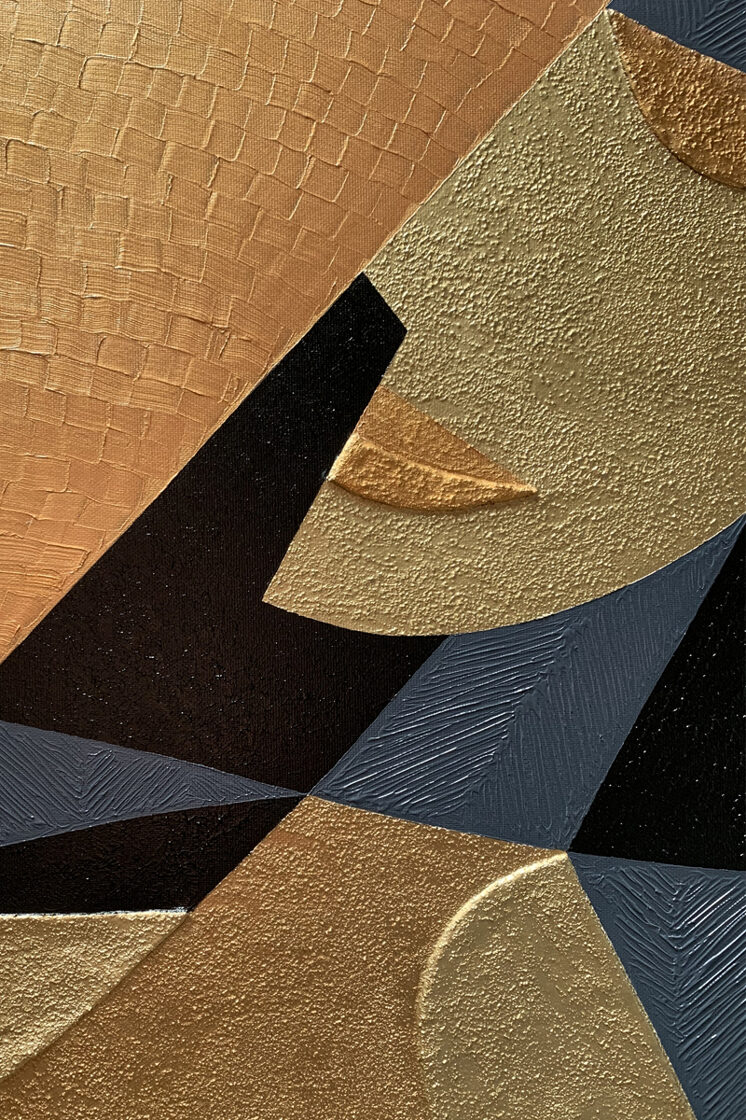
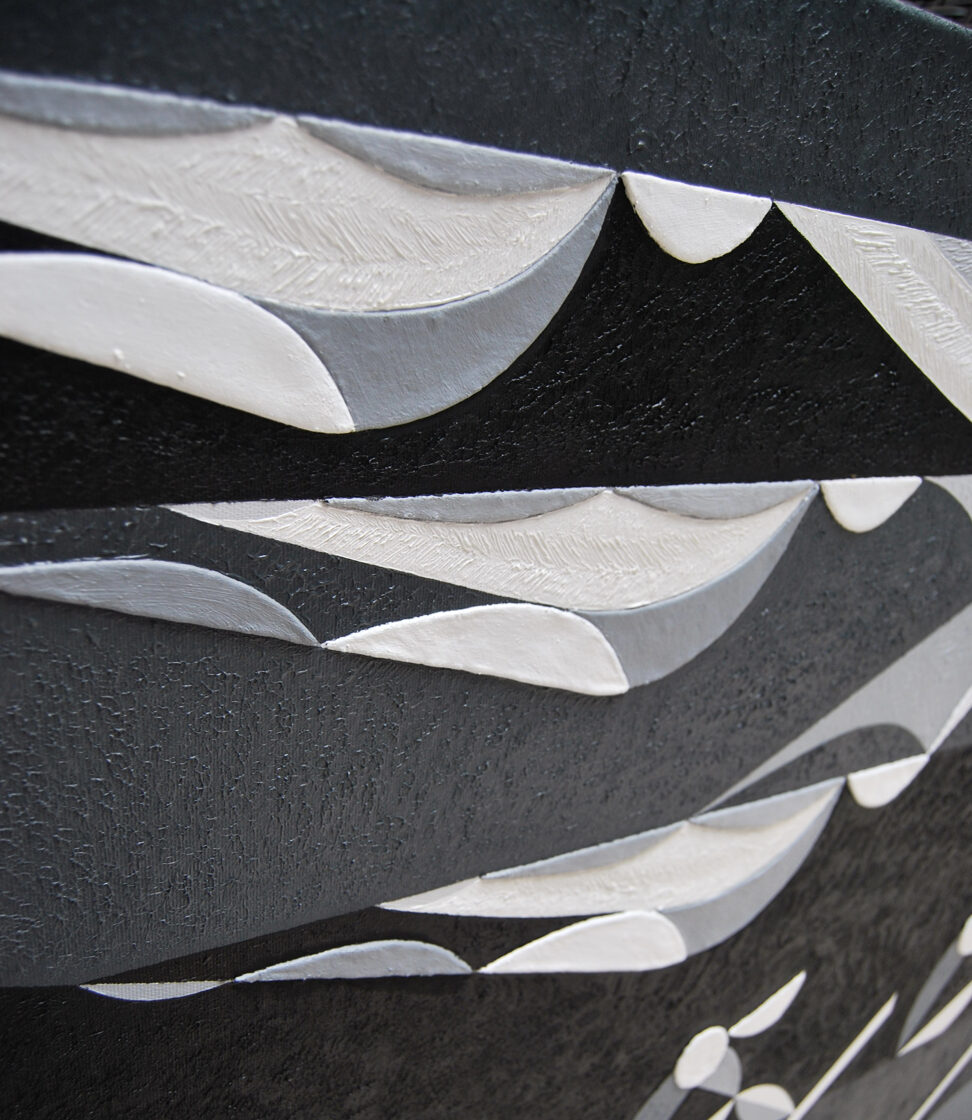
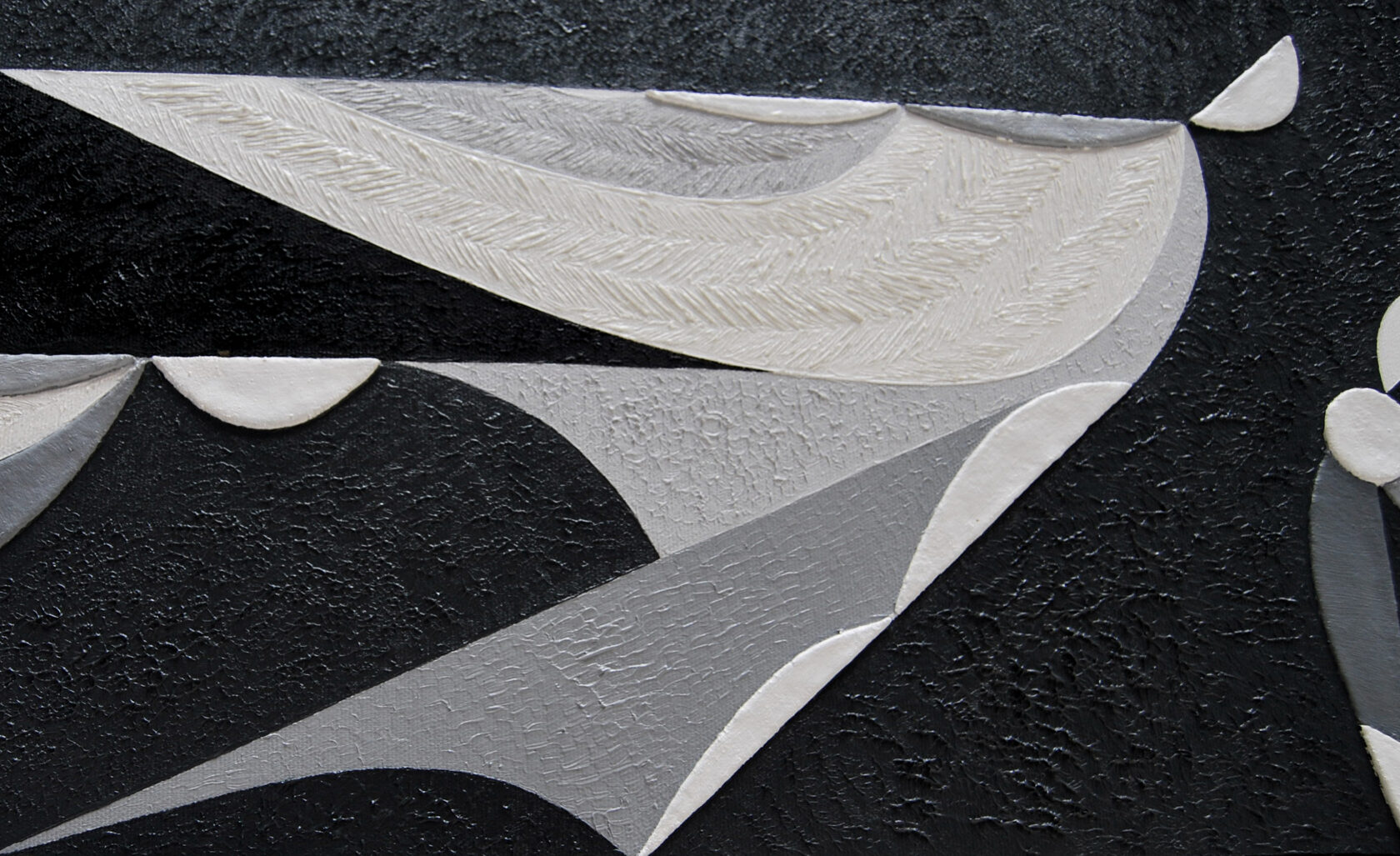
Emese’s Dream is one of the foundational images of the Hungarian origin myth: the turul bird, also known as the peregrine falcon, appears to the sleeping Emese as a divine symbol and spiritually fertilizes her. The child born from this vision is Álmos (meaning “sleepy” in Hungarian), who is thus partly descended from a celestial father. Several elements of this mythological story parallel the Egyptian legend of Horus, the falcon-headed god, who was born to Isisthrough magic, after her husband Osiris was killed by Set. Later, in the Christian tradition, the story of the Virgin Mary, where Christ’s divine origin is linked to the visitation of the Holy Spirit—often depicted in the form of a dove—also bears strong similarities. Moreover, some Hungarian historians and etymologists trace the word "karácsony"(Christmas) back to "kerecsen" (falcon). The period around the winter solstice, December 21–25, carried the same meaning in Egyptian, Christian, and ancient Hungarian belief systems alike: the triumph of light over darkness. Emese’s Dream is therefore both a national origin myth and a universal archetype: a mother, who under the influence of a spiritual force, gives birth to a son who brings a new era to his people. This image seeks to connect the layers of the Hungarian myth with the great religious and mythological traditions of the world through its visual language, in which the formal elements of Egyptian, Scythian, and early Christian mosaics can be recognized. The use of gold in the painting symbolizes the timeless representation of the supernatural found in many ancient cultures. As with all of my geometric compositions, this piece too was created in a stylized yet modernized language reminiscent of the visual traditions of ancient civilizations. Emese is depicted lying down, propped up on one elbow, eyes closed, embraced by a black-painted turul in the background.
The initial sketch of the painting was originally created for the Kempinski Hotel, but in the end, they chose my other work, Grande Jetée Rouge, mentioned above. Nevertheless, I went ahead and painted the piece, and exhibited it in California, at the Avran Art Gallery in Laguna Beach—but through a twist of fate, it ultimately ended up in a private collection in Hungary, on the wall facing a window that overlooks the Pilis Mountains (one of the sacred mountains of the ancient Hungarian religion). The division of the painting into five parts was not only rooted in archaic numerology, but also had practical benefits, as it made it easier to transport the work to the USA. I completed about 70% of the painting in Hungary, continued working on it in Miami, and the final brushstrokes were added in California, at the gallery, on the night before the opening.
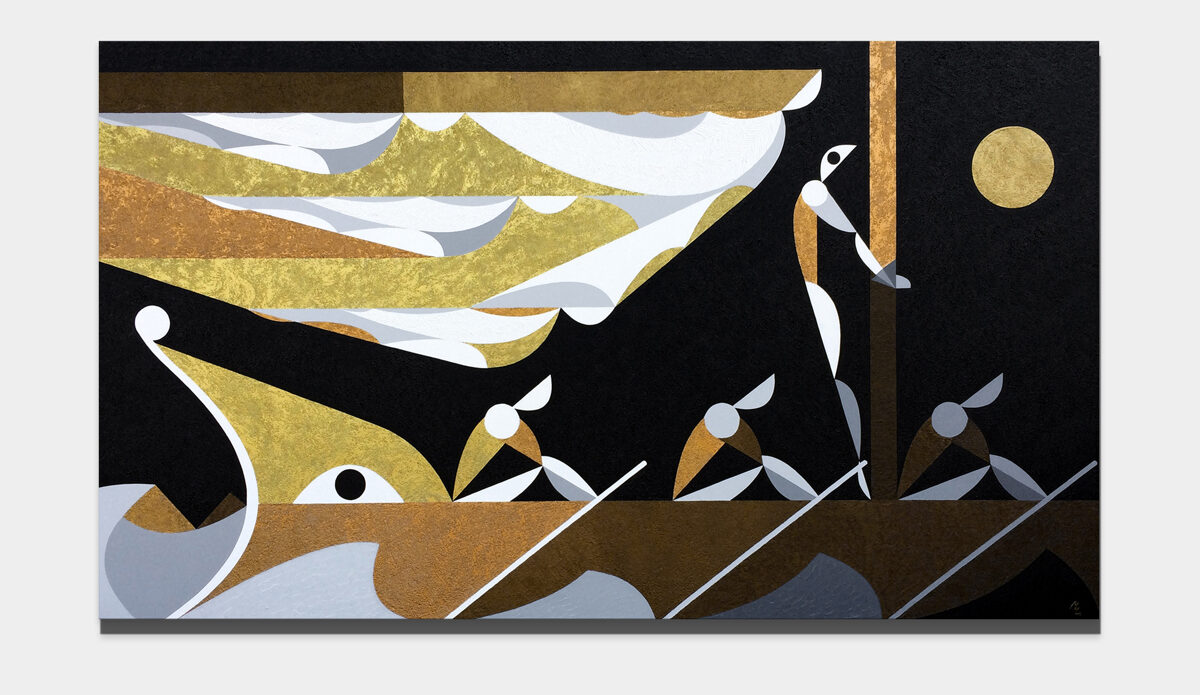
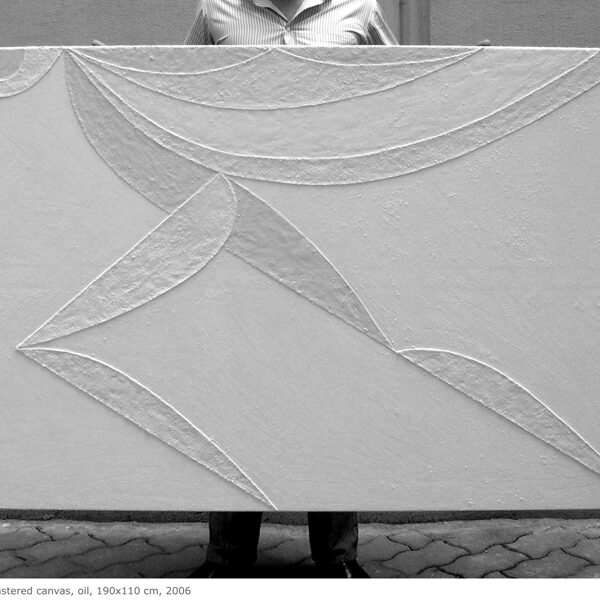
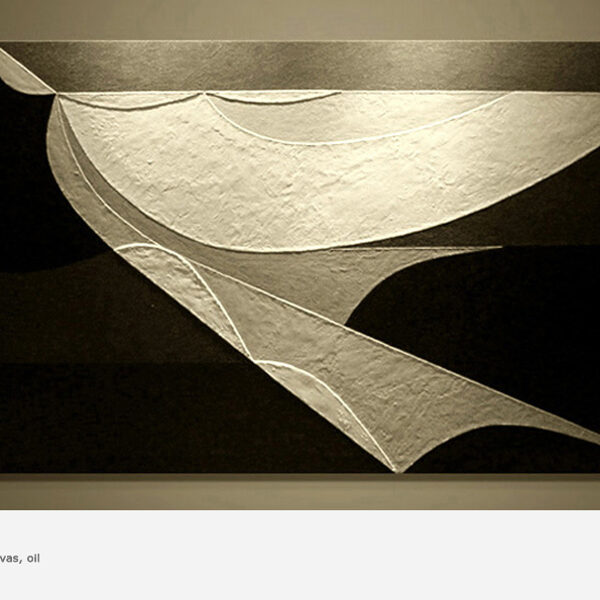
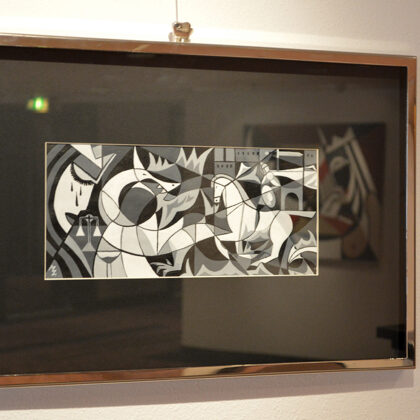
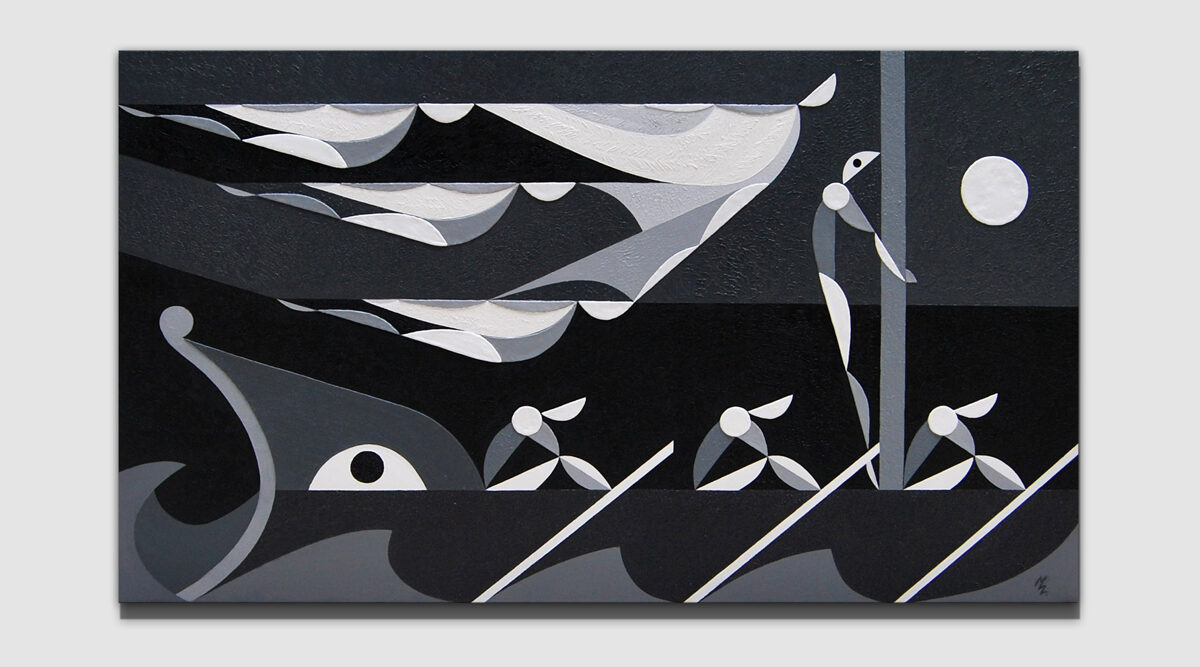
title: Odysseus and the Sirens
medium: plastered canvas, oil, gold
size: 190x110 cm
year: 2013
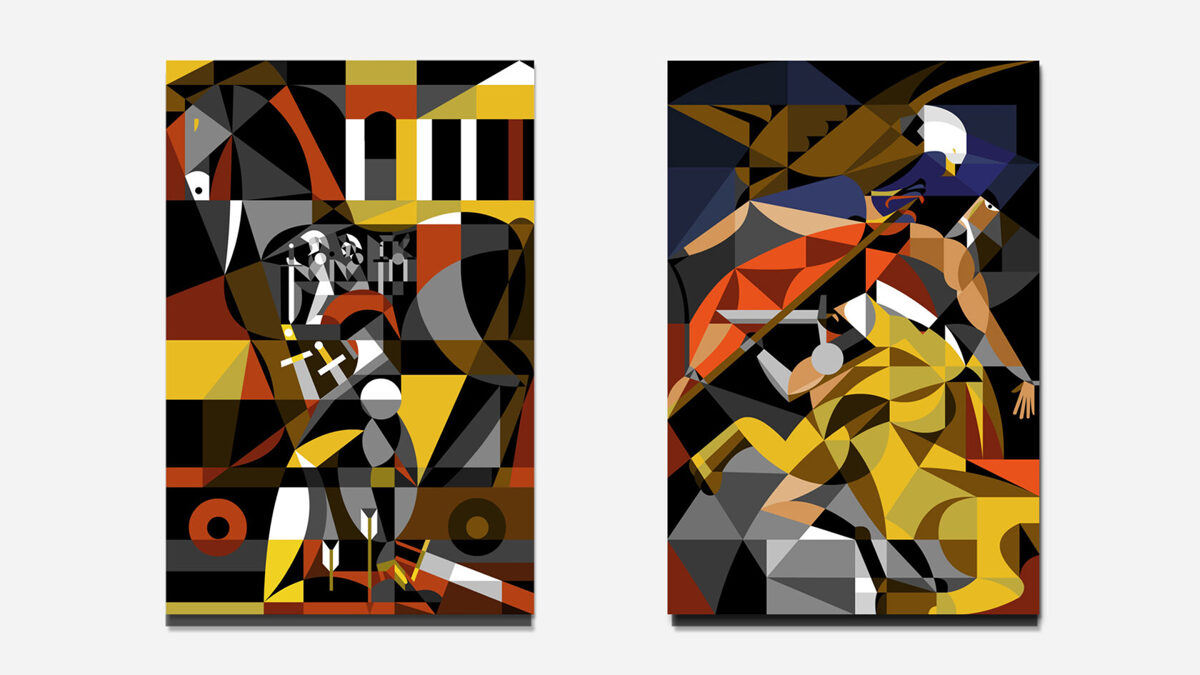
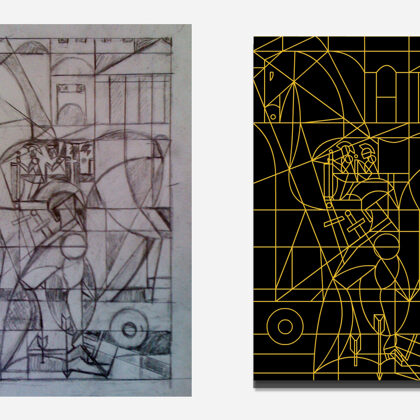
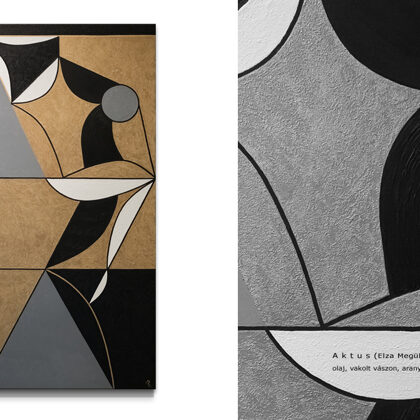
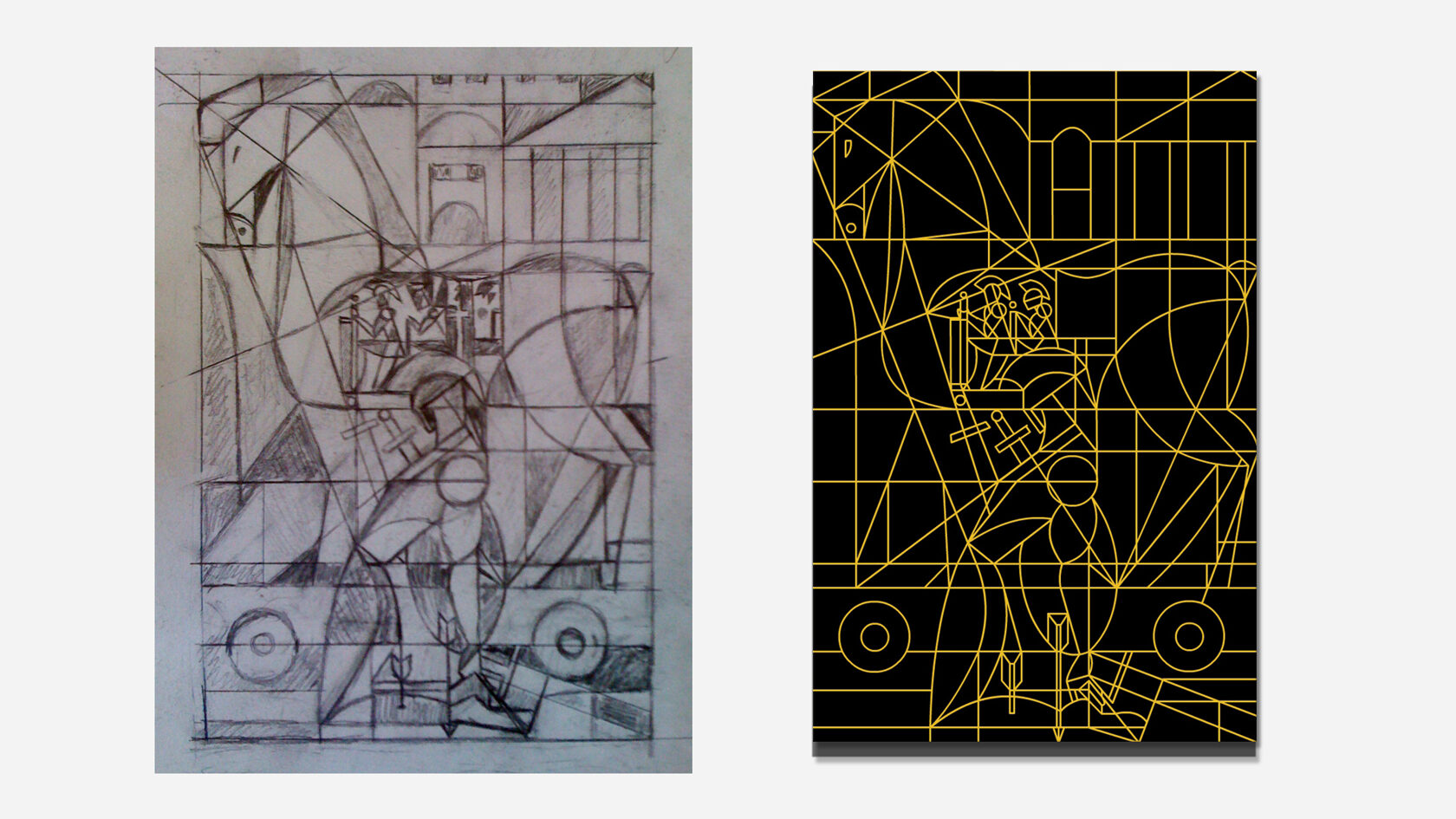
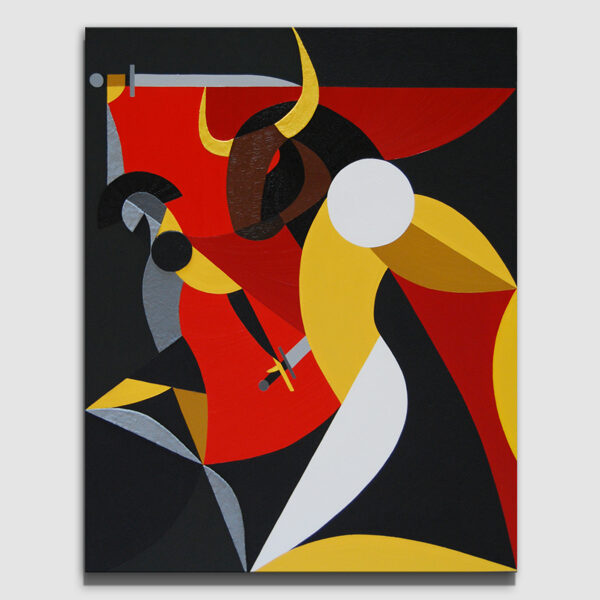
Left painting: Achilles and the Trojan Horse
Achilles has fallen to his knees, with the Trojan Horse looming in the background. Inside its belly, Odysseus and his companions lie in wait, ready to take their revenge.
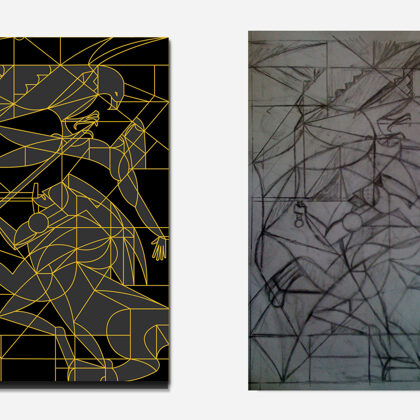
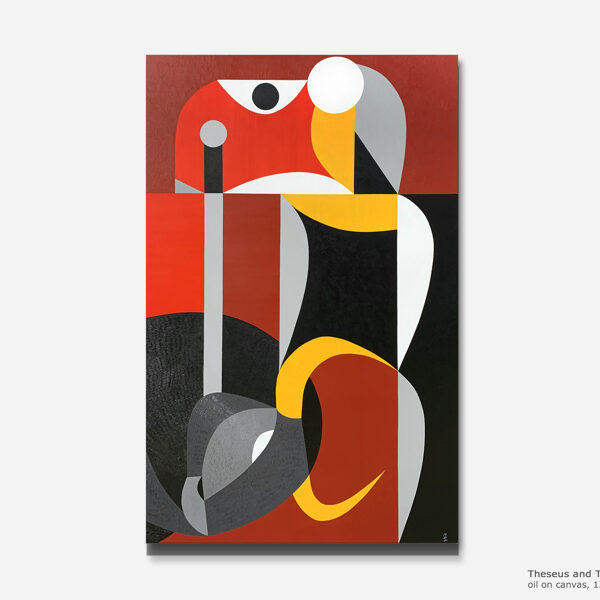
Right painting: Hercules Rescues Prometheus
Disguised in the pelt of the Nemean lion, Hercules bursts onto the scene to rescue Prometheus from the tormenting eagle feasting on his liver
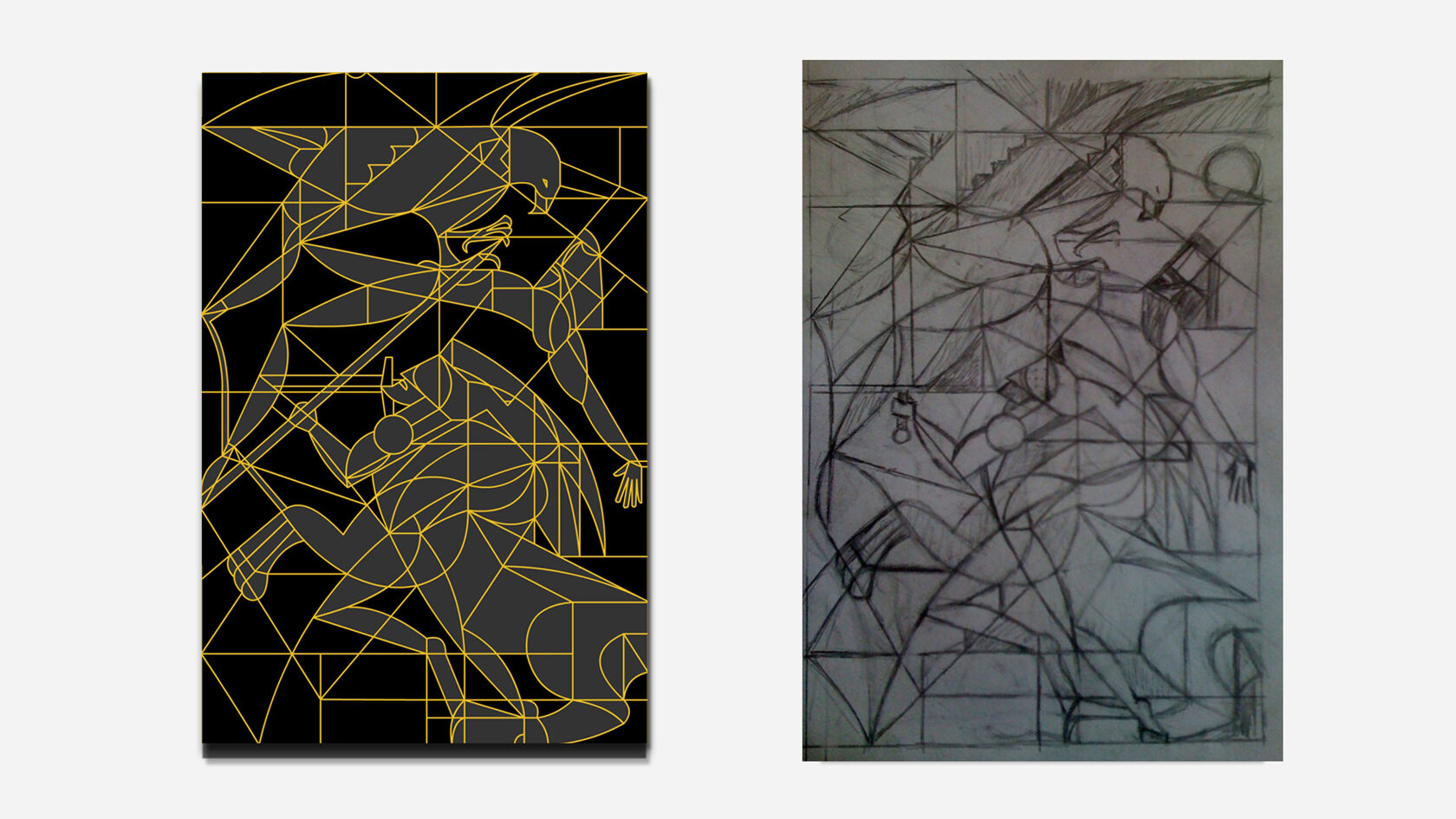
Below in the gallery are the preliminary sketches of Achilles and Prometheus, as well as the gold outline versions of these works.
 title: Odysseus and the Sirens